Category
page 1Extant Paleocene first appearances

Strigiformes
Owls are birds from the order Strigiformes (), which includes over 200 species of mostly solitary and nocturnal birds of prey typified by an upright stance, a large, broad head, binocular vision, binaural hearing, sharp talons, and feathers adapted for silent flight. Exceptions include the diurnal northern hawk-owl and the gregarious burrowing owl.

chameleon

heron
Herons are long-legged, long-necked, freshwater and coastal birds in the family Ardeidae, with 75 recognised species, some of which are referred to as egrets or bitterns rather than herons. Members of the genus Botaurus are referred to as bitterns, and, together with the zigzag heron, or zigzag bittern, in the monotypic genus Zebrilus, form a monophyletic group within the Ardeidae. Egrets do not form a biologically distinct group from herons, and tend to be named differently because they are mainly white or have decorative plumes in breeding plumage. Herons, by evolutionary adaptation, have lo

Fabaceae
Fabaceae or Leguminosae, commonly known as the legume, pea, or bean family, is a large and agriculturally important family of flowering plants. It includes trees, shrubs, and perennial or annual herbaceous plants, which are easily recognized by their fruit (legume) and their compound, stipulate leaves. The family is widely distributed, and is the third-largest land plant family in number of species, behind only the Orchidaceae and Asteraceae, with about 765 genera and nearly 20,000 known species.

marsupial
Marsupials are a diverse group of mammals belonging to the infraclass Marsupialia. They are natively found in Australasia, Wallacea, and the Americas. One of marsupials' unique features is their reproductive strategy: the young are born in a relatively undeveloped state and then nurtured within a pouch on their mother's abdomen. Extant marsupials encompass many species, including kangaroos, koalas, opossums, possums, Tasmanian devils, wombats, wallabies, and bandicoots.

Galliformes
Galliformes , also known as gallinaceous birds or landfowl, is an order of heavy-bodied terrestrial birds that contains about 290 species. The order is divided into five families: Phasianidae (chicken and junglefowls, Old World quails, partridges, pheasants, turkeys, peafowl and grouse), Odontophoridae (New World quails), Numididae (guinea fowl), Cracidae (including chachalacas and curassows), and Megapodiidae (incubator birds like malleefowl and brushturkeys). Galliformes and the semi-aquatic order Anseriformes (waterfowl) are collectively called fowl.

Pholidota
Pangolins, also called scaly anteaters, are mammals of the order Pholidota (). The one extant family, the Manidae, has three genera: Manis, Phataginus, and Smutsia. Manis comprises five species found in Asia, while Phataginus and Smutsia include two species each, all found in sub-Saharan Africa. These species range in size from . Several extinct pangolin species are also known. In September 2023, a ninth species was reported, although it is only known from confiscated scales and has never been observed in the wild.

Lagomorpha
thumb|225px|Fossil occurrences of leporids and ochotonids and global environmental change (climate change, C3/C4 plants distribution)

Apodiformes
The Apodiformes is an order, or taxonomic grouping, of birds which traditionally contained three living families—the Apodidae (swifts), the Hemiprocnidae (treeswifts), and the Trochilidae (hummingbirds); however, in the Sibley-Ahlquist taxonomy, this order is elevated to the superorder Apodimorphae, in which hummingbirds are separated into a new order, the Trochiliformes. With nearly 450 species identified to date, it is the most diverse order of birds after the Passeriformes (the "perching" birds).
%20(cropped).jpg)
Xenarthra
Xenarthra (; from Ancient Greek ξένος (xénos), meaning "strange, foreign", and ἄρθρον (árthron), meaning "joint") is a superorder and major clade of placental mammals native to the Americas. There are 31 living species: the anteaters, tree sloths, and armadillos. Extinct xenarthrans include the glyptodonts, pampatheres and ground sloths, with some glyptodonts and ground sloths reaching sizes of several tonnes, much larger than any living xenarthran. Xenarthrans originated in South America during the late Paleocene about 60 million years ago. They evolved and diversified extensively in Sou

Caprimulgiformes
REDIRECT Nightjar

Placentalia
Placental mammals (infraclass Placentalia ) are one of the three extant subdivisions of the class Mammalia, the other two being Monotremata and Marsupialia. Placentalia contains the vast majority of extant mammals, which are partly distinguished from monotremes and marsupials in that the fetus is carried in the uterus of its mother to a relatively late stage of development. The name is something of a misnomer, considering that marsupials also nourish their fetuses via a placenta, though for a relatively briefer period, giving birth to less-developed young, which are then nurtured for a period
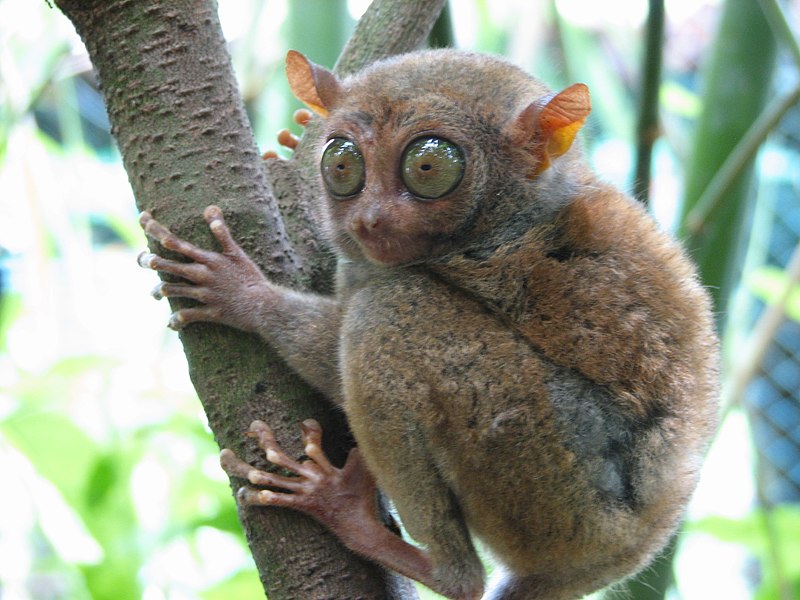
Haplorhini
Haplorhini (), the haplorhines (Greek for "simple-nosed") or the "dry-nosed" primates is a suborder of primates containing the tarsiers and the simians (Simiiformes or anthropoids), as sister of the Strepsirrhini ("moist-nosed"). The name is sometimes spelled Haplorrhini. The simians include catarrhines (Old World monkeys and apes, including humans), and the platyrrhines (New World monkeys).

ungulate
Ungulates are members of the diverse clade Euungulata, which primarily consists of large mammals with hooves. Once part of the taxon "Ungulata" along with paenungulates and tubulidentates, as well as several extinct taxa, "Ungulata" has since been determined to be a polyphyletic grouping based on molecular data. As a result, true ungulates have since been reclassified to the newer clade Euungulata in 2001 within the clade Laurasiatheria, while Paenungulata and Tubulidentata have been reclassified to the distant clade Afrotheria. Alternatively, some authors use the name Ungulata to designate th

Pleuronectiformes
Flatfish are a group of ray-finned fish belonging to the suborder Pleuronectoidei and historically the order Pleuronectiformes (though this is now disputed). Their collective common name is due to their habit of lying on one side of their laterally-compressed body (flattened side-to-side) upon the seafloor; in this position, both eyes lie on the side of the head facing upwards, while the other side of the head and body (the "blind side") lies on the substrate. This loss of symmetry, a unique adaptation in vertebrates, stems from one eye "migrating" towards the other during the juvenile's metam

Lemuriformes
Lemuriformes is the sole extant infraorder of primate that falls under the suborder Strepsirrhini. It includes the lemurs of Madagascar, as well as the galagos and lorisids of Africa and Asia, although a popular alternative taxonomy places the lorisoids in their own infraorder, Lorisiformes.

Laurasiatheria
Laurasiatheria (; "Laurasian beasts") is a superorder of placental mammals that groups together true insectivores (eulipotyphlans), bats (chiropterans), carnivorans, pangolins (pholidotes), even-toed ungulates (artiodactyls), odd-toed ungulates (perissodactyls), and all their extinct relatives (pan-euungulates). From systematics and phylogenetic perspectives, it is subdivided into order Eulipotyphla and clade Scrotifera. It is a sister group to Euarchontoglires with which it forms the magnorder Boreoeutheria. Laurasiatheria was discovered on the basis of the similar gene sequences shared by th
.jpg)
Cheloniidae
Cheloniidae is a family of typically large marine turtles that are characterised by their common traits such as having a flat streamlined wide and rounded shell and almost paddle-like flippers for their forelimbs. They are the only sea turtles to have stronger front limbs than back limbs. The six species that make up this family are the green sea turtle, loggerhead sea turtle, olive ridley sea turtle, hawksbill sea turtle, flatback sea turtle and the Kemp's ridley sea turtle.

Euarchontoglires
Euarchontoglires (from Euarchonta + Glires ), synonymous with Supraprimates, is a clade and a superorder of placental mammals, the living members of which belong to one of the five following groups: rodents, lagomorphs, treeshrews, primates, and colugos.

Eulipotyphla
Eulipotyphla (, from eu- "true" + Lipotyphla "lacking blind gut"; sometimes called true insectivores) is an order of mammals comprising the families Erinaceidae (hedgehogs and gymnures), Solenodontidae (solenodons), Talpidae (moles, shrew-like moles and desmans), and Soricidae (true shrews).

Struthionidae
Struthionidae (; ) is a family of flightless birds, containing the extant ostriches and their extinct relatives. The two extant species of ostrich are the common ostrich and Somali ostrich, both in the genus Struthio, which also contains several species known from Holocene fossils such as the Asian ostrich. The common ostrich is the more widespread of the two living species, and is the largest living bird species. The extinct genus Pachystruthio from the Late Pliocene-Early Pleistocene of Eurasia is one of the largest birds ever.
%20(white%20background).jpg)
Glires
Glires (; from Latin ) is a clade (sometimes ranked as a grandorder) consisting of rodents and lagomorphs (rabbits, hares, and pikas). The hypothesis that these form a monophyletic group has been long debated based on morphological evidence. Two morphological studies, published in 2001 and 2003, strongly support the monophyly of Glires. In particular, the 2003 study reported the discovery of fossil material of basal members of Glires, particularly the genera Mimotona, Gomphos, Heomys, Matutinia, Rhombomylus, and Sinomylus. Their description, in 2005, helped to bridge the gap between more typic
%20white%20background.jpg)
Cariamiformes
Cariamiformes (or Cariamae) is an order of primarily flightless birds that has existed for over 50 million years. The group includes the family Cariamidae (seriemas) and the extinct families such as Phorusrhacidae, Bathornithidae, Idiornithidae, and Ameghinornithidae. Extant members (seriemas) are only known from South America, but fossils of many extinct taxa are also found in other continents including Europe and North America. Though traditionally considered a suborder within Gruiformes, both morphological and genetic studies show that it belongs to a separate group of birds, Australaves, w

Euarchonta
The Euarchonta are a proposed grandorder of mammals: the order Scandentia (treeshrews), and its sister Primatomorpha mirorder, containing the Dermoptera (colugos) and the primates (Plesiadapiformes and descendants).
==Terminology ==
The term "Euarchonta" (meaning "true rulers") appeared in 1999, when molecular evidence suggested that the morphology-based Archonta should be trimmed down to exclude Chiroptera. Further DNA sequence analyses supported the Euarchonta hypothesis. Despite multiple papers pointing out that some mitochondrial sequences showed unusual properties (particularly murid rode
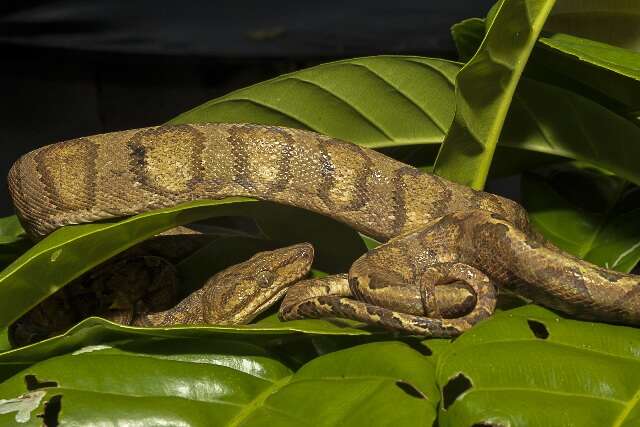
Boinae
The Boinae are a purported subfamily of boas found in Central and South America, as well as the West Indies. In the Integrated Taxonomic Information System (ITIS), Boinae is considered an invalid synonym of Boidae.

Diplodactylidae
The Diplodactylidae are a family in the suborder Gekkota (geckos), with over 150 species in 25 genera. These geckos occur in Australia, New Zealand, and New Caledonia. Diplodactylids are the most ecologically diverse and widespread family of geckos in both Australia and New Caledonia, and are the only family of geckos found in New Zealand. Three diplodactylid genera (Oedura, Rhacodactylus, and Hoplodactylus) have recently been split into multiple new genera.
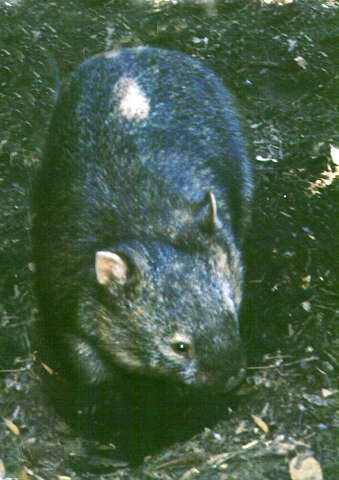
Australidelphia
Australidelphia is a superorder of marsupials encompassing about three-quarters of all living marsupial species, including all those native to Australasia and one South American species, the monito del monte. Unlike other American marsupials, which belong to the Ameridelphia, Australidelphia's lineage emerged in South America, with genetic evidence (retrotransposon insertion sites) showing the monito del monte as its most ancient branch.

Corallus
Corallus, the neotropical tree boas, are a genus of boas found in Central America, South America and the West Indies. Nine extant species are recognized .

Aldrovanda
Aldrovanda is a genus of carnivorous plants encompassing one extant species: the waterwheel plant (Aldrovanda vesiculosa). It also covers numerous extinct taxa. The genus is named in honor of the Italian naturalist Ulisse Aldrovandi, the founder of the Botanical Garden of Bologna, Orto Botanico dell'Università di Bologna. Aldrovanda vesiculosa primary habitat is shallow standing waters with humic elements. It has been reported from scattered locations in Europe, Asia, Africa, and Australia.

Necturus
Necturus is a genus of aquatic salamanders in the family Proteidae. Species of the genus are native to the eastern United States and Canada. They are commonly known as waterdogs and mudpuppies. The common mudpuppy (N. maculosus) is probably the best-known species – as an amphibian with gill slits, it is often dissected in comparative anatomy classes. The common mudpuppy has the largest distribution of any fully aquatic salamander in North America.
Atlantogenata
Atlantogenata ("born around the Atlantic Ocean") is a magnorder of placental mammals containing the cohorts or superorders Xenarthra and Afrotheria. These groups originated and radiated in the South American and African continents, respectively, presumably in the Cretaceous. Together with Boreoeutheria, they make up Placentalia. The monophyly of this grouping is supported by some genetic evidence.

Scrotifera
Scrotifera ("scrotum bearers") is a clade of placental mammals that groups together grandorder Ferungulata, Chiroptera (bats), other extinct members and their common ancestors. The clade Scrotifera is a sister group to the order Eulipotyphla (true insectivores) based on evidence from molecular phylogenetics, and together they make superorder Laurasiatheria. The last common ancestor of Scrotifera is supposed to have diversified ca. 73.1 to 85.5 million years ago.

Necturus maculosus
species of amphibian

Cypselomorphae
Strisores ( ), sometimes called nightbirds, is a clade of birds that includes the living families and orders Caprimulgidae (nightjars, nighthawks and allies), Nyctibiidae (potoos), Steatornithidae (oilbirds), Podargidae (frogmouths), Apodiformes (swifts and hummingbirds), as well as the Aegotheliformes (owlet-nightjars) whose distinctness was only recently realized. The Apodiformes (which include the "Trochiliformes" of the Sibley–Ahlquist taxonomy) and the Aegotheliformes form the Daedalornithes.

Triakis
Triakis is a genus of houndsharks in the family Triakidae. The name comes from the Ancient Greek word () meaning , and the Latin word meaning or , in reference to their three-pointed teeth.
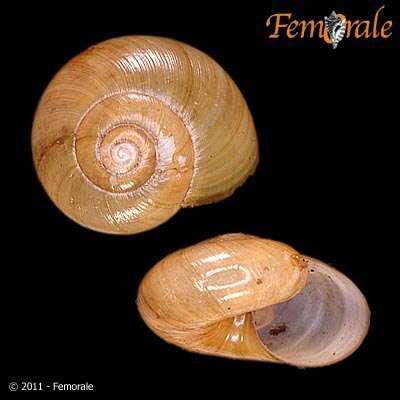
Zonitidae
Zonitidae, common name the true glass snails, are a family of mostly rather small, air-breathing land snails, terrestrial pulmonate gastropod mollusks in the superfamily Zonitoidea.

Cassis
genus of molluscs
Alligatorinae
Alligatorinae is a subfamily within the family Alligatoridae that contains the alligators and their closest extinct relatives, and is the sister taxon to Caimaninae (the caimans). Many genera in Alligatorinae are described, but only the genus Alligator is extant, with the remaining being extinct.

Attini
tribe of ants

Rhineuridae
Rhineuridae is a family of amphisbaenians (commonly called worm lizards) that includes one living genus and species, Rhineura floridana, as well as many extinct species belonging to both Rhineura and several extinct genera. The living R. floridana is found only in Georgia and Florida, but extinct species ranged across North America, some occurring as far west as Oregon. The family has a fossil record stretching back 60 million years to the Paleocene and was most diverse in the continental interior during the Eocene and Oligocene.

Hexapodidae
Hexapodidae is a family of crabs, the only family in the superfamily Hexapodoidea. It has traditionally been treated as a subfamily of the family Goneplacidae, and was originally described as a subfamily of Pinnotheridae. Its members can be distinguished from all other true crabs by the reduction of the thorax, such that only seven sternites are exposed, and only four pairs of pereiopods are present. Not counting the enlarged pair of claws, this leaves only six walking legs, from which the type genus Hexapus, and therefore the whole family, takes its name. Some anomuran "crabs", such as porcel

Carpilioidea
thumb|Harpactoxanthopsis quadrilobata fossil, Middle Eocene, Venetia Region, northern Italy

Polinices
thumb|Polinices galianor from the Pliocene of San Diego County, California.
thumb|Polinices galianor umbilicus; Pliocene of San Diego County, California.
Chaeteessidae
Chaeteessidae is a family of praying mantises. It contains a single extant genus, Chaeteessa, native to South America which is thought to be the most primitive and earliest diverging lineage of living mantises. Fossil genera are known from the Paleogene of Eurasia and North America.

Phidoloporidae
Phidoloporidae is a family within the bryozoan order Cheilostomatida. The colonies of many genera grow in an upright, reticulate branching manner, which gave rise to one colloquial name for this group as 'lace corals'. Zooids generally open on one side of the branches.

Mysella
Mysella is a genus of marine bivalve molluscs of the family Lasaeidae.
Scaphella
Scaphella is a genus of large sea snails, marine gastropod mollusks in the family Volutidae, the volutes.