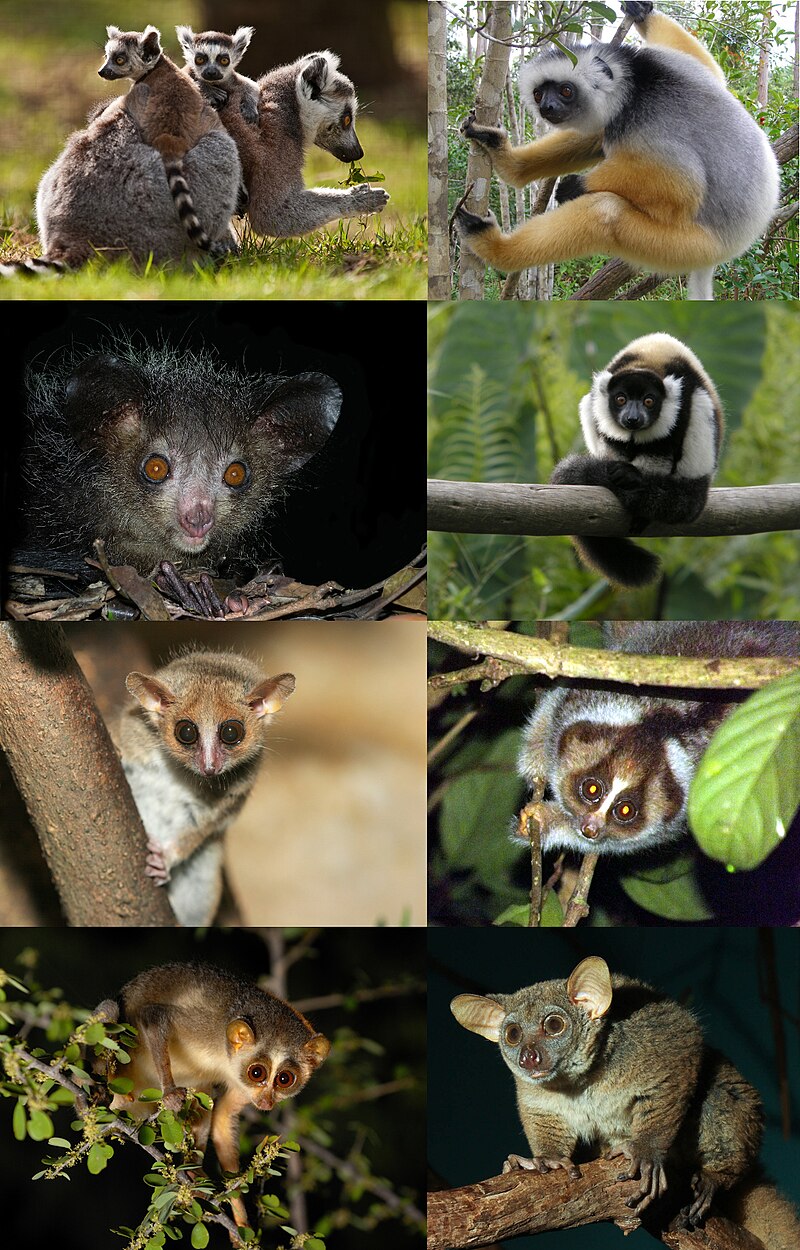
File:Extant_Strepsirrhini.jpg · Wikimedia Commons · See Wikimedia Commons
Lemuriformes
Sign in to saveAlso known as lemurs, lemur
Lemuriformes is the sole extant infraorder of primate that falls under the suborder Strepsirrhini. It includes the lemurs of Madagascar, as well as the galagos and lorisids of Africa and Asia, although a popular alternative taxonomy places the lorisoids in their own infraorder, Lorisiformes.
Lemuriformes is a major group of primates that includes lemurs from Madagascar along with galagos and lorisids found across Africa and Asia. This group matters because it represents one of the most ancient branches of primate evolution and helps scientists understand how primates diversified and adapted to different environments around the world.
AI-generated from the Wikipedia summary — may contain errors.
Wikidata facts
- Instance of
- taxon
- Parent taxon
- Strepsirrhini
- Image
- Indri Indri.jpg
Show 7 more facts
- taxon rank
- infraorder
- Commons category
- Lemuriformes
- taxon name
- Lemuriformes
- topic's main category
- Category:Lemuriformes
- endemic to
- Madagascar
- on focus list of Wikimedia project
- Wikipedia:Vital articles/Level/4
- time period
- Holocene
Sources (2)
via Wikidata · CC0
~6 min read
Encyclopedic overview
5 sectionsContents
- Evolutionary history
- Taxonomic classification
- Notes
- References
- Literature cited
Lemuriformes is the sole extant infraorder of primate that falls under the suborder Strepsirrhini. It includes the lemurs of Madagascar, as well as the galagos and lorisids of Africa and Asia, although a popular alternative taxonomy places the lorisoids in their own infraorder, Lorisiformes.
Lemuriform primates are characterized by a toothcomb, a specialized set of teeth in the front, lower part of the mouth mostly used for combing fur during grooming.
Excerpted from Wikipedia’s “Lemuriformes” article, available under the CC BY-SA 4.0 licence.