Category
page 1Extant Ypresian first appearances

Chiroptera
Bats (order Chiroptera ) are winged mammals; the only mammals capable of true and sustained flight. Bats are more agile in flight than most birds, flying with their long spread-out digits covered with a thin membrane or patagium. The smallest bat, and one of the smallest extant mammals, is Kitti's hog-nosed bat, which is in length, across the forearm and in mass. The largest bats are the flying foxes, with the giant golden-crowned flying fox (Acerodon jubatus) reaching a weight of and having a wingspan of .

Cetacea
Cetaceans are marine mammals belonging to the infraorder Cetacea (), a secondarily aquatic clade under the order Artiodactyla that include whales, dolphins, porpoises and extinct groups such as Basilosaurus. Most cetaceans live in marine environments, particularly the pelagic zone, but some reside solely in brackish or fresh water. Having a cosmopolitan distribution, they can be found in some rivers and all of Earth's oceans. Many species migrate seasonally over vast ranges for food advantages.

Psittaciformes
Parrots (Psittaciformes), also known as psittacines () from the name of the type genus Psittacus, are birds with a strong curved beak, upright stance, and clawed feet. They are classified in four families that contain roughly 410 species in 101 genera, found mostly in tropical and subtropical regions. The four families are the Psittaculidae (Old World parrots), Psittacidae (African and New World parrots), Cacatuidae (cockatoos), and Strigopidae (New Zealand parrots). One-third of all parrot species are threatened by extinction, with a higher aggregate extinction risk (IUCN Red List Index) than
%20(Sylvilagus%20palustris).jpg)
rabbit
Rabbits, or bunnies, are small mammals in the family Leporidae (which also includes the hares), which is in the order Lagomorpha (which also includes pikas). They are familiar throughout the world as a small herbivore, a prey animal, a domesticated form of livestock, and a pet, having a widespread effect on ecologies and cultures. The most widespread rabbit genera are Oryctolagus and Sylvilagus. The former, Oryctolagus, includes the European rabbit, Oryctolagus cuniculus, which is the ancestor of the hundreds of breeds of domestic rabbit and has been introduced on every continent except Antarc

Betula
A birch is a thin-leaved deciduous hardwood tree of the genus Betula (), in the family Betulaceae, which also includes alders, hazels, and hornbeams. It is closely related to the beech-oak family Fagaceae. The genus Betula contains 30 to 60 known taxa of which 11 are on the IUCN 2011 Red List of Threatened Species. They are typically short-lived pioneer species and are widespread in the Northern Hemisphere, particularly in northern areas of temperate climates and in boreal climates. Birch wood is used for a wide range of purposes.

Crocodile
A crocodile (family Crocodylidae) or true crocodile is a large, semiaquatic reptile that lives throughout the tropics in Africa, Asia, the Americas and Australia. The term "crocodile" is sometimes used more loosely to include all extant members of the order Crocodilia, which includes the alligators and caimans (both members of the family Alligatoridae), the gharial and false gharial (both members of the family Gavialidae) as well as other extinct taxa. This article will use "crocodile" or "true crocodile" to refer only to the species taxonomically included in the Crocodylidae family, extant or

Artiodactyla
Artiodactyla ( ; ) is an order of placental mammals. Typically, they are ungulates which bear weight equally on two (an even number) of their five toes (the third and fourth, often in the form of a hoof). The other three toes are either present, absent, vestigial, or pointing posteriorly. By contrast, most perissodactyls bear weight on an odd number of the five toes. Another difference between the two orders is that many artiodactyls (except for Suina) digest plant cellulose in one or more stomach chambers rather than in their intestine (as perissodactyls do). Molecular biology, along with fos

rabbits and hares
thumb|Skeleton of Alaskan hare on display at the Museum of Osteology
Leporidae () is the family of rabbits and hares (Lepus), containing over 70 species of extant mammals in all. Together with the pikas, the Leporidae constitute the mammalian order Lagomorpha. Leporidae differ from pikas in that they have short, furry tails and elongated ears and hind legs.

Abies
Firs are evergreen coniferous trees belonging to the genus Abies () in the family Pinaceae. There are approximately 48–65 extant species, found on mountains throughout much of North and Central America, Eurasia, and North Africa. The genus is most closely related to Keteleeria, a small genus confined to eastern Asia.

odd-toed ungulate
thumb|The white rhinoceros is the largest living perissodactyl

Ginkgo biloba
species of ginkgo tree

Accipitridae
The Accipitridae () is one of the four families within the order Accipitriformes, and is a family of small to large birds of prey with strongly hooked bills and variable morphology based on diet. They feed on a range of prey items from insects to medium-sized mammals, with a number feeding on carrion and a few feeding on fruit. The Accipitridae have a cosmopolitan distribution, being found on all the world's continents (except Antarctica) and a number of oceanic island groups. Some species are migratory. The family contains 256 species which are divided into 12 subfamilies and 75 genera.

Equidae
Equidae (commonly known as the horse family) is the taxonomic family of horses and related animals, including asses, zebras, and many extinct species known only from fossils. The family evolved more than 50 million years ago, in the Eocene epoch, from a small, multi-toed ungulate into larger, single-toed animals. All extant species are in the genus Equus, which originated in North America. Equidae belongs to the order Perissodactyla, which includes the extant tapirs and rhinoceros, and several extinct families. It is more specifically grouped within the superfamily Equoidea, the only other fam

Rhododendron
Rhododendron (; : rhododendra), from Ancient Greek ῥόδον (rhódon), meaning "rose", and δένδρον (déndron), meaning "tree", is a very large genus of about 1,024 species of woody plants in the heath family (Ericaceae). They can be either evergreen or deciduous. Most species are native to eastern Asia and the Himalayan region, but smaller numbers occur elsewhere in Asia, and in North America, Europe and Australia.
.png)
ruminants
Ruminants are herbivorous grazing or browsing artiodactyls belonging to the suborder Ruminantia that are able to acquire nutrients from plant-based food by fermenting it in a specialized stomach prior to digestion, principally through microbial actions. The process, which takes place in the front part of the digestive system and therefore is called foregut fermentation, typically requires the fermented ingesta (known as cud) to be regurgitated and chewed again. The process of rechewing the ingesta to further break down plant matter and stimulate digestion is called rumination or chewing the cu

Falconidae
The falcons and caracaras are around 65 species of diurnal birds of prey that make up the family Falconidae (representing all extant species in the order Falconiformes). The family likely originated in South America during the Paleocene and is divided into three subfamilies: Herpetotherinae, which includes the laughing falcon and forest falcons; Polyborinae, which includes the spot-winged falconet and the caracaras; and Falconinae, the falcons and kestrels (Falco) and falconets (Microhierax).

Viverridae
Viverridae is a family of small to medium-sized feliform mammals, comprising 14 genera with 33 species. This family was named and first described by John Edward Gray in 1821. Viverrids occur all over Africa, in southern Europe, and in South and Southeast Asia on both sides of the Wallace Line.

Engraulidae
Anchovies are small, common forage fish of the family Engraulidae. Most species are found in marine waters, but several will enter brackish water, and some in South America are restricted to fresh water.

Ibises and Spoonbills
The family Threskiornithidae includes 35 extant species of large wading birds, and one more that became extinct in historical times. The family has been traditionally classified into two subfamilies, the ibises and the spoonbills; however, recent genetic studies have cast doubt on this arrangement, and have found the spoonbills to be nested within the Old World ibises, and the New World ibises as an early offshoot. These studies found two major clades within the family, a widespread clade that includes the type genus Threskiornis and seven other genera (including the spoonbills) occurring in b

Physalis
Physalis (, , , , from 'bladder') is a genus of approximately 75 to 90 flowering plants in the nightshade family (Solanaceae), which are native to the Americas and Australasia. At least 46 species are endemic to Mexico. Cultivated and weedy species have been introduced worldwide. A defining feature of Physalis is a large, papery husk derived from the calyx, which partly or fully encloses the fruit. Many species bear edible fruit, and some species are cultivated.

tiger shark
species of fish
%20male%20San%20Isidro.jpg)
trogon
thumb|Male masked trogonTrogon personatus temperatus
The trogons and quetzals are birds in the order Trogoniformes which contains only one family, the Trogonidae. The family Trogonidae contains 49 species in seven genera. The fossil record of the trogons dates back 49 million years to the Early Eocene. They might constitute a member of the basal radiation of the order Coraciiformes and order Passeriformes or be closely related to mousebirds and owls. The word trogon is Greek for "nibbling" and refers to the fact that these birds gnaw holes in trees to make their nests.
%20on%20Santa%20Cruz%2C%20Gal%C3%A1pagos%20Islands.JPG)
Sulidae
The bird family Sulidae comprises the gannets and boobies. Collectively called sulids, they are medium-large coastal seabirds that plunge-dive for fish and similar prey. The 10 species in this family are often considered congeneric in older sources, placing all in the genus Sula. However, Sula (true boobies) and Morus (gannets) can be distinguished via morphological, behavioral, and DNA sequence characters. Abbott's booby (Papasula) is given its own genus, as it stands apart from both in these respects. It appears to be a distinct and ancient lineage, maybe closer to the gannets than to the tr

Fregata
Frigatebirds are a family of seabirds called Fregatidae which are found across all tropical and subtropical oceans. The five extant species are classified in a single genus, Fregata. All have predominantly black plumage, long, deeply forked tails and long hooked bills. Females have white underbellies and males have a distinctive red gular pouch which they inflate during the breeding season to attract females. Their wings are long and pointed and can span up to , the largest wing area to body mass ratio of any bird.

Sparidae
Sparidae, the seabreams and porgies, is a family of ray-finned fishes belonging to the order Acanthuriformes, although they were previously classified in the order Perciformes. The over 150 species are found in shallow and deep marine waters in temperate through tropical regions around the world. Most species are demersal carnivores.

Chanos chanos
The milkfish (Chanos chanos) is a widespread species of ray-finned fish found throughout the Indo-Pacific. It is the sole living species in the family Chanidae, and the only living member of the genus Chanos.
The repeating scientific name (tautonym) is from Greek ( 'mouth'). They are grouped in the order Gonorhynchiformes and are most closely related to the Ostariophysi—freshwater fishes such as carps, catfish, and loaches.

Syngnathidae
The Syngnathidae is a family of fish which includes seahorses, pipefishes, and seadragons (Phycodurus and Phyllopteryx). The family name comes from Ancient Greek σύν (sún), meaning "together", and γνάθος (gnáthos), meaning "jaw", referring to the fused jaw that the entire family have in common.
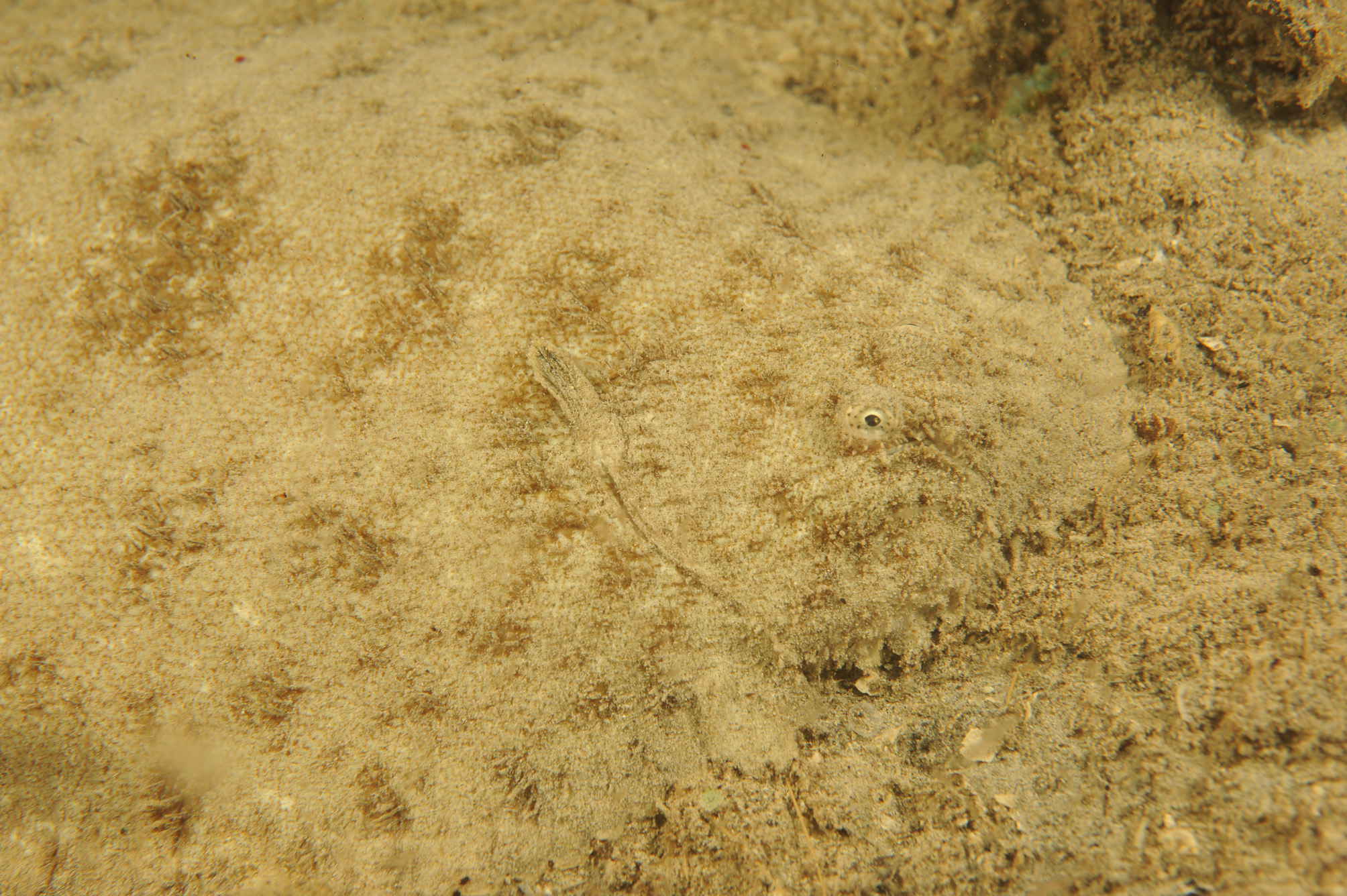
Soleidae
The true soles are a family, Soleidae, of flatfishes. It includes saltwater and brackish water species in the East Atlantic, Indian Ocean, West and Central Pacific Ocean, and the Mediterranean sea. Freshwater species are found in Africa, southern Asia, New Guinea, and Australia. Many soles are important food species: the common sole, Solea solea, is popular in northern Europe and the Mediterranean.
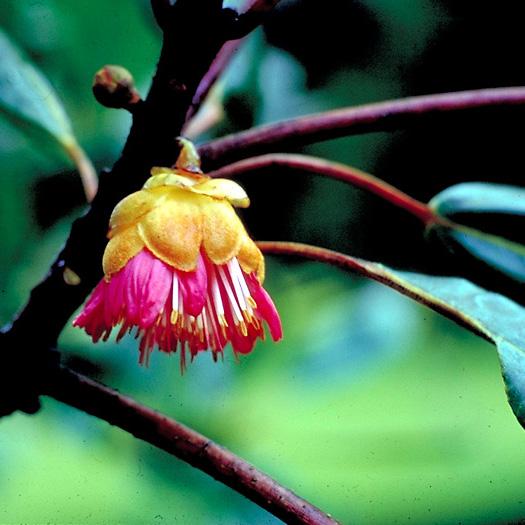
Hamamelidaceae
Hamamelidaceae, commonly referred to as the witch-hazel family, is a family of flowering plants in the order Saxifragales. The clade consists of shrubs and small trees positioned within the woody clade of the core Saxifragales. An earlier system, the Cronquist system, recognized Hamamelidaceae in the Hamamelidales order.

Burseraceae
The Burseraceae are a moderate-sized family of 17-19 genera and about 540 species of woody flowering plants. The actual numbers given in taxonomic sources differ according to taxonomic revision at the time of writing. The Burseraceae are also known as the torchwood family, the frankincense and myrrh family, or simply the incense tree family. The family includes both trees and shrubs; its species are native to tropical regions of Africa, Asia, Australasia, and the Americas.

Lutjanidae
Lutjanidae, the snappers and fusiliers, are a family of percomorph fishes, mainly marine but with some members inhabiting estuaries and, in some cases, fresh water (e.g., Lutjanus goldiei). The family includes about 113 species. Most species are used for food and many are of high economic importance. Many species around the world are known in local languages as red snapper, including species from different genera (including Lutjanus and Pristipomoides)

Euglenoidea
Euglenids or euglenoids are one of the best-known groups of eukaryotic flagellates: single-celled organisms with flagella, or whip-like tails. They are classified in the phylum Euglenozoa, class Euglenida or Euglenoidea. Euglenids are commonly found in fresh water, especially when it is rich in organic materials, but they have a few marine and endosymbiotic members. Many euglenids feed by phagocytosis, or strictly by diffusion. A monophyletic subgroup known as Euglenophyceae have chloroplasts and produce their own food through photosynthesis. This group contains the carbohydrate paramylon.
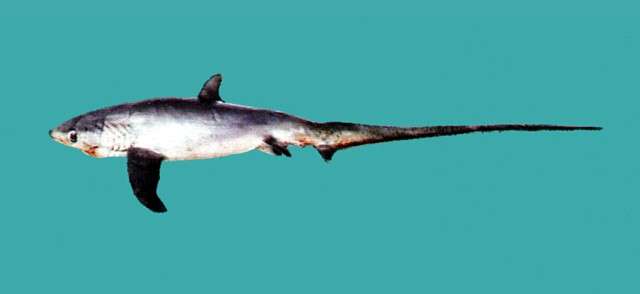
Alopias
genus of sharks

Ambassidae
The Asiatic glassfishes are a family, the Ambassidae, of freshwater and marine ray-finned fishes. Some species are known as perchlets.
Polychrotidae
The Polychrotidae family (sometimes classified as the Polychrotinae subfamily instead) of iguanian lizards contains the living genus Polychrus (commonly called bush anoles) and the extinct genus Afairiguana. The family Polychrotidae was once thought to encompass all anoles, including those in the genus Anolis (which are now included in the family Dactyloidae). Studies of the evolutionary relationships of anoles based on molecular information has shown that Polychrus is not closely related to Anolis, but instead closer to Hoplocercidae. It is therefore not part of Dactyloidae and instead is tre

Handfish
Handfish or warty frogfish are marine, ray-finned fishes belonging to the subfamily Brachionichthyinae, a group that comprises five genera and 14 extant species and is classified within the frogfish family Antennariidae in the order Lophiiformes, the anglerfishes. These benthic, marine fish are unusual in the way that in addition to swimming, they also use their pectoral fins to "walk" on the sea floor.

Koelreuteria
Koelreuteria , also known as chinese lantern tree, is a genus of three species of flowering plants in the family Sapindaceae, native to southern and eastern Asia, as well as the island of Fiji. Many fossil species are also known, suggesting that this genus had a wider range in the past.

Seriola
Seriola is a genus of ray-finned fish, with many species commonly known as amberjacks. Nine extant species are currently recognized, although these were formerly split into many more. Also, several species are currently placed in several other genera of the Carangidae that were originally described under Seriola.
They are a large, carnivorous finfish popularly known for the firm texture and rich flavour of their flesh, which make them an ideal fish for aquaculture. Because specimens caught can weigh up to , and are powerful swimmers and hunters, they are also highly prized by sport fisherman.

Scatophagidae
Scatophagidae, the scats are a small family of ray-finned fishes in the order Acanthuriformes. They are found in the Indo-Pacific region but one species has been introduced elsewhere.
Procaviidae
Hyraxes (), also called dassies, are small, stout, thickset, herbivorous mammals in the family Procaviidae within the order Hyracoidea. Hyraxes are well-furred, rotund animals with short tails. Modern hyraxes are typically between in length and weigh between . They are superficially similar to marmots or over-large pikas but are much more closely related to elephants and sirenians. Hyraxes have a life span of 9 to 14 years. Both types of "rock" hyrax (P. capensis and H. brucei) live on rock outcrops, including cliffs in Ethiopia and isolated granite outcrops called koppies in so

Gymnosarda unicolor
species of fish

Lichia amia
The leerfish or garrick (Lichia amia) is a species of marine fish in the family Carangidae. It is the only extant member of the genus Lichia. It is native to much of the eastern Atlantic Ocean, from the Mediterranean and western Black Sea, north to France, and south along the coastal waters of western Africa, reaching as far south as eastern South Africa. They are an important species in coastal recreational fisheries, especially in Africa.
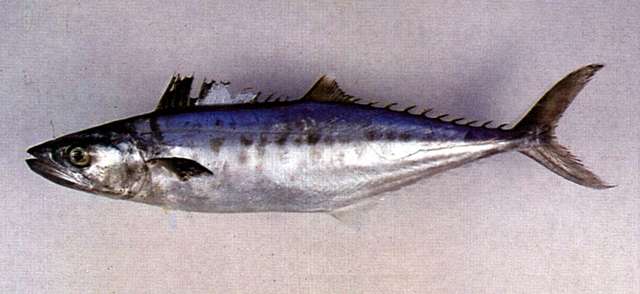
Scomberomorus
Scomberomorus is a genus of ray-finned bony fish in the mackerel family, Scombridae. More specifically, it is a member of the tribe Scomberomorini, commonly known as the Spanish mackerels.
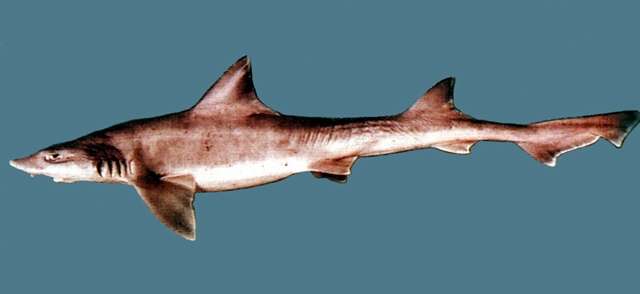
Mustelus
Mustelus, also known as the smooth-hounds, is a genus of sharks in the family Triakidae. The name of the genus comes from the Latin word mustela, meaning weasel. It should not be confused with the name Mustela, which is used for weasels.

Procambarus
Procambarus is a genus of crayfish in the family Cambaridae, all native to North and Central America. It includes a number of troglobitic species, and the marbled crayfish (marmorkrebs), which is parthenogenetic. Originally described as a subgenus for four species, it now contains around 161 species.

Rhizoprionodon
Rhizoprionodon is a genus of requiem sharks, and part of the family Carcharhinidae, commonly known as sharpnose sharks because of their long, pointed snouts.
Alosinae
The Alosidae, or the shads, are a family of clupeiform fishes. The family currently comprises four genera worldwide, and about 32 species.
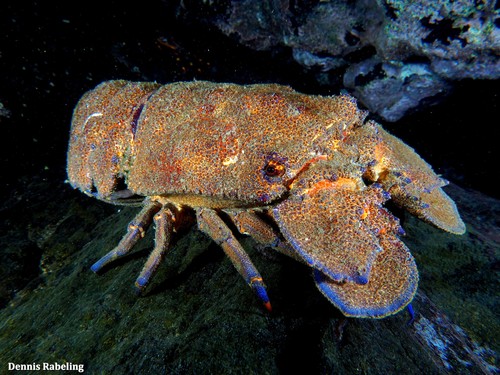
Scyllarides
Scyllarides is a genus of slipper lobsters.
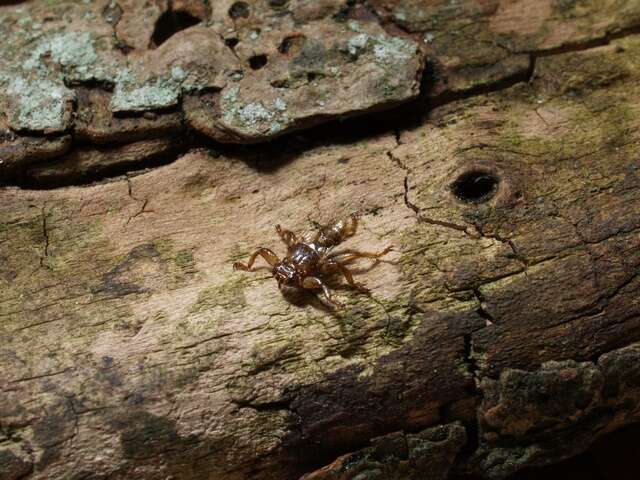
Hippoboscoidea
Hippoboscoidea is a superfamily of the Calyptratae. The flies in this superfamily are blood-feeding obligate parasites of their hosts. Four families are often placed here:

Echelus
Echelus is a genus of eels in the snake-eel family Ophichthidae. Fossils belonging to this genus date back to the Early Eocene.
Glossanodon
Glossanodon is a genus of fishes in the family Argentinidae.
Butidae
Butidae is a family of sleeper gobies in the order Gobiiformes. The family was formerly classified as a subfamily of the Eleotridae but the 5th Edition of Fishes of the World classifies it as a family in its own right. Molecular phylogenetic analyses have demonstrated that the Butidae are a sister clade to the clade containing the families Gobiidae and Gobionellidae and that the Eleotridae is a sister to both of these clades. This means that the Eloetridae as formerly classified was paraphyletic and that its subfamilies should be raised to the status of families.
Holocentrinae
Holocentrinae is a subfamily of Holocentridae containing 40 recognized species and one proposed species. Its members are typically known as squirrelfish and all are nocturnal. All three genera in the subfamily are found in the Atlantic and Holocentrus is restricted to this ocean. Most species in genera Neoniphon and Sargocentron are from the Indo-Pacific region and several of these occur in the Indian Ocean west of the southern tip of India. A fossil genus of the subfamily is Eoholocentrum from the Early Eocene of Italy.
Proxiuber
Proxiuber is a genus of sea snails, marine gastropod molluscs in the family Naticidae, the moon shells. The genus is endemic to New Zealand, with fossils dating back to the early Eocene, found in primarily in New Zealand, with one fossil species in Australia.
Luvarus
Luvarus is a genus of ray-finned fishes belonging to the family Luvaridae. It is the only extant genus in that family and its only extant species is the cosmopolitan louvar (Luvarus imperialis), with one fossil species (L. necopinatus) known from the earliest Eocene of Turkmenistan.
Mauidrillia
Mauidrillia is a genus of sea snails, marine gastropod molluscs in the family Horaiclavidae, the turrids. The genus has one known living member, Mauidrillia felina, found in the waters of South Africa. Fossils of the genus date back to the early Eocene, and are found in Australia, New Zealand, Germany and Japan.
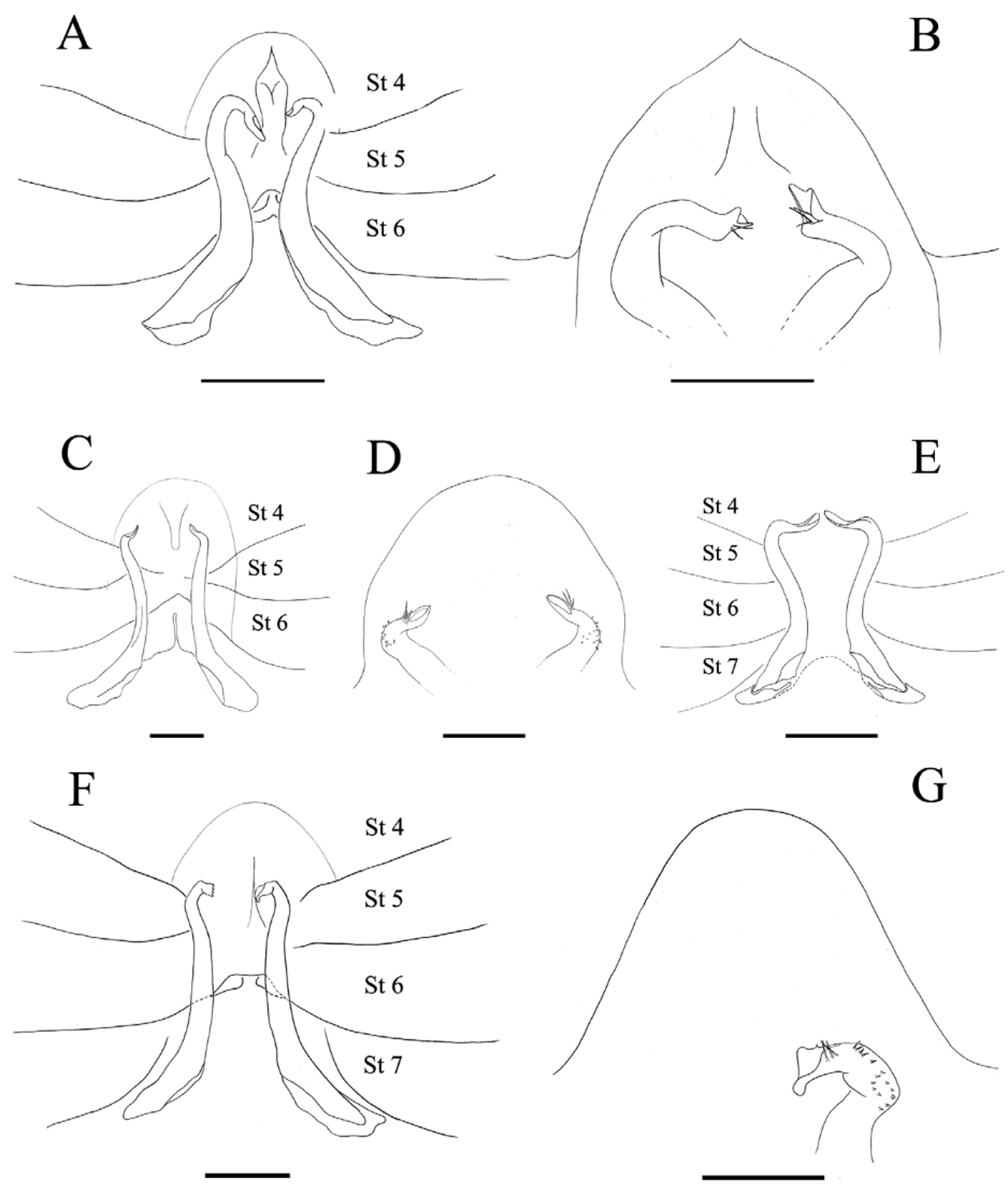
Speocarcinus
Speocarcinus is a genus of crabs in the family Pseudorhombilidae, containing six extant species, one fossil species from the Late Miocene, one fossil species from the Eocene (Lutetian) and one fossil species from the Early Eocene (Ypresian):
Percalates
Percalates (from Perca + Lates) is a genus of ray-finned fish native to both estuarine and freshwater habitats of southeastern Australia. They are the only members of the suborder Percalatoidei, and of their own undescribed family ('Percalatidae').