Category
page 1Filipino cuisine

Colocasia esculenta
Taro (; Colocasia esculenta) is a root vegetable. It is the most widely cultivated species of several plants in the family Araceae that are used as vegetables for their corms, leaves, stems and petioles. Taro corms are a food staple in African, Caribbean, Oceanian, East Asian, Southeast Asian and South Asian cultures (similar to yams).

Momordica charantia
species of plant in the family Cucurbitaceae
Lagenaria siceraria
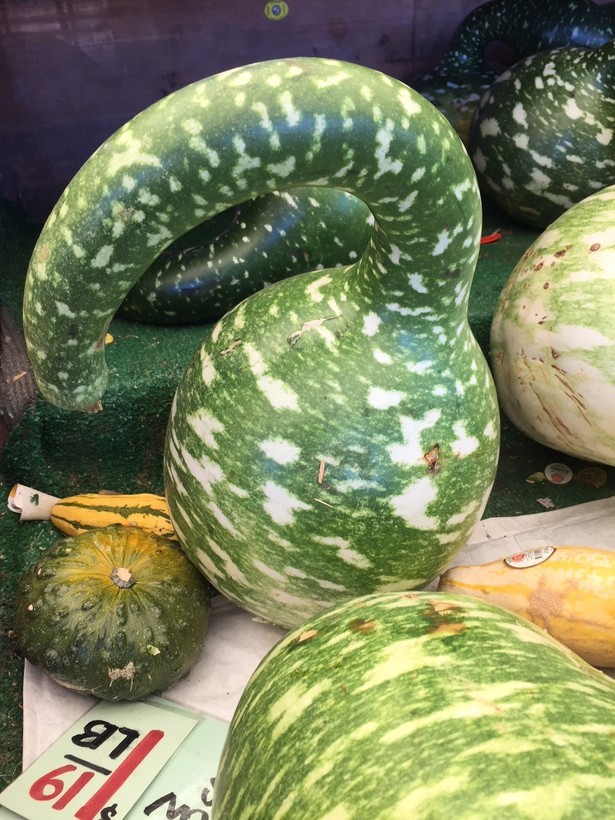
Calabash (; Lagenaria siceraria), also known as bottle gourd, white-flowered gourd, long melon, birdhouse gourd, New Guinea bean, New Guinea butter bean, Tasmania bean, zucca melon and opo squash, is a vine which is grown for its fruit. It belongs to the family Cucurbitaceae, is native to tropical Africa, and cultivated across the tropics. It can be either harvested young to be consumed as a vegetable, or harvested mature to be dried and used as a kitchen utensil (typically as a ladle or bowl), beverage container or a musical instrument. When it is fresh, the fruit has a light green smooth ski

curry
thumb|upright=1.2|Lamb Madras curry, Anglo-Indian, c. 1850
Curry is a dish with a spicy sauce, initially in Indian cuisine, then modified by interchange with the Portuguese, followed by the British, and eventually thoroughly internationalised. Many curries are found in the cuisines of countries in Southeast Asia and East Asia.

blood sausage
sausage filled with blood that are cooked or dried and mixed with a filler until they are thick enough to congeal when cooled

Wax gourd
species of plant, winter melon

Citrus hystrix
species of plant

Chanos chanos
The milkfish (Chanos chanos) is a widespread species of ray-finned fish found throughout the Indo-Pacific. It is the sole living species in the family Chanidae, and the only living member of the genus Chanos.
The repeating scientific name (tautonym) is from Greek ( 'mouth'). They are grouped in the order Gonorhynchiformes and are most closely related to the Ostariophysi—freshwater fishes such as carps, catfish, and loaches.
Edam
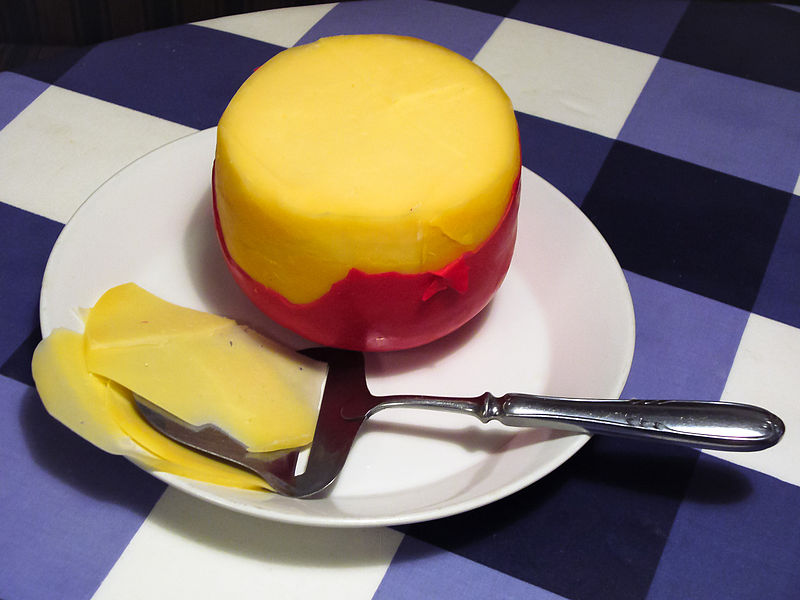
Dutch cheese

calamansi
Calamansi ('''Citrus × microcarpa), also known as calamondin, Philippine lime, or Philippine lemon''', is a citrus hybrid cultivated predominantly in the Philippines. It is native to the Philippines, parts of Indonesia (Borneo, Sumatra, and Sulawesi), Malaysia, and Brunei, as well as Taiwan, and parts of southern China.

Dioscorea alata
species of plant

glutinous rice
type of rice grown mainly in Southeast and East Asia, with opaque grains, very low amylose content; especially sticky when cooked; does not contain gluten

century egg
Chinese egg-based culinary dish
%20caseras.JPG)
empanada
An empanada is a type of baked or fried turnover consisting of pastry and filling, common in Spain, Portugal, other Southern European countries, North African countries, West African countries (where they are known as meatpies in Nigeria), South Asian countries, Latin American countries, and the Philippines. The name comes from the Spanish (to bread, i.e., to coat with bread), and translates as 'breaded', that is, wrapped or coated in bread. They are made by folding dough over a filling, which may consist of meat, cheese, tomato, corn, or other ingredients, and then cooking the resulting turno

cooked rice
rice that has been cooked either by steaming or boiling

satay
Satay or sate is a Southeast Asian dish consisting of small pieces of seasoned meat, seafood or vegetables skewered on sticks and grilled over charcoal. It is typically served with a sauce, most commonly peanut-based and accompanied by rice cakes, cucumber or pickled vegetables. Common ingredients include chicken, beef, goat, pork and seafood, while regional and vegetarian variations are also found.
rice flour
form of flour made from finely milled rice

tamale
A tamale is a traditional Mesoamerican dish made of masa, a dough made from nixtamalized corn, which is steamed in a corn husk or banana leaves. The wrapping can either be discarded prior to eating or used as a plate. Tamales can be filled with meats, cheeses, fruits, vegetables, herbs, chilies, or any preparation according to taste, and both the filling and the cooking liquid may be seasoned.
.jpg)
tilapia
Tilapia ( ) is the common name for nearly a hundred species of cichlid fish from the coelotilapine, coptodonine, heterotilapine, oreochromine, pelmatolapiine, and tilapiine tribes (formerly all were "Tilapiini"), with the economically most important species placed in the Coptodonini and Oreochromini. Tilapia are mainly freshwater fish native to Africa and the Middle East, inhabiting shallow streams, ponds, rivers, and lakes, and less commonly found living in brackish water. Historically, they have been of major importance in artisanal fishing in Africa, and they are of increasing importance in
rendang
Rendang is a fried meat or dry curry made of meat stewed in coconut milk and spices, widely popular across Brunei, Indonesia, Malaysia, Singapore, and the Philippines, where each version is considered local cuisine. It refers to both a cooking method of frying and the dish cooked in that way. The process involves slowly cooking meat in spiced coconut milk in an uncovered pot or pan until the oil separates, allowing the dish to fry in its own sauce, coating the meat in a rich, flavorful glaze.

wonton
A wonton () is a type of Chinese dumpling commonly found across regional styles of Chinese cuisine. It is also spelled wantan or wuntun, a transliteration from Cantonese (), and wenden from Shanghainese (). Even though there are many different styles of wonton served throughout China, Cantonese wontons are the most popular in the West due to the predominance of Cantonese restaurants overseas.

sambal
Sambal (Indonesian and Malay pronunciation: ) is a category of chilli-based sauces or pastes originating in maritime Southeast Asia, particularly within the cuisines of Indonesia, Malaysia, Timor-Leste, Brunei, Singapore, southern Thailand and southern Philippines. Owing to historical connections and migration, sambal is also found in South Africa, Suriname and the Netherlands, while in Sri Lanka a local adaptation is known as sambol. In English, it is commonly described as an “Indonesian condiment” or “Malaysian condiment.”
shrimp paste
fermented condiment
dim sum
style of Chinese cuisine of bite-sized portions served in small steamer baskets or plates
oyster sauce
condiment
corned beef
salt-cured beef product
Filipino cuisine
culinary traditions of the Philippines

ketupat
Ketupat (Indonesian and Malay pronunciation: kəˈt̪upat̪̚) is a type of compressed rice cake commonly found across Southeast Asia, particularly in Indonesia, Malaysia, Brunei, Singapore, Timor-Leste and southern Thailand. It is traditionally made by filling a pouch woven from young palm leaves with rice, which is then boiled until the grains expand and form a firm, compact mass. Ketupat is typically served as an accompaniment to meat, vegetable or coconut milk-based dishes and is widely prepared for festive and ceremonial occasions.

merienda
thumb|Typical merienda fare
thumb|Typical vespertine merienda in the Andalusia|South of Spain
thumb|Traditional serving of merienda in Café El Gato Negro, [[Buenos Aires: medialunas (croissants), café en jarrito (a double espresso coffee) and a little glass of sparkling water]]
thumb|A typical meryenda in the Philippines, [[tsokolate with suman rice cakes and ripe carabao mangoes]]
Merienda is a light meal in southern Europe, particularly Spain (merenda in Galician, berenar in Catalan), Portugal (lanche, merenda) and Italy (merenda), whence the word spread to Serbo-Croatian in, according to di
adobo
Filipino dish composed of chicken/pork cooked in soy sauce and vinegar
liver as food
liver meat used as food

macaroon
alt=A plate of coconut and chocolate coconut macaroons served on Passover|thumb|A plate of coconut and [[chocolate coconut macaroons served on Passover]]
A macaroon ( ) is a small cake or cookie, originally made from ground almonds, egg whites, and sugar, but now often with coconut or other nuts. They may also include jam, chocolate, or other flavorings.
coconut jam
jam made from a base of coconut milk, eggs and sugar
mung bean sprout
sprout of the mung bean

Halo-halo
thumb|upright=0.6|Haluhalo made in Spring Valley, San Diego County, California|Spring Valley, California
Halo-halo, more properly or formally spelled haluhalo, is a popular cold dessert in the Philippines made with crushed ice, evaporated milk or sometimes coconut milk, and flavoring such as ube jam (ube halaya), sweetened kidney beans or garbanzo beans, coconut strips, sago, gulaman (agar), pinipig, boiled taro or soft yams in cubes, flan, slices or portions of fruit preserves, and other root crop preserves. The dessert is often topped with a scoop of ube ice cream and sometimes other fruit-b
.jpg)
sofrito
' (), (), soffritto (), (), () or ' () typically consists of aromatic ingredients cut into small pieces and sautéed or braised in cooking oil for a long period of time over a low heat, then used as a foundation for a variety of dishes. It is a basic preparation in Mediterranean and Latin American cooking.
banana fritter
deep fried banana or plantain

escabeche
__NOTOC__
thumb|Escabeche of tilapia, from the [[Philippines]]
suckling pig
piglet fed on its mother's milk

Adobo
thumb|right|—smoked, ripe jalapeño peppers in
thumb|right|Peruvian chicken made from dried (yellow lantern chili, Capsicum chinense)
' or ' (Spanish: marinade, sauce, or seasoning) is the immersion of food in a stock (or sauce) composed variously of paprika, oregano, salt, garlic, and vinegar to preserve and enhance its flavor. The Portuguese variant is known as . The practice, native to Iberia (Spanish and Portuguese cuisine), was widely adopted in Latin America, as well as Spanish and Portuguese colonies in Africa and Asia.
Caulerpa lentillifera
species of alga
Peanut sauce
Indonesian seasoning originally from Java island

shumai
Shumai () is a type of traditional Chinese dumpling meat made of ground pork. In Cantonese cuisine, it is usually served as a dim sum snack, and is served with an additional serving of soy sauce. In addition to accompanying the Chinese diaspora, variations of shumai can be found in Japan, Southeast Asia, and South America. Variations include the Hawaiian pork hash and the Indonesian siomay. In Australia, it developed into dim sim.

krupuk
Krupuk (), also known as keropok () and kropek () refers to traditional deep-fried crackers made from starch combined with flavouring ingredients such as prawn, fish or other seafood. The food has long-standing traditions throughout maritime Southeast Asia and neighbouring coastal regions, particularly in Indonesia, Malaysia, the Philippines, southern Thailand, Brunei and Singapore.
edible seaweed
algae that can be eaten and used in the preparation of food
coconut rice
coconut-flavoured rice
.jpg)
Misua
Misua (also spelled miswa) is an extremely thin type of noodle made from wheat flour. It is common in East and Southeast Asia, especially in China, Philippines, Taiwan, Malaysia, Indonesia, Singapore, Vietnam, Brunei, and Thailand.

Tapai
thumb|Tapuy, a traditional Ifugao [[rice wine prepared with tapay in the Cordillera highlands of Luzon, Philippines]]
thumb|Dried alcoholic fermented cassava or peuyeum at Yogyakarta, [[Indonesia]]

chicharrón
'''''' is a dish generally consisting of fried pork belly or fried pork rinds. may also be made from chicken, mutton, or beef.
salted duck egg
traditional Asian dish common in several regions

panela
Panela () or rapadura () is an unrefined whole cane sugar, typical of Latin America. It is a solid form of sucrose derived from the boiling and evaporation of sugarcane juice. Panela is known by other names in Latin America, such as chancaca in Chile, Bolivia, and Peru, piloncillo in Mexico (where panela refers to a type of cheese, queso panela). Just like brown sugar, two varieties of piloncillo are available; one is lighter () and one darker (). Unrefined, it is commonly used in Mexico, where it has been around for at least 500 years. Made from crushed sugar cane, the juice is collected, boi
prawn cracker
prawn-flavored cracker
Malay cuisine
Sumatran cuisine
squid as food
squid used as food, commonly eaten in the Mediterranean, in East Asia, and elsewhere
Salpicon
Salpicon (, meaning "hodgepodge" or "medley"; ) is a dish of one or more ingredients diced or minced and bound with a sauce or liquid. There are different versions found in Spanish and the broader Latin American cuisine and Filipino cuisine. A salpicon is sometimes used as stuffing.
Christmas ham
ham eaten for Christmas

pancit
Pancit ( ), also spelled pansit, is a general term referring to various traditional noodle dishes in Filipino cuisine. There are numerous types of pancit, often named based on the noodles used, method of cooking, place of origin or the ingredients. Most pancit dishes are served with calamansi, which adds a citrusy flavor.

Kare-kare
Kare-kare is a Filipino dish featuring a thick savory peanut sauce. It is generally made from a base of stewed oxtail, beef tripe, pork hocks, calves' feet, pig's feet or trotters, various cuts of pork, beef stew meat, and occasionally offal. Vegetables, such as eggplant, Chinese cabbage, or other greens, daikon, green beans, okra, and asparagus beans, are added. The stew is flavored with ground roasted peanuts or peanut butter, onions, and garlic. It is colored with annatto and can be thickened with toasted or plain ground rice.
ropa vieja
dish of mestizo-Hispanic origin whose main ingredient is beef
hash
food