Category
page 1Food colorings

Curcuma longa
Turmeric (), or Curcuma longa (), is a flowering plant in the ginger family Zingiberaceae. It is a perennial, rhizomatous, herbaceous plant native to the Indian subcontinent and Southeast Asia that requires temperatures between and high annual rainfall to thrive. Plants are gathered each year for their rhizomes, some for propagation in the following season and some for consumption or dyeing.

saffron
alt=Saffron|thumb|Saffron crocus, Crocus sativus, with its vivid crimson stigmas and styles

Carthamus tinctorius
thumb|right|250px|Carthamus tinctoriusthumb|300px|right|Worldwide safflower production
thumb|Carthamus tinctorius - MHNT

riboflavin
Riboflavin, also known as vitamin B2, is a vitamin found in food and sold as a dietary supplement. It is essential to the formation of two major coenzymes, flavin mononucleotide and flavin adenine dinucleotide. These coenzymes are involved in energy metabolism, cellular respiration, and antibody production, as well as normal growth and development. The coenzymes are also required for the metabolism of niacin, vitamin B6, and folate. Riboflavin is prescribed to treat corneal thinning, and taken orally, may reduce the incidence of migraine headaches in adults.

caramel
Caramel (, or (US) ) is a range of food ingredients made by heating sugars to high temperatures. It is used as a flavoring in puddings and desserts, as a filling in bonbons or candy bars, as a topping for ice cream and custard, and as a colorant commonly used in drinks.
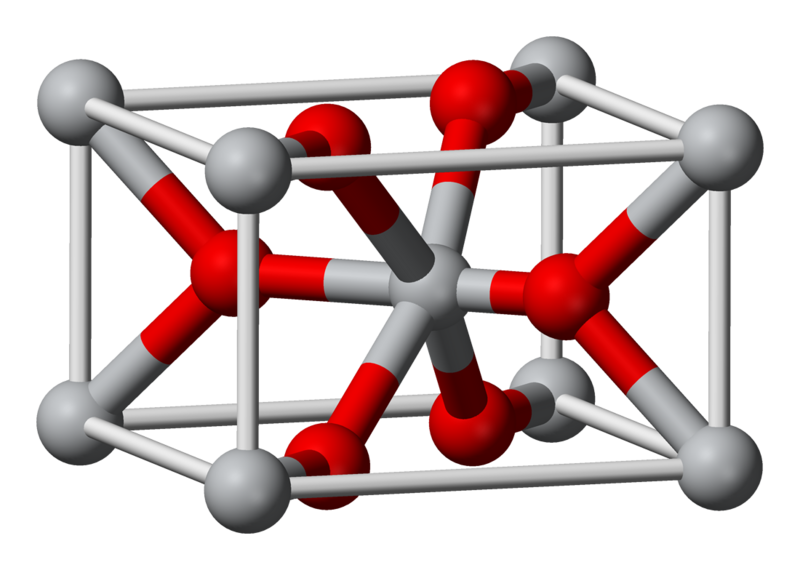
titanium dioxide
chemical compound

carotene
thumb|upright=1.4|A 3-dimensional stick diagram of β-carotene
thumb|Carotene is responsible for the orange colour of carrots and the colours of many other fruits and vegetables and even some animals.
thumb|Lesser flamingo|Lesser flamingos in the [[Ngorongoro Crater, Tanzania. The pink colour of wild flamingos is due to astaxanthin (a carotenoid) they absorb from their diet of brine shrimp. If fed a carotene-free diet they become white.]]

Clitoria ternatea
species of plant originally from Indonesian island of Ternate

lycopene
Lycopene is an organic compound classified as a tetraterpene and a carotene. Lycopene (from the Neo-Latin Lycopersicon, the name of a former tomato genus) is a bright red carotenoid hydrocarbon found in tomatoes and other red fruits and vegetables.

Dactylopius coccus
The cochineal ( , ; Dactylopius coccus) is a scale insect in the suborder Sternorrhyncha, from which the natural dye carmine is derived. A primarily sessile parasite native to tropical and subtropical South America through North America (Mexico and the Southwest United States), this insect lives on cacti in the genus Opuntia, feeding on plant moisture and nutrients. The insects are found on the pads of prickly pear cacti, collected by brushing them off the plants, and dried.

curcumin
Curcumin is a bright yellow chemical produced by plants of the Curcuma longa species. It is the principal curcuminoid of turmeric (Curcuma longa), a member of the ginger family, Zingiberaceae. It is sold as an herbal supplement, cosmetics ingredient, food flavoring, and food coloring.
%2004%20ies.jpg)
carmine
Carmine ()also called cochineal (when it is extracted from the cochineal insect), cochineal extract, crimson lake, or carmine lake is a pigment of a bright-red color obtained from the aluminium complex derived from carminic acid. Specific code names for the pigment include natural red 4, C.I. 75470, or E120. Carmine is also a general term for a particularly deep-red color.

tartrazine
Tartrazine is a synthetic lemon yellow azo dye primarily used as a food coloring. It is also known as E number E102, C.I. 19140, FD&C Yellow 5, Yellow 5 Lake, Acid Yellow 23, Food Yellow 4, and trisodium 1-(4-sulfonatophenyl)-4-(4-sulfonatophenylazo)-5-pyrazolone-3-carboxylate.
lutein
Lutein (; from Latin luteus meaning "yellow") is a xanthophyll and one of 600 known naturally occurring carotenoids. Lutein is synthesized only by plants, and like other xanthophylls is found in high quantities in green leafy vegetables such as spinach, kale and yellow carrots. In green plants, xanthophylls act to modulate light energy and serve as non-photochemical quenching agents to deal with triplet chlorophyll, an excited form of chlorophyll which is overproduced at high light levels during photosynthesis.

spirulina
Dry biomass of cyanobacteria belonging to genus Limnospira, used as dietary supplement and food
food coloring
substance that imparts color when it is added to food or drink

astaxanthin
Astaxanthin is a keto-carotenoid within a group of chemical compounds known as carotenoids, a subclass of the broad group of phytochemicals known as terpenes. Astaxanthin is a metabolite of zeaxanthin and canthaxanthin, containing both hydroxyl and ketone functional groups.
sunset yellow FCF
chemical compound
carmoisine
Azorubine, also known as carmoisine, is an azo dye consisting of two naphthalene subunits. It is a red solid. It is mainly used in foods that are heat-treated after fermentation. It has E number E122.
zeaxanthin
Zeaxanthin is one of the most common carotenoids in nature, and is used in the xanthophyll cycle. Synthesized in plants and some micro-organisms, it is the pigment that gives paprika (made from red sweet peppers), corn, saffron, goji (wolfberries), and many other plants and microbes their characteristic color.
flavin mononucleotide
chemical compound
indigotindisulfonate sodium
chemical compound
erythrosine
Erythrosine, also known as E127 and Red No. 3, is an organoiodine compound, specifically a derivative of fluorone. It is a red-pink dye used for food coloring, cosmetics, hair coloring, pet products, and diverse industrial colorings. It is the disodium salt of 2,4,5,7-tetraiodofluorescein.

Alkanna tinctoria
species of plant
betanin
Betanin, or beetroot red, is a red glycosidic food dye obtained from beets; its aglycone, obtained by hydrolyzing the glucose molecule, is betanidin. As a food additive, its E number is E162. As a food additive, betanin has no safety concerns.

annatto
right|thumb|250px|Open fruit of the achiote tree (Bixa orellana), showing the seeds from which annatto is extracted
canthaxanthin
Canthaxanthin is a keto-carotenoid pigment widely distributed in nature. Carotenoids belong to a larger class of phytochemicals known as terpenoids. The chemical formula of canthaxanthin is C40H52O2. It was first isolated in edible mushrooms. It has also been found in green algae, bacteria, crustaceans, and bioaccumulates in fish such as carp, golden grey mullet, seabream and trush wrasse.
ponceau 4R
chemical compound, food colourant
calcium phosphate
class of chemical compounds
brilliant blue FCF
chemical compound
Green S
chemical compound
Allura Red AC
chemical compound
amaranth
chemical compound
disodium 2-(1,3-dioxo-2,3-dihydro-1H-inden-2-yl)quinoline-6,8-disulfonate
chemical compound
Yellow 2G
chemical compound
Brilliant Black BN
group of stereoisomers
Fast Yellow AB
chemical compound

violaxanthin
Violaxanthin is a xanthophyll pigment with an orange color found in a variety of plants. Violaxanthin is the product of the epoxidation of zeaxanthin where the oxygen atoms are from reactive oxygen species (ROS). Such ROS's arise when a plant is subject to solar radiation so intense that the light cannot all be absorbed by the chlorophyll.
Brown HT
chemical compound
crocin
Crocin is a carotenoid chemical compound that is found in the flowers of crocus and gardenia. Crocin is the chemical primarily responsible for the color of saffron.
Patent Blue V
chemical compound
juglone
Juglone, also called 5-hydroxy-1,4-naphthalenedione (IUPAC) is a phenolic organic compound with the molecular formula C10H6O3. In the food industry, juglone is also known as C.I. Natural Brown 7 and C.I. 75500. It is insoluble in benzene but soluble in dioxane, from which it crystallizes as yellow needles. It is an isomer of lawsone, which is the active dye compound in the henna leaf.
Red 2G
chemical compound
Chrysoine resorcinol
chemical compound
Fast Green FCF
chemical compound
flavoxanthin
Flavoxanthin is a natural xanthophyll pigment with a golden-yellow color found in small quantities in a variety of plants. As a food additive it used under the E number E161a as a food coloring although it is not approved for use in the EU or USA. It is listed as food additive 161a in Australia and New Zealand where it is approved for usage as an ingredient in food products.
food orange 2
chemical compound
rhodoxanthin
Rhodoxanthin is a xanthophyll pigment with a purple color that is found in small quantities in a variety of plants including Taxus baccata and Lonicera morrowii. It is also found in the feathers of some birds. As a food additive it is used under the E number E161f as a food coloring. It is not approved for use in the EU or US; however, it is approved in Australia and New Zealand (where it is listed under its INS number 161f).
caramel color
Brown water soluble food colouring made by dry heating and burning of sugars in the presence of alkali, ammonia, sulphite or combinations thereof
red yeast rice
type of fermented rice
Citrus Red 2
chemical compound
D&C Red 7
chemical compound
apocarotenal
Apocarotenal, or trans-β-apo-8'-carotenal, is a carotenoid found in spinach and citrus fruits. Like other carotenoids, apocarotenal plays a role as a precursor of vitamin A, even though it has 50% less pro-vitamin A activity than β-carotene. The empirical chemical formula for apocarotenal is C30H40O.
alkannin
Alkannin is a natural dye that is obtained from the extracts of the plant dyer's alkanet (Alkanna tinctoria) which is found in the Mediterranean region. The dye is used as a food coloring and in cosmetics; within the European E number schedule, it is numbered E103. It is used as a red-brown food additive in regions such as Australia. Alkannin is deep red in an acid and blue in an alkaline environment. The chemical structure as a naphthoquinone derivative was first determined by Hans Brockmann in 1936. The (R)-enantiomer of alkannin is known as shikonin, and the racemic mixture of the two is kn
rubixanthin
Rubixanthin, or natural yellow 27, is a natural xanthophyll pigment with a red-orange color found in rose hips. As a food additive it used under the E number E161d as a food coloring; it is not approved for use in the USA or EU but is approved in Australia and New Zealand where it is listed as 161d.
Black 7984
chemical compound
Ponceau 6R
chemical compound
citranaxanthin
Citranaxanthin is a carotenoid pigment used as a food additive under the E number E161i as a food coloring. There are natural sources of citranaxanthin, but it is generally prepared synthetically. It is used as an animal feed additive to impart a yellow color to chicken fat and egg yolks.
Scarlet GN
chemical compound
solvent yellow 14
chemical compound