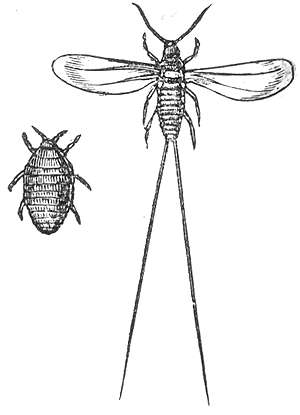
File:Cochineal_drawing.jpg · Wikimedia Commons · See Wikimedia Commons
Dactylopius coccus
Sign in to saveThe cochineal ( , ; Dactylopius coccus) is a scale insect in the suborder Sternorrhyncha, from which the natural dye carmine is derived. A primarily sessile parasite native to tropical and subtropical South America through North America (Mexico and the Southwest United States), this insect lives on cacti in the genus Opuntia, feeding on plant moisture and nutrients. The insects are found on the pads of prickly pear cacti, collected by brushing them off the plants, and dried.
OverviewAI-generated
Dactylopius coccus is a species of insect classified within the kingdom Animalia, phylum Arthropoda, and class Insecta. It belongs to the order Hemiptera and the family Dactylopiidae.
Records for this organism are held by institutions including NMSU, CASC, and NHMUK. Specimens have been documented in the United States, Canary Islands, India, United Kingdom, and Egypt. The species has 556 occurrences recorded in GBIF and 103 records in iDigBio, which includes 91 media items.
Synthesized by Vinony from 17 facts across 5 sources: Wikidata, GBIF, Gbif Occ, iDigBio, Vinony graph. Generated from structured data (not the Wikipedia text) and checked against those facts — may still contain errors.
In the Vinony graph
Within Vinony's link graph, Dactylopius coccus is referenced by 575 other articles, and connects out to Red coat, Japan and Italy.
Vinony files it under Animal dyes, Dactylopiidae and E-number additives.
Its subject is documented across 46 Wikipedia language editions.
Species
SPECIES
- KingdomAnimalia
- PhylumArthropoda
- ClassInsecta
- OrderHemiptera
- FamilyDactylopiidae
via GBIF
Museum specimens
- Specimen records
- 103
- With media
- 91
- Family
- Dactylopiidae
- Collections
- NMSU, CASC, NHMUK
- Recorded in
- United States, Canary Islands, India, United Kingdom, Egypt, Peru, Spain, Greece
Wikidata facts
- Instance of
- taxon
- Parent taxon
- Dactylopius
- Image
- Cochonilha.jpg
Show 7 more facts
- taxon name
- Dactylopius coccus
- taxon rank
- species
- Commons category
- Dactylopius coccus
- Commons gallery
- Dactylopius coccus
- diel cycle
- diurnality
- short name
- D. coccus
- described by source
- Encyclopædia Britannica 11th edition
Sources (2)
via Wikidata · CC0
~26 min read
Encyclopedic overview
25 sectionsContents
- Etymology
- ''Dactylopius coccus''
- Life cycle
- Host cacti
- Predation
- Farming
- Failed farming in Australia
- Failed farming in Ethiopia
- Biocontrol in South Africa
- Carmine
- Preparation
- History
- Pre-Columbian dye
- Use as pigment
- Comparable colors
- Colonial production export
- Production elsewhere
- Competition from artificial dyes
- Modern uses
- Risks and labeling
- Explanatory notes
- See also
- References
- Further reading
- External links
The cochineal ( , ; Dactylopius coccus) is a scale insect in the suborder Sternorrhyncha, from which the natural dye carmine is derived. A primarily sessile parasite native to tropical and subtropical South America through North America (Mexico and the Southwest United States), this insect lives on cacti in the genus Opuntia, feeding on plant moisture and nutrients. The insects are found on the pads of prickly pear cacti, collected by brushing them off the plants, and dried.
thumb|250 px|Chemical structure of carminic acid, the predator-deterring substance found in high concentration in cochineal insects: The insoluble aluminium and calcium salts of this acid form red and purple dyes called "[[carmine".]] The insect produces carminic acid that deters predation by other insects. Carminic acid, typically 17–24% of dried insects' weight, can be extracted from the body and eggs, then mixed with aluminium or calcium salts to make carmine dye, also known as cochineal. Today, carmine is primarily used as a colorant in food and in lipstick (E120 or Natural Red 4).
Excerpted from Wikipedia’s “Dactylopius coccus” article, available under the CC BY-SA 4.0 licence.