Category
page 1Former countries in West Asia

Soviet Union
The Union of Soviet Socialist Republics (USSR), also known as the Soviet Union, was a transcontinental country that spanned much of Eurasia from 1922 until its dissolution in 1991. It was the world's third-most populous country, largest by area, and bordered twelve countries. A diverse multinational state, it was organized as a federal union of national republics, the largest and most populous being the Russian Soviet Federative Socialist Republic. In practice, its government and economy were highly centralized. As a one-party state governed by the Communist Party, it was the flagship communist state. Its capital and largest city was Moscow.

Roman Empire
period of ancient Rome following the Republic

Byzantine Empire
Roman Empire during Late Antiquity and the Middle Ages

Roman Republic
period of ancient Roman civilization (509 BC–27 BC)

Phoenicia
Phoenicians were an ancient Semitic people who inhabited city-states in Canaan along the Levantine coast of the eastern Mediterranean, primarily in present-day Lebanon and parts of coastal Syria. Their maritime civilization expanded and contracted over time, with its cultural core stretching from Arwad to Mount Carmel. Through trade and colonization, the Phoenicians extended their influence across the Mediterranean, from Cyprus to the Iberian Peninsula, leaving behind thousands of inscriptions.

Umayyad Caliphate
second Islamic caliphate (661–750 CE)

United Arab Republic
Middle Eastern state between 1958 and 1961 in the present territories of Egypt and Syria

Mandatory Palestine
League of Nations Mandate in the Middle East under British administration (1920–1948)

Kingdom of Jerusalem
medieval Christian kingdom in the Middle East
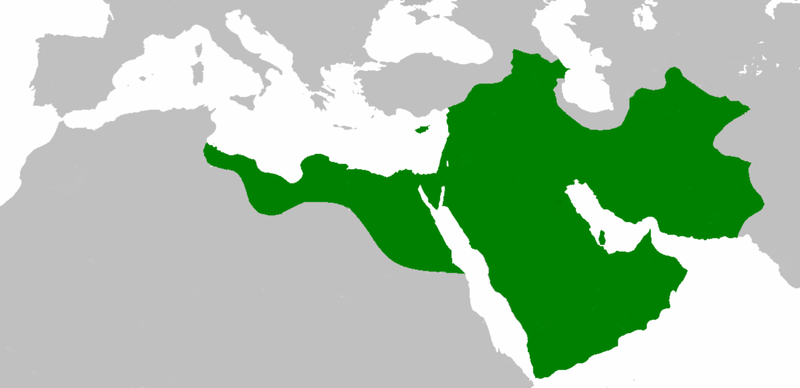
Rashidun Caliphate
first caliphate established after the death of the Islamic prophet Muhammad (632–661)

Mitanni
Mitanni or Mittani (–1260 BC), earlier called Ḫabigalbat in old Babylonian texts, ; Ḫanigalbat or Ḫani-Rabbat in Assyrian records, or Naharin in Egyptian and some Akkadian texts, was a Hurrian-speaking state in northern Syria and southeast Anatolia (modern-day Turkey) with Indo-Aryan linguistic and political influences. Since no histories, royal annals or chronicles have yet been found in its excavated sites, knowledge about Mitanni is sparse compared to the other powers in the area, and dependent on what its neighbours commented in their texts.
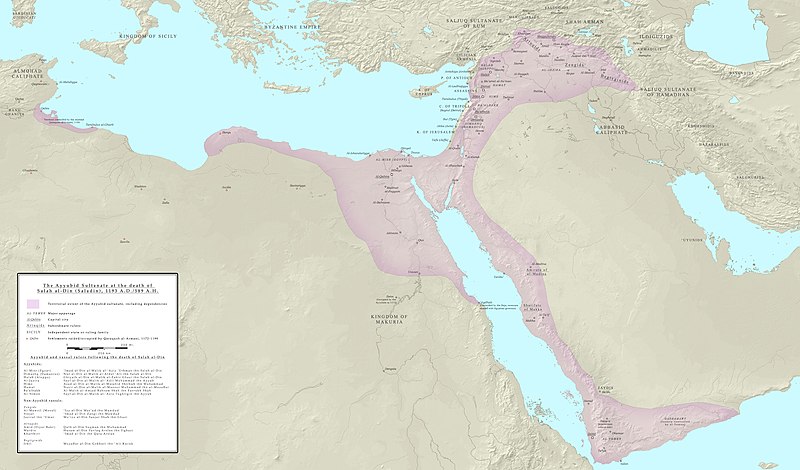
Ayyubid dynasty
Kurdish dynasty from 1171 to 1341

Cilicia
Cilicia (, ) is a geographical region of southern Anatolia in West Asia, extending inland from the northeastern coasts of the Mediterranean Sea. Cilicia borders Pamphylia to the west, Lycaonia and Cappadocia to the north, Commagene to the north-east, Syria to the east and the Mediterranean Sea to the south. Cilicia has a population ranging over six million, concentrated mostly at the Cilician plain (). The region includes the provinces of Mersin, Adana, Osmaniye and Hatay.

Mamluk Sultanate of Egypt
state in Egypt, Hejaz and the Levant (1250–1517)

Transcaucasian Socialist Federative Soviet Republic
republic of the Soviet Union (1922 – 1936)

South Yemen
1967–1990 state in Western Asia

Kingdom of Iberia
ancient Georgian kingdom of Kartli

Colchis
In classical antiquity and Greco-Roman geography, Colchis (; ) was an exonym for the Georgian polity of Egrisi () located on the eastern coast of the Black Sea, centered in present-day western Georgia also including the region of Abkhazia.
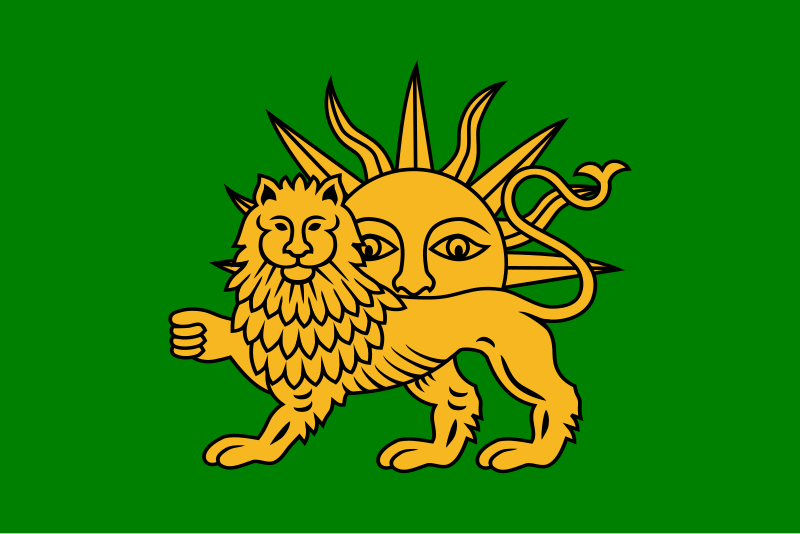
Safavid Iran
historical empire that existed between 1501 and 1736

Kingdom of Israel
possible Israelite kingdom of Israel and Judah (c. 1047–930 BCE)

Qara Qoyunlu
Persianate Muslim Turkoman monarchy (1374–1468)

Galatia
Galatia (; , Galatía, ) was an ancient area in the highlands of central Anatolia, roughly corresponding to the provinces of Ankara and Eskişehir in modern Turkey. Galatia was named after the Gauls from Thrace (cf. Tylis), who settled here and became a small transient foreign tribe in the 3rd century BC, following the Gallic invasion of the Balkans in 279 BC.

Roman Syria
Roman province (64 BC - 198 AD)

Atropatene
Atropatene (; ; ), also known as Atropatia or Atropatian Media (; ), was an ancient Iranian kingdom established in by the Persian satrap Atropates (). The kingdom, mostly centered around the present-day Azerbaijan region in northwestern Iran, was ruled by Atropates' descendants until the early 1st-century AD, when the Parthian Arsacid dynasty supplanted them. It was conquered by the Sasanians in 226, and turned into a province governed by a marzban ("margrave"). Atropatene was the only Iranian region to remain under Zoroastrian authority from the Achaemenids to the Arab conquest without interr

First Republic of Armenia
Armenian state existing from 1918–1920

Yemen Republic
former country

Transcaucasian Democratic Federative Republic
short-lived South Caucasian state (1918)

Kingdom of Hejaz
former country

Qarmatians
The Qarmatians were an Isma'ili Shia militant movement led by a dynasty of Persian descent, centred in Al-Ahsa in Eastern Arabia, where they established a religious state in 899 CE. Its members were part of a movement that adhered to a syncretic branch of Sevener Ismaili Shia Islam, and were ruled by a dynasty founded by Abu Sa'id al-Jannabi. They rejected the claim of Fatimid Caliph Abdallah al-Mahdi Billah to imamate and clung to their belief in the coming of the Mahdi, and they revolted against the Fatimid and Abbasid Caliphates.
Republic of Mahabad
1946 unrecognised Kurdish state in Iran
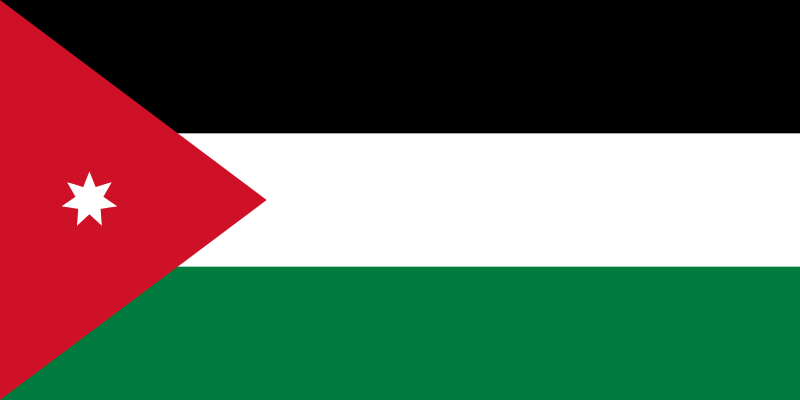
Emirate of Transjordan
former country in the Middle East
Khedivate of Egypt
1867-1914 monarchy in Northeastern Africa

French Mandate for Syria and the Lebanon
League of Nations mandate of France in the Middle East (1923–1946)
Sultanate of Egypt
1914-1922 sultanate in Northeastern Africa
French mandate of Lebanon
mandate of the French Third Republic, the predecessor of modern Lebanon, existed between 1920 and 1943
Mandatory Iraq
former country
Ba'athist Syria
Syrian state from 1963 to 2024
Ziyarid dynasty
Daylmian dynasty ruling the north of Iran (930–1090)
Second Syrian Republic
Republic between 1950 and 1963
Hatay State
former country in western Asia
Trucial States
British protectorate 1820–1971 in Persian Gulf, precursor to United Arab Emirates
First Saudi State
1727–1818 included most of Arabian Peninsula
Samanid Empire
former state in Central Asia
Second Saudi State
1818– 1891 country in Arabian Peninsula
Colony of Aden
1937-1967 UK possession on the Arab Peninsula

Kalba
Kalba () is a city in the Emirate of Sharjah in the United Arab Emirates (UAE). It is an exclave of Sharjah lying on the Gulf of Oman coast north of Oman. Khor Kalba (Kalba Creek), an important nature reserve and mangrove swamp, is located south of the town by the Omani border.
Q130802
former state in the French Mandate of Syria
Kingdom of Kakheti
1465–1762 kingdom in eastern Georgia
Protectorate of South Arabia
former country
Aden Protectorate
1869-1969 UK possession on the Arab Peninsula

Kizzuwatna
Kizzuwatna () was an ancient Anatolian kingdom attested in written sources from the end of the 16th century BC onwards. Although its origins remain obscure, the Middle Bronze Age in Cilicia (ca. 2000–1550 BC) may be regarded as its possible formative period. Kizzuwatna was situated primarily in the Cilician Plain of southeastern Anatolia, near the Gulf of İskenderun, in modern-day Turkey. It was bounded by the Central Taurus Mountains and the Amanus Mountains. The centre of the kingdom was the city of Kummanni, located in the highlands.
Kingdom of Kurdistan
former country
Jabal Druze
historical state in the French Mandate in Palestine
State of Aleppo
former country

Qataban
Qataban () was an ancient Yemenite kingdom in South Arabia that existed from the early 1st millennium BCE to the late 1st or 2nd centuries CE.
State of Syria
former country
Beylik of Dulkadir
former country

Chobanids
The Chobanids or the Chupanids () were descendants of a Mongol family of the Suldus clan that came to prominence in 14th century Persia. At first serving under the Ilkhans, they took de facto control of the territory after the fall of the Ilkhanate. The Chobanids ruled over Azerbaijan (where they were based), Arrān, parts of Asia Minor, Mesopotamia, and west central Persia, while the Jalayirids took control in Baghdad.
Federation of the Emirates of South Arabia
organization of states within the British Aden Protectorate in what would become South Yemen
Khanates of the Caucasus
Various administrative units in the South Caucasus governed by a hereditary or appointed ruler under the official rule of Iran.