Category
page 1Immune system

immunity
biological system

allergy
An allergy is an exaggerated immune response where the body mistakenly identifies an ordinarily harmless allergen as a threat. Allergic reactions give rise to allergic diseases such as hay fever, allergic conjunctivitis, allergic asthma, atopic dermatitis, food allergies, and anaphylaxis. Symptoms of allergic diseases may include red eyes, an itchy rash, sneezing, coughing, a runny nose, shortness of breath, or swelling.

spleen
alt=3D medical animation still showing structure of as well as location of the spleen in human body|thumb|A 3D medical animation still of spleen structure and exact location

white blood cell
type of cells of the immunological system

thymus
The thymus (: thymuses or thymi) is a specialized primary lymphoid organ of the immune system. Within the thymus, T cells mature. T cells are critical to the adaptive immune system, where the body adapts to specific foreign invaders. The thymus is located in the upper front part of the chest, in the anterior superior mediastinum, behind the sternum, and in front of the heart. It is made up of two lobes, each consisting of a central medulla and an outer cortex, surrounded by a capsule.

pus
Pus is an exudate, typically white-yellow, yellow, or yellow-brown, formed at the site of inflammation during infections, regardless of cause.

lymph node
organ of the lymphatic system

tonsil
The tonsils ( ) are a set of lymphoid organs facing into the aerodigestive tract, which is known as Waldeyer's tonsillar ring and consists of the adenoid tonsil (or pharyngeal tonsil), two tubal tonsils, two palatine tonsils, and the lingual tonsils. These organs play an important role in the immune system.

lymphocyte
A lymphocyte is a type of white blood cell (leukocyte) in the immune system of most vertebrates. Lymphocytes include T cells (for cell-mediated and cytotoxic adaptive immunity), B cells (for humoral, antibody-driven adaptive immunity), and innate lymphoid cells (ILCs; "innate T cell-like" cells involved in mucosal immunity and homeostasis), of which natural killer cells are an important subtype (which functions in cell-mediated, cytotoxic innate immunity). They are the main type of cell found in lymph, which prompted the name "lymphocyte" (with cyte meaning cell). Lymphocytes make up between 1

antigen
thumb|255px|An illustration that shows how antigens induce the immune system response by interacting with an [[antibody that matches the molecular structure of an antigen]]

histamine
Histamine or histamin is an organic nitrogenous compound involved in local immune responses communication, as well as regulating physiological functions in the gut and acting as a neurotransmitter for the brain, spinal cord, and uterus. Discovered in 1910, histamine has been considered a local hormone (autocoid) because it is produced without involvement of the classic endocrine glands; however, in recent years, histamine has been recognized as a central neurotransmitter. Histamine is involved in the inflammatory response and has a central role as a mediator of itching. As part of an immune re

T-lymphocytes
type of lymphocyte

monocyte
Monocytes are a type of leukocyte or white blood cell. They are the largest type of leukocyte in the blood and can differentiate into macrophages and monocyte-derived dendritic cells. As a part of the vertebrate innate immune system monocytes also influence adaptive immune responses and exert tissue repair functions. There are at least three subclasses of monocytes in human blood based on their phenotypic receptors.

macrophage
Macrophages (; abbreviated Mφ, MΦ or MP) are a type of white blood cell of the innate immune system that engulf and digest pathogens, such as cancer cells, microbes, cellular debris and foreign substances, which do not have proteins that are specific to healthy body cells on their surface. This self-protection method can be contrasted with that employed by Natural Killer cells. This process of engulfment and digestion is called phagocytosis; it acts to defend the host against infection and injury.

B-cell
type of white blood cell

phagocyte
thumb|Scanning electron microscope|Scanning electron micrograph of a neutrophil phagocytosing anthrax bacilli (orange)|alt= Long rod-shaped bacteria, one of which has been partially engulfed by a larger blob-shaped white blood cell. The shape of the cell is distorted by undigested bacterium inside it.

allergen
An allergen is an otherwise harmless substance that triggers an allergic reaction in sensitive individuals by stimulating an immune response.

cytokine
thumb|264x264px|Cytokines (small pink particles) being secreted in a medical animation

complement system
part of the immune system that enhances (complements) the ability of antibodies and phagocytic cells to clear microbes and damaged cells from an organism, promotes inflammation, and attacks the pathogen's cell membrane
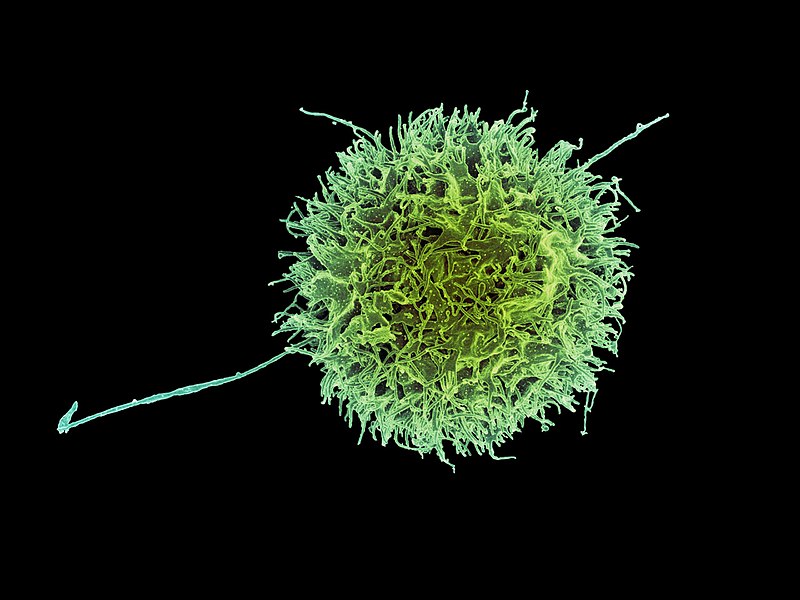
natural killer cell
type of cytotoxic lymphocyte
psychosomatic medicine
interdisciplinary medical field exploring the relationships among social, psychological, and behavioral factors on bodily processes and quality of life in humans and animals
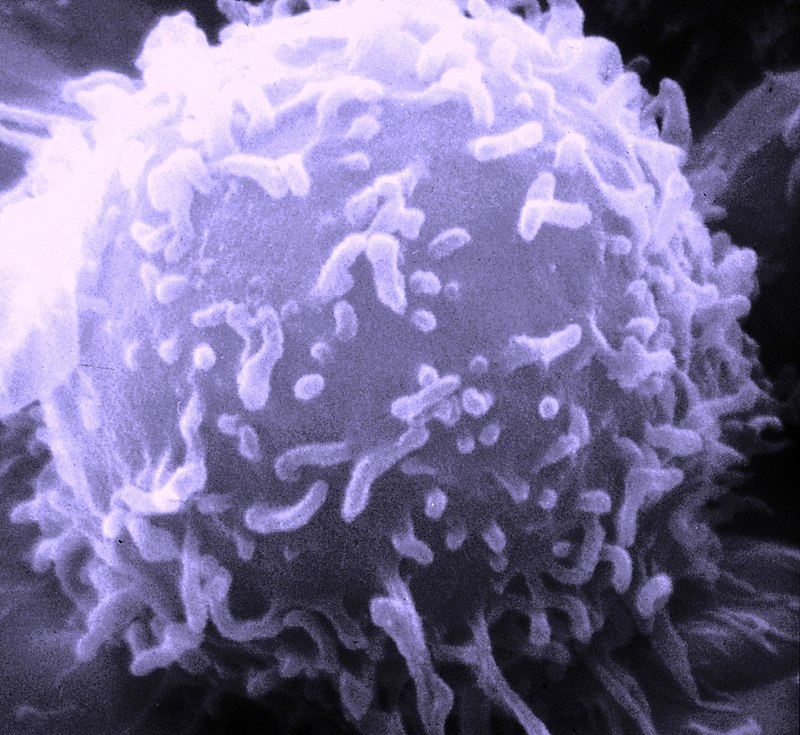
adaptive immune system
subsystem of the overall immune system that is composed of highly specialized, systemic cells and processes that eliminate pathogens or prevent their growth

CRISPR
thumb|262px|Diagram of the CRISPR prokaryotic antiviral defense mechanism
CRISPR (; acronym for clustered regularly interspaced short palindromic repeats) is a family of DNA sequences found in the genomes of prokaryotic organisms such as bacteria and archaea. Each sequence within an individual prokaryotic CRISPR is derived from a DNA fragment of a bacteriophage that had previously infected the prokaryote or one of its ancestors. These sequences are used to detect and destroy DNA from similar bacteriophages during subsequent infections. Hence these sequences play a key role in the antiviral (i.

immunization
thumb|Dr. Schreiber of San Augustine giving a typhoid inoculation at a rural school, [[San Augustine County, Texas. Transfer from U.S. Office of War Information, 1944.]]
Immunization, or immunisation, is the process by which an individual's immune system becomes fortified against an infectious agent (known as the immunogen). When this system is exposed to molecules that are foreign to the body, called non-self, it will orchestrate an immune response, and it will also develop the ability to quickly respond to a subsequent encounter because of immunological memory. This is a function of the adap
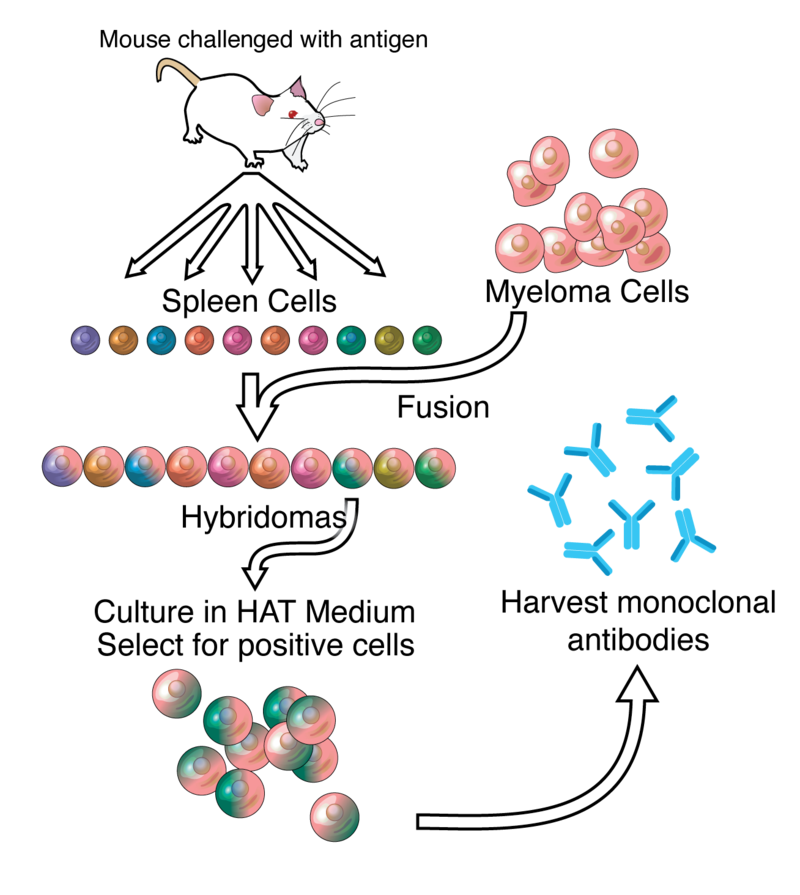
monoclonal antibody
monospecific antibody that is made by identical immune cells that are all clones of a unique parent cell

innate immune response
one of the two main immunity strategies found in vertebrates
major histocompatibility complex
set of genes for cell surface proteins essential for the acquired immune system to recognize foreign molecules in vertebrates, which in turn determines histocompatibility
plasma cell
white blood cell that secretes large volumes of antibodies

immunosuppression
Immunosuppression is a reduction of the activation or efficacy of the immune system. Some portions of the immune system itself have immunosuppressive effects on other parts of the immune system, and immunosuppression may occur as an adverse reaction to treatment of other conditions.
T helper cell
type of immune cell
superoxide
In chemistry, a superoxide is a compound that contains the superoxide ion, which has the chemical formula . The systematic name of the anion is dioxide(1−). The reactive oxygen ion superoxide is particularly important as the product of the one-electron reduction of dioxygen , which occurs widely in nature. Molecular oxygen (dioxygen) is a diradical containing two unpaired electrons, and superoxide results from the addition of an electron which fills one of the two degenerate molecular orbitals, leaving a charged ionic species with a single unpaired electron and a net negative charge of −
growth factor
naturally occurring substance capable of stimulating cellular growth

antitoxin
thumb|A vintage 1895 vial of diphtheria antitoxin.|252x252px

haptens
Haptens (derived from the Greek haptein, meaning “to fasten”) are small molecules that elicit an immune response only when attached to a large carrier such as a protein; the carrier may be one that also does not elicit an immune response by itself. The mechanisms of absence of immune response may vary and involve complex immunological interactions, but can include absent or insufficient co-stimulatory signals from antigen-presenting cells.
thumb|445x445px|Attaching of haptens to a carrier molecule lead to a complete antigen.

antiserum
In immunology, antiserum is a blood serum containing antibodies (either monoclonal or polyclonal) that is used to spread passive immunity to many diseases via blood donation (plasmapheresis). For example, convalescent serum, or passive antibody transfusion from a previous human survivor, was the only known effective treatment for Ebola infection with a high success rate of 7 out of 8 patients surviving.
human leukocyte antigen
a gene complex responsible for the regulation of the immune system in humans
immune response
immune system process that functions in the calibrated response of an organism to a potential internal or invasive threat
V(D)J recombination
process in which immune receptor V, D, and J, or V and J gene segments, are recombined within a single locus
cell-mediated immunity
immune response that does not involve antibodies
.jpg)
empyema
thumb|Empyema
acute-phase proteins
proteins secreted into the blood by hepatocytes in response to trauma, inflammation or disease

opsonin
Opsonins are extracellular proteins that, when bound to substances or cells, induce phagocytes to phagocytose the substances or cells with the opsonins bound. Thus, opsonins act as tags to label things in the body that should be phagocytosed (i.e. eaten) by phagocytes (cells that specialise in phagocytosis, i.e. cellular eating). Different types of things ("targets") can be tagged by opsonins for phagocytosis, including: pathogens (such as bacteria), cancer cells, aged cells, dead or dying cells (such as apoptotic cells), excess synapses, or protein aggregates (such as amyloid plaques). Opsoni

Cas9
Cas9 (CRISPR-associated protein 9, formerly Cas5, Csn1, or Csx12) is a DNA cutting enzyme that is part of the CRISPR immune system in bacteria and archaea. It has been adapted to be used as a CRISPR genome editing tool that enables targeted modification of DNA sequences and permanently changes a cell’s genome.
chimeric antigen receptor
artificial T-cell receptor for use in immunotherapy
pattern recognition receptors
family of cell surface receptors that bind conserved molecular structures present in pathogens

superantigen
thumb|right|Staphylococcal Enterotoxin B|SEB, a typical bacterial superantigen (PDB:3SEB). The β-grasp domain is shown in red, the β-barrel in green, the "[[disulfide loop" in yellow.]]
thumb|right|SEC3 (yellow) complexed with an MHC class II molecule (green & cyan). The SAgs binds adjacent to the antigen presentation cleft (purple) in the MHC-II.
thumb|Schematic representation of MHC class II.
thumb|The T-cell receptor complex with TCR-α and TCR-β chains, CD3 and ζ-chain accessory molecules.
antimicrobial peptide
class of peptides that have antimicrobial activity
clonal selection
model of the immune system response to infection
bursa of Fabricius
epithelial outgrowth of the cloaca in birds
somatic hypermutation
immunity adaptation by B cell
vernix caseosa
waxy or cheese-like white substance found coating the skin of newborn human babies
memory B cell
cell type
immunological memory
altered state of immunologic responsiveness resulting from initial contact with antigen
pathogen-associated molecular pattern
pattern of the immune system
cross-reactivity
Cross-reactivity, in a general sense, is the reactivity of an observed agent which initiates reactions outside the main reaction expected. This has implications for any kind of test or assay, including diagnostic tests in medicine, and can be a cause of false positives. In immunology, the definition of cross-reactivity refers specifically to the reaction of the immune system to antigens. There can be cross-reactivity between the immune system and the antigens of two different pathogens, or between one pathogen and proteins on non-pathogens, which in some cases can be the cause of allergies.
polyclonal antibodies
type of immunoglobulin
memory T cell
cell type
immune complex
Molecule formed from the binding of multiple antigens to antibodies
abzyme
An abzyme (from antibody and enzyme), also called catmab (from catalytic monoclonal antibody), and most often called catalytic antibody or sometimes catab, is a monoclonal antibody with catalytic activity. Abzymes are usually raised in lab animals immunized against synthetic haptens, but some natural abzymes can be found in normal humans (anti-vasoactive intestinal peptide autoantibodies) and in patients with autoimmune diseases such as systemic lupus erythematosus, where they can bind to and hydrolyze DNA. To date abzymes display only weak, modest catalytic activity and have not proved to be
Neutrophil extracellular traps
networks of extracellular fibers released by neutrophils