Category
page 1Infectious diseases

virus
A virus is a submicroscopic infectious agent that replicates only inside the living cells of an organism. Viruses infect all life forms, from animals and plants to microorganisms, including bacteria and archaea. Viruses are found in almost every ecosystem on Earth and are the most numerous type of biological entity. Since Dmitri Ivanovsky's 1892 article describing a non-bacterial pathogen infecting tobacco plants and the discovery of the tobacco mosaic virus by Martinus Beijerinck in 1898, more than 16,000 of the millions of virus species have been described in detail. The study of viruses is

rabies
Rabies is a zoonotic viral disease that causes acute and severe encephalitis in humans and other mammals. It was historically referred to as hydrophobia ("fear of water") because its victims panic when offered liquids to drink. Early symptoms can include fever and abnormal sensations at the site of exposure, which are followed by nausea, vomiting, violent movements, uncontrolled excitement, fear of water, an inability to move parts of the body, confusion, and/or loss of consciousness. Once symptoms appear, the result is virtually always death. The time period between contracting the disease an
pneumonia
Pneumonia is an inflammatory condition of the lung primarily affecting the small air sacs known as alveoli. Symptoms typically include some combination of productive or dry cough, chest pain, fever, and difficulty breathing. The severity of the condition is variable.
%20on%20the%20surface%20of%20a%20tongue-CDC.jpg)
syphilis
Syphilis () is a sexually transmitted infection caused by the bacterium Treponema pallidum subspecies pallidum. The signs and symptoms depend on the stage it presents: primary, secondary, latent or tertiary. The primary stage classically presents with a single chancre (a firm, painless, non-itchy skin ulceration usually between 1 cm and 2 cm in diameter), though there may be multiple sores. In secondary syphilis, a diffuse rash occurs, which frequently involves the palms of the hands and soles of the feet. There may also be sores in the mouth or vagina. Latent syphilis has no symptom

infection
An infection is the invasion of tissues by pathogens, their multiplication, and the reaction of host tissues to the infectious agent and the toxins they produce. An infectious disease, also known as a transmissible disease or communicable disease, is an illness resulting from an infection.

gastroenteritis
Gastroenteritis, also known as infectious diarrhea, is an inflammation of the gastrointestinal tract including the stomach and intestine. Symptoms may include diarrhea, vomiting, and abdominal pain. Fever, lack of energy, and dehydration may also occur. This typically lasts less than two weeks. Although it is not related to influenza, in Canada and the United States it is often referred to as "stomach flu".
sepsis
Sepsis is a potentially life-threatening condition that arises when the body's dysregulated response to infection causes injury to its own tissues and organs.

pathogen
In biology, a pathogen (, "suffering", "passion" and , "producer of"), in the oldest and broadest sense, is any organism, agent or micro-organism that can produce disease. A pathogen may also be referred to as an infectious agent, or simply a germ.

encephalitis
Encephalitis (, ) is inflammation of the brain. The severity can be variable with symptoms including reduction or alteration in consciousness, aphasia, headache, fever, confusion, a stiff neck, and vomiting. Complications may include seizures, hallucinations, trouble speaking, memory problems, and problems with hearing.

social distancing
reduction of human social interaction in an effort to prevent the spread of infectious disease

prion
.jpg)
zoonosis
A zoonosis (; : zoonoses) or zoonotic disease is an infectious disease of humans caused by a pathogen (an infectious agent, such as a virus, bacterium, parasite, fungi or prion) which can jump from a non-human animal to a human. When humans infect non-humans, it is called reverse zoonosis or anthroponosis.
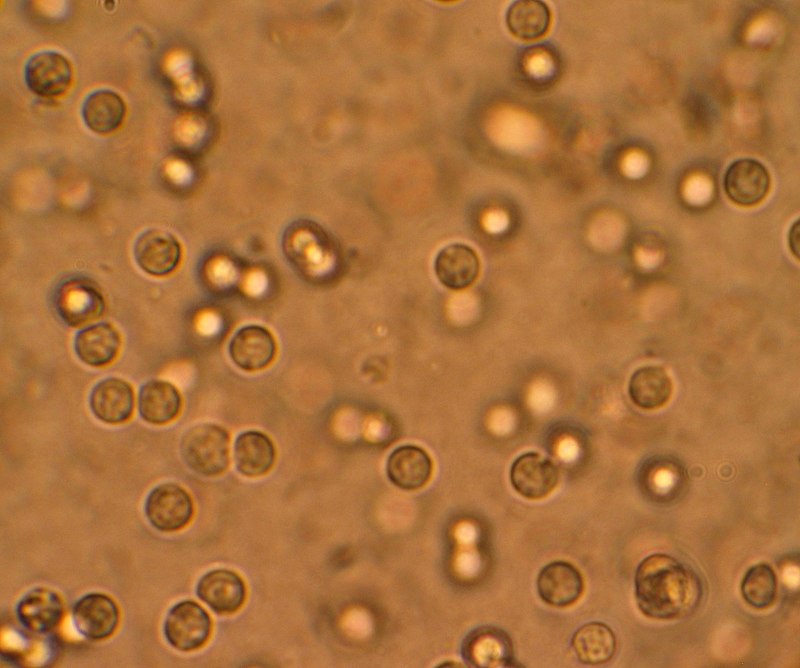
urinary tract infection
infection that affects part of the urinary tract
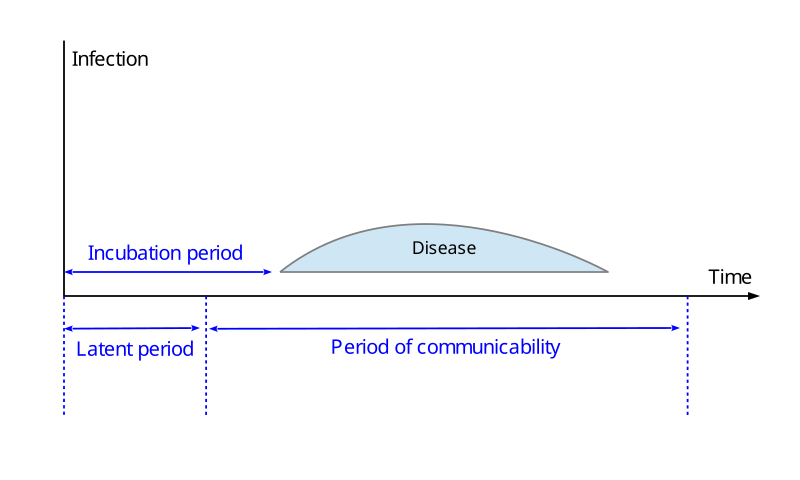
incubation period
time between an infection and the onset of disease symptoms
.jpg)
pharyngitis
Pharyngitis is inflammation of the back of the throat, known as the pharynx. It typically results in a sore throat and fever. Other symptoms may include a runny nose, cough, headache, difficulty swallowing, swollen lymph nodes, and a hoarse voice. Symptoms usually last 3–5 days, but can be longer depending on cause. Complications can include sinusitis and acute otitis media. Pharyngitis is a type of upper respiratory tract infection.

puerperal infection
human disease

endemic disease
epidemiological term describing a disease which is constantly present in a specific area

Koch's postulates
four criteria showing a causal relationship between a causative microbe and a disease
vector
agent that carries and transmits an infectious pathogen into another living organism

hospital-acquired infection
nosocomial infection
opportunistic infection
infection caused by pathogens that take advantage of an opportunity not normally available

occupational health and safety
area concerned with the safety, health and welfare of people at occupation
urethritis
Urethritis is the inflammation of the urethra. The most common symptoms include painful or difficult urination and urethral discharge. It is a commonly treatable condition usually caused by infection with bacteria. This bacterial infection is often sexually transmitted, but not in every instance; it can be idiopathic, for example. Some incidence of urethritis can appear asymptomatic as well.
T helper cell
type of immune cell
infectious diseases
medical specialty dealing with the diagnosis, control and treatment of infections
asymptomatic carrier
person or other organism that has become infected with a pathogen without displaying signs or symptoms
tropical disease
disease that is indigenous to tropical or subtropical areas of the world or that occurs principally in those areas
traveler's diarrhea
disease
pathogen transmission
passing of a pathogen causing communicable disease from an infected host individual or group to other individual or group, regardless of whether the other individual was previously infected
.png)
cowpox
Cowpox is an infectious disease caused by Cowpox virus (CPXV). It presents with large blisters in the skin, a fever and swollen glands, historically typically following contact with an infected cow, though in the last several decades more often (though overall rarely) from infected cats. The hands and face are most frequently affected and the spots are generally very painful.
neglected tropical disease
diverse group of tropical infection diseases which are common in developing countries
germ theory of disease
prevailing theory about the cause of infectious diseases
ascending cholangitis
bile duct disease that is an inflammation of the bile duct
respiratory tract infection
infectious disease affecting nose, throat and lungs
cell-mediated immunity
immune response that does not involve antibodies
phlegmon
A phlegmon is a localized area of acute inflammation of the soft tissues. It is a descriptive term which may be used for inflammation related to a bacterial infection or non-infectious causes (e.g. pancreatitis). Most commonly, it is used in contradistinction to a "walled-off" pus-filled collection (abscess). A phlegmon is inherently dangerous due to its diffuse, uncontained nature; if left untreated, it may either be successfully localized by the immune system to form an abscess, or it may rapidly spread and lead to extensive tissue destruction (necrosis), gangrene, and life-threatening syste
upper respiratory tract infection
illness caused by an acute infection in including the nose, sinuses, pharynx, or larynx
viral load
amount of virus found in host tissue or a given volume of fluid
adenitis
Adenitis is a general term for an inflammation of a gland. Often it is used to refer to lymphadenitis which is the inflammation of a lymph node.
brain abscess
abscess caused by inflammation and collection of infected material in the brain
contagious disease
subset category of transmissible diseases, which are transmitted to other persons
dental abscess
tooth disease characterized by a localized collection of pus associated with a tooth
congenital rubella syndrome
human disease
notifiable disease
any disease that is required by law to be reported to government authorities
antibiogram
a laboratory procedure in which samples of a bacterium are treated with a variety of antibiotics.
emerging communicable disease
infectious disease of emerging pathogen, often novel in its outbreak range or transmission mode
kennel cough
upper respiratory infection affecting dogs
.jpg)
fomite
thumb|right|Detecting whether medics have inadvertently transferred fluids to their clothing during a training sequence using simulated bodily fluids carrying an ultraviolet dye
A fomite () or fomes () is any inanimate object that, when contaminated with or exposed to infectious agents (such as pathogenic bacteria, viruses or fungi), can transfer disease to a new host.
anthroponotic disease
pathogens capable of transmitting from humans to other non-human animals
molecular mimicry
structure of a molecule that imitates or simulates the structure of a different molecule
lower respiratory tract infection
medical term
list of infectious diseases
Wikimedia list article

mycetoma
Mycetoma is a chronic infection in the skin caused by either bacteria (actinomycetoma) or fungi (eumycetoma), typically resulting in a triad of painless firm skin lumps, the formation of weeping sinuses, and a discharge that contains grains. 80% occur in feet.
bejel
Human disease
rat-bite fever
human disease
fever of unknown origin
symptom
coinfection
Coinfection is the simultaneous infection of a host by multiple pathogen species. In virology, coinfection includes simultaneous infection of a single cell by two or more virus particles. An example is the coinfection of liver cells with hepatitis B virus and hepatitis D virus, which can arise incrementally by initial infection followed by superinfection.
vaccine-preventable diseases
diseases that can be prevented by vaccines
community-acquired pneumonia
type of pneumonia
Negative room pressure
isolation technique used in hospitals and medical centers to prevent cross-contamination