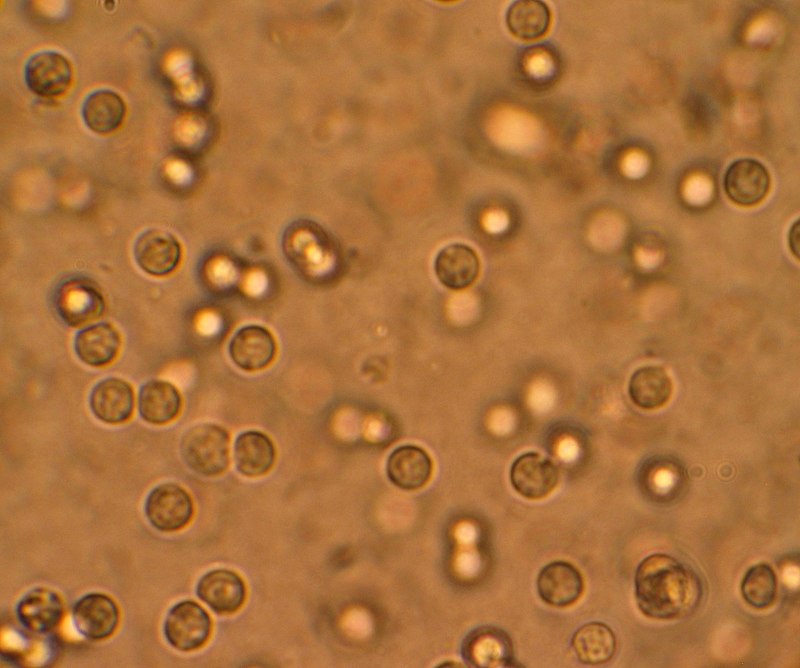
File:Pyuria.JPG · Wikimedia Commons · See Wikimedia Commons
urinary tract infection
Sign in to saveAlso known as UTI, urinary tract infections, acute cystitis, urinary tract infectious disease, cystitis acute, infection of urinary tract
infection that affects part of the urinary tract
A urinary tract infection (UTI) is an infection that occurs in part of the system that produces and removes urine from your body. UTIs matter because they cause uncomfortable symptoms and can become serious if left untreated.
AI-generated from the Wikipedia summary — may contain errors.
Research
91,037 papers- Urinary Tract Infection: Pathogenesis and Outlook.ReviewTrends in molecular medicine · 2016McLellan LK, Hunstad DADOI: 10.1016/j.molmed.2016.09.003
- Urinary tract infection syndromes: occurrence, recurrence, bacteriology, risk factors, and disease burden.ReviewInfectious disease clinics of North America · 2014Foxman BDOI: 10.1016/j.idc.2013.09.003
- [Complicated urinary tract infection].ReviewMMW Fortschritte der Medizin · 2022Karwat MFDOI: 10.1007/s15006-022-0707-4
- Diagnosis and management of fungal urinary tract infection.ReviewInfectious disease clinics of North America · 2014Kauffman CADOI: 10.1016/j.idc.2013.09.004
- Catheter-associated urinary tract infection.Journal of infection and chemotherapy : official journal of the Japan Society of Chemotherapy · 2021Chuang L, Tambyah PADOI: 10.1016/j.jiac.2021.07.022
- Urinary Tract Infection and Neuropathic Bladder.ReviewThe Urologic clinics of North America · 2024Ross SS, Forster CS, Borawski KDOI: 10.1016/j.ucl.2024.06.009
- Advances in the Treatment of Urinary Tract Infection and Bacteriuria in Pregnancy.ReviewThe Urologic clinics of North America · 2024Grant A, Bai K, Badalato GM et al.DOI: 10.1016/j.ucl.2024.07.001
- Complicated urinary tract infection in patients with benign prostatic hyperplasia.Journal of infection and chemotherapy : official journal of the Japan Society of Chemotherapy · 2021Choi JB, Min SKDOI: 10.1016/j.jiac.2021.06.006
via PubMed
Wikidata facts
- Instance of
- symptom or sign
- Subclass of
- disease
- Image
- Pyuria.JPG
Show 10 more facts
- ICPC 2 ID
- U71
- symptoms and signs
- frequent urination
- health specialty
- urology
- drug or therapy used for treatment
- linezolid
- exact match
- identifiers.org/doid/DOID:0080784
- Commons category
- Infectious diseases and disorders of the urinary system
- ICD-9-CM
- 595.0
- NCI Thesaurus ID
- C50791
- facet of
- women's health
- Wikimedia import URL
- en.wikipedia.org/wiki/Urinary_tract_infection
via Wikidata · CC0
~26 min read
Encyclopedic overview
A urinary tract infection (UTI) is an infection that affects a part of the urinary tract, which includes the bladder, urethra and the kidney. Lower UTIs affect the bladder (cystitis) or urethra while upper UTIs affect the kidney (pyelonephritis). Symptoms from a lower UTI include burning or pain during urination, pain in the lower abdomen and the urge to urinate even when the bladder is empty. Symptoms of a kidney infection are more systemic and include fever or flank pain, usually in addition to the symptoms of a lower UTI. Rarely, the urine may appear bloody. Symptoms may be less clear in very young or old people.
The most common cause of infection is E. coli, though other bacteria or fungi may sometimes be the cause. Risk factors include being female, sexual intercourse, diabetes, using a catheter, and family history. Kidney infections usually occurs when a bladder infection spreads, but may also come from bacteria in the blood. Diagnosis in young healthy women can be based on symptoms alone. In those with vague symptoms, diagnosis can be harder because bacteria may be present even if there is no infection.
Excerpted from Wikipedia’s “urinary tract infection” article, available under the CC BY-SA 4.0 licence.
Gallery (5)
Available in 63 languages
- Español
- Français
- Deutsch
- 中文
- 日本語
- Русский
- Português
- Italiano
- العربية
- हिन्दी
- Albanian
- Armenian
- azb
- Bahasa Indonesia
- Bangla
- Basque
- Bulgarian
- Catalan
Show 44 more
- Central Kurdish
- Croatian
- Czech
- Danish
- Divehi
- dty
- Estonian
- Filipino
- Finnish
- Greek
- Hausa
- Hebrew
- Hungarian
- Irish
- Kazakh
- Latvian
- Macedonian
- Madurese
- Malay
- Malayalam
- Marathi
- Nederlands
- Nepali
- Norwegian
- Odia
- Polski
- Punjabi
- Romanian
- Serbian
- Serbian (Latin)
- simple
- Slovenian
- Svenska
- Swahili
- Tamil
- Tiếng Việt
- Türkçe
- Ukrainian
- Urdu
- Uzbek
- Welsh
- فارسی
- ไทย
- 한국어
via Wikidata sitelinks · CC0