Category
page 1Insects in culture

Formicidae
thumb|Bright red ant, likely part of the Formica pallidefulva species group, on a flower

Mosquito
Mosquitoes, the Culicidae, are a family of small flies consisting of 3,600 species. The word mosquito (formed by mosca and diminutive -ito) is Spanish and Portuguese for little fly. Mosquitoes have a slender, segmented body, one pair of wings, three pairs of long hair-like legs, and specialized, highly elongated, piercing-sucking mouthparts. All mosquitoes drink nectar from flowers; females of many species have adapted to also drink blood. The group diversified during the Cretaceous period. Evolutionary biologists view mosquitoes as micropredators, small animals that parasitise larger ones by
%20male%20in%20flight.jpg)
butterfly

beetles
Beetles are insects that form the order Coleoptera (), in the superorder Holometabola. Their front pair of wings are hardened into wing-cases, elytra, distinguishing them from most other insects. The Coleoptera, with about 400,000 described species, is the largest of all orders, constituting almost 40% of described arthropods and 25% of all known animal species; new species are discovered frequently, with estimates suggesting that there are between 0.9 and 2.1 million total species.

Lepidoptera
Lepidoptera ( ) or lepidopterans are an order of winged insects which include butterflies and moths. About 180,000 species of the Lepidoptera have been described, representing 10% of the total described species of living organisms, making it the second largest insect order (behind Coleoptera) with 126 families and 46 superfamilies, and one of the most widespread and widely recognizable insect orders in the world.

termite
Termites are a group of detritophagous eusocial cockroaches which consume a variety of decaying plant material, generally in the form of wood, leaf litter, and soil humus. They are distinguished by their moniliform antennae and the soft-bodied, unpigmented worker caste for which they have been commonly termed "white ants"; however, they are not ants but highly derived cockroaches. About 2,997 extant species are currently described, 2,125 of which are members of the family Termitidae.
%20(10144905255).jpg)
Diptera
thumb|266px|An Anthomyiidae|Anthomyiid species showing characteristic dipteran features: large [[eyes, small antennae, sucking mouthparts, single pair of flying wings, hindwings reduced to clublike halteres]]
%3B%20adult%2C%20pupa%2C%20egg%20and%20lar%20Wellcome%20V0022501EL.jpg)
flea
Flea, the common name for the order Siphonaptera, includes 2,500 species of small flightless insects that live as external parasites of mammals and birds. Fleas live by ingesting the blood of their hosts. Adult fleas grow to about long, are usually dark in color, and have bodies that are "flattened" sideways or narrow, enabling them to move through their hosts' fur or feathers. They lack wings; their hind legs are extremely well adapted for jumping. Their claws keep them from being dislodged, and their mouthparts are adapted for piercing skin and sucking blood. Some species can leap 50 times t
%20Female%20(31407673590).png)
Coccinellidae
Coccinellidae () is a widespread family of small beetles. They are commonly known as ladybugs in North America and ladybirds in the United Kingdom; "lady" refers to mother Mary. Entomologists use the names ladybird beetles or lady beetles to avoid confusion with true bugs. The more than 6,000 described species have a global distribution and are found in a variety of habitats. They are oval beetles with a domed back and flat underside. Many of the species have conspicuous aposematic (warning) colours and patterns, such as red with black spots, that warn potential predators that they taste bad.

Anisoptera
A dragonfly is a flying insect belonging to the infraorder Anisoptera below the order Odonata. About 3,000 extant species of dragonflies are known. Most are tropical, with fewer species in temperate regions. Loss of wetland habitat threatens dragonfly populations around the world. Adult dragonflies are characterised by a pair of large, multifaceted, compound eyes, two pairs of strong, transparent wings, sometimes with coloured patches, and an elongated body. Many dragonflies have brilliant iridescent or metallic colours produced by structural coloration, making them conspicuous in flight. An a

Bombus
A bumblebee (or bumble bee, bumble-bee, or humble-bee) is any of over 250 species in the genus Bombus, part of Apidae, one of the bee families. This genus is the only extant group in the tribe Bombini, though a few extinct related genera (e.g., Calyptapis) are known from fossils. They are found primarily in the Northern Hemisphere, although they are also found in South America, where a few lowland tropical species have been identified. European bumblebees have also been introduced to New Zealand and Tasmania. Female bumblebees can sting repeatedly, but generally ignore humans and other animals

Mantodea
Mantises are an order (Mantodea) of insects that contains over 2,400 species in about 460 genera in 33 families. The largest family is the Mantidae ("mantids"). Mantises are distributed worldwide in temperate and tropical habitats. They have triangular heads with bulging eyes supported on flexible necks. Their elongated bodies may or may not have wings, but all mantodeans have forelegs that are greatly enlarged and adapted for catching and gripping prey; their upright posture, while remaining stationary with forearms folded, resembling a praying posture, has led to the common name praying mant

Bombyx mori
insect from the moth family

wasps
A wasp is any insect of the narrow-waisted suborder Apocrita of the order Hymenoptera which is neither a bee nor an ant; this excludes the broad-waisted sawflies (Symphyta), which look somewhat like wasps, but are in a separate suborder. The wasps do not constitute a clade, a complete natural group with a single ancestor, as bees and ants are deeply nested within the wasps, having evolved from wasp ancestors. Wasps that are members of the clade Aculeata can sting their prey.

Apis
genus of insects

Phthiraptera
Louse (: lice) is the common name for any member of the infraorder Phthiraptera, which contains nearly 5,000 species of wingless parasitic insects. Phthiraptera was previously recognized as an order, until a 2021 genetic study determined that they are a highly modified lineage of the order Psocodea, whose members are commonly known as booklice, barklice or barkflies.

beekeeping
thumb|Beekeeper at the College of DuPage, Illinois
Beekeeping (or apiculture, from ) is the maintenance of bee colonies, commonly in artificial beehives. Honey bees in the genus Apis are the most commonly kept species but other honey producing bees such as Melipona stingless bees are also kept. Beekeepers (or apiarists) keep bees to collect honey and other products of the hive: beeswax, propolis, bee pollen, and royal jelly. Other sources of beekeeping income include pollination of crops, raising queens, and production of package bees for sale. Bee hives are kept in an apiary or "bee yard".

Tabanidae
Horse flies and deer flies are true flies in the family Tabanidae in the insect order Diptera. The adults are often large and agile in flight. Females parasitize land vertebrates, including humans, biting them to obtain blood. They prefer to fly in sunlight, avoiding dark and shady areas, and are inactive at night. They are found all over the world except for some islands and the polar regions (Hawaii, Greenland, Iceland). Both horse flies and botflies (Oestridae) are sometimes referred to as gadflies. Contrary to popular belief, horse flies can not see infrared light or otherwise detect heat

Musca domestica
The housefly (Musca domestica) is a fly of the suborder Cyclorrhapha. It possibly originated in the Middle East, and spread around the world as a commensal of humans. Adults are gray to black, with four dark, longitudinal lines on the thorax, slightly hairy bodies, and a single pair of membranous wings. They have red compound eyes, set farther apart in the slightly larger female.

Colorado potato beetle
species of insect

aphid
Aphids are small sap-sucking insects in the family Aphididae. Common names include greenfly and blackfly, although individuals within a species can vary widely in color. The group includes the fluffy white woolly aphids. A typical life cycle involves flightless females giving live birth to female nymphs—who may also be already pregnant, an adaptation scientists call telescoping generations—without the involvement of males. Maturing rapidly, females breed profusely so that the number of these insects multiplies quickly. Winged females may develop later in the season, allowing the insects to col

Tsetse fly
genus of insects

An-Nahl
The Bee (Arabic: الْنَّحْل; an-naḥl) is the 16th chapter (sūrah) of the Qur'an, with 128 verses (āyāt). It is named after honey bees mentioned in verse 68, and contains a comparison of the industry and adaptability of honey bees with the industry of man.

Drosophila melanogaster
species of fly

locust
thumb|Locusts, such as this migratory locust (Locusta migratoria), are grasshoppers in a migratory phase of their life.
thumb|Millions of swarming [[Australian plague locusts on the move]]

cockroach
Cockroaches (or roaches) are insects belonging to the order Blattodea (Blattaria). About 30 cockroach species out of 4,600 are associated with human habitats. Some species are well-known pests.

Oestridae
thumb|Juvenile male Ecuadorian mantled howler (Alouatta palliata aequatorialis) with botfly parasites
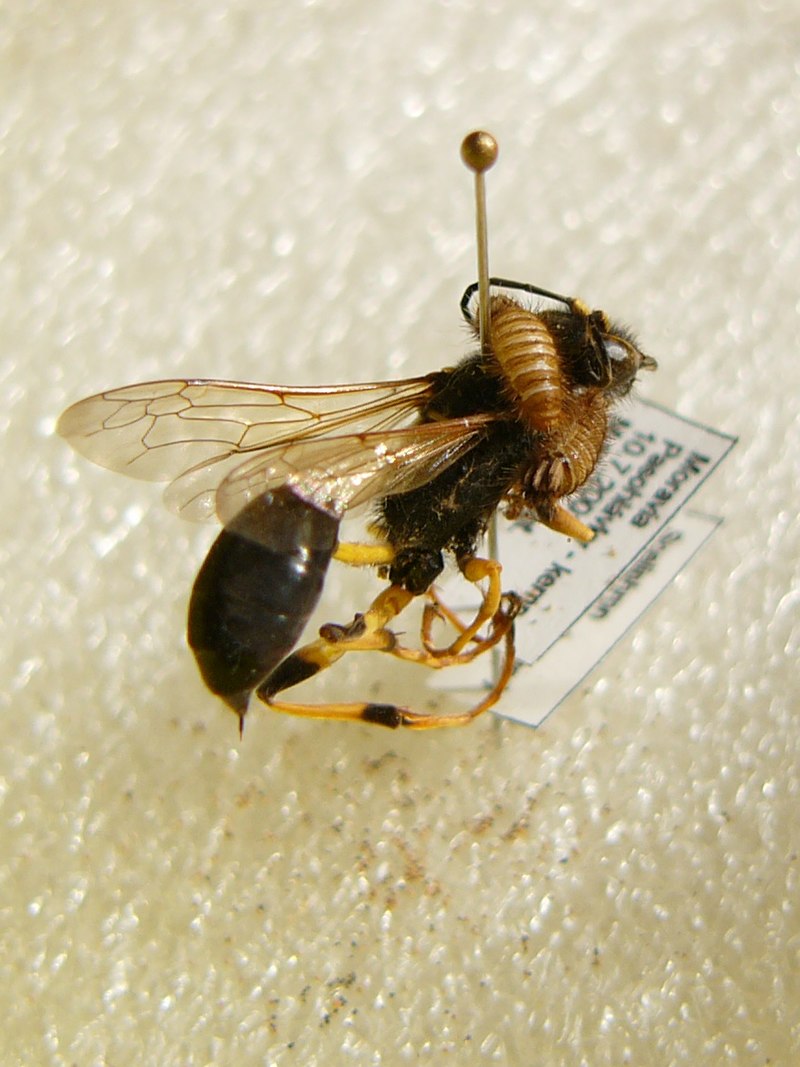
pest
living organism detrimental to humans or human concerns

Jean-Henri Fabre
French entomologist and author (1823-1915)

sericulture
Sericulture, or silk farming, is the cultivation of silkworms to produce silk. Although there are several commercial species of silkworms, the caterpillar of the domestic silkmoth is the most widely used and intensively studied silkworm. This species of silkmoth is no longer found in the wild as they have been modified through selective breeding, rendering most flightless and without defense against predators. Silk is believed to have first been produced in China as early as the Neolithic period. Today, China and India are the two main producers, with more than 60% of the world's annual produc

Daktulosphaira vitifoliae
thumb|Galls made by D. vitifoliae on leaf of Vitis sp.
Grape phylloxera is an insect pest of grapevines worldwide, originally native to eastern North America. Grape phylloxera (Daktulosphaira vitifoliae Fitch 1855) belongs to the family Phylloxeridae, within the order Hemiptera, bugs); originally described in France as Phylloxera vastatrix; it is equated to the previously described Daktulosphaera vitifoliae and Phylloxera vitifoliae. The insect is commonly just called phylloxera (; from , leaf, and , dry).

Tenebrio molitor
thumb|Mealworms, larvae of Tenebrio molitor, illustrated by Des Helmore

Lytta vesicatoria
species of insect

Dynastinae
Dynastinae or rhinoceros beetles are a subfamily of the scarab beetle family (Scarabaeidae), named for their rhinoceros-like horns. Other common names – some for particular groups of rhinoceros beetles – include Hercules beetles, unicorn beetles or horn beetles. Over 1,500 species and 225 genera of rhinoceros beetles are known.
biological pest control
method of controlling pests using other living organisms

Old-house borer
Hylotrupes is a monotypic genus of woodboring beetles in the family Cerambycidae, the longhorn beetles. The sole species, Hylotrupes bajulus, is known by several common names, including house longhorn beetle, old house borer, and European house borer. In South Africa it also is known as the Italian beetle because of infested packing cases that had come from Italy. Hylotrupes is the only genus in the tribe Hylotrupini.

grasshopper
Grasshoppers are a group of insects belonging to the suborder Caelifera. They are amongst what are possibly the most ancient living groups of chewing herbivorous insects, dating back to the early Triassic, around 250 million years ago.

Common furniture beetle
woodboring beetle

Cicadoidea
The cicadas () are a superfamily, the Cicadoidea, of insects in the order Hemiptera (true bugs). They are in the suborder Auchenorrhyncha, along with smaller jumping bugs such as leafhoppers and froghoppers. The superfamily is divided into two families, the Tettigarctidae, with two species in Australia, and the Cicadidae, with more than 3,000 species described from around the world; many species remain undescribed. Nearly all cicada species are annual cicadas with the exception of the few North American periodical cicada species, genus Magicicada, which in a given region emerge en masse every

maggot
thumb|Maggots on a porcupine carcass
thumb|Maggots feeding on an opossum [[carrion]]
thumb|Common wild pig (boar) corpse decomposition timelapse. Maggots are visible.
A maggot is the larva of a fly (order Diptera); it is applied in particular to the larvae of Brachycera flies, such as houseflies, cheese flies, hoverflies, and blowflies, rather than larvae of the Nematocera, such as mosquitoes and crane flies.
scarab
scarab beetle-shaped amulets and impression seals of ancient Egypt
fly fishing
angling method
Orytes rinojaponyes
species of insect

Death watch beetle
species of woodboring beetle

entomophily
thumb|Bee pollinating a flower
thumb|Soldier beetle covered with pollen

Gonimbrasia belina
species of insect

Ichneumonoidea
The superfamily Ichneumonoidea contains one extinct and two extant families, including the two largest families within Hymenoptera: Ichneumonidae and Braconidae. The group is thought to contain as many as 100,000 species, many of which have not yet been described. Like other parasitoid wasps, they were long placed in the "Parasitica", variously considered as an infraorder or an unranked clade, now known to be paraphyletic.

cantharidin
Cantharidin is an odorless, colorless fatty substance of the terpenoid class, which is secreted by many species of blister beetles. Its main current use in pharmacology is treating molluscum contagiosum and warts topically. It is a burn agent, poisonous in large doses. It has been historically used as an aphrodisiac (in preparations sold under the name "Spanish fly"). In its natural form, cantharidin is secreted by the male blister beetle, and given to the female as a copulatory gift during mating. Afterwards, the female beetle covers her eggs with it as a defense against predators.

Anthonomus grandis
species of insect

Hypoderma
genus of insects
insect-inflicted wound
wound caused by the bite or sting of an insect
insect as food
flesh from insects
flea circus
circus sideshow attraction in which fleas are attached (or appear to be attached) to miniature carts and other items, and encouraged to perform circus acts within a small housing
cricket fighting
hobby and gambling activity involving the fighting of male crickets
.jpg)
Cochliomyia
Cochliomyia is a genus in the family Calliphoridae, known as blowflies, in the order Diptera. Cochliomyia is commonly referred to as the New World screwworm flies, as distinct from Old World screwworm flies. Four species are in this genus: C. macellaria, C. hominivorax, C. aldrichi, and C. minima. C. hominivorax is known as the primary screwworm because its larvae produce myiasis and feed on living tissue. This feeding causes deep, pocket-like lesions in the skin, which can be very damaging to the animal host. C. macellaria is known as the secondary screwworm because its larvae produce myiasis
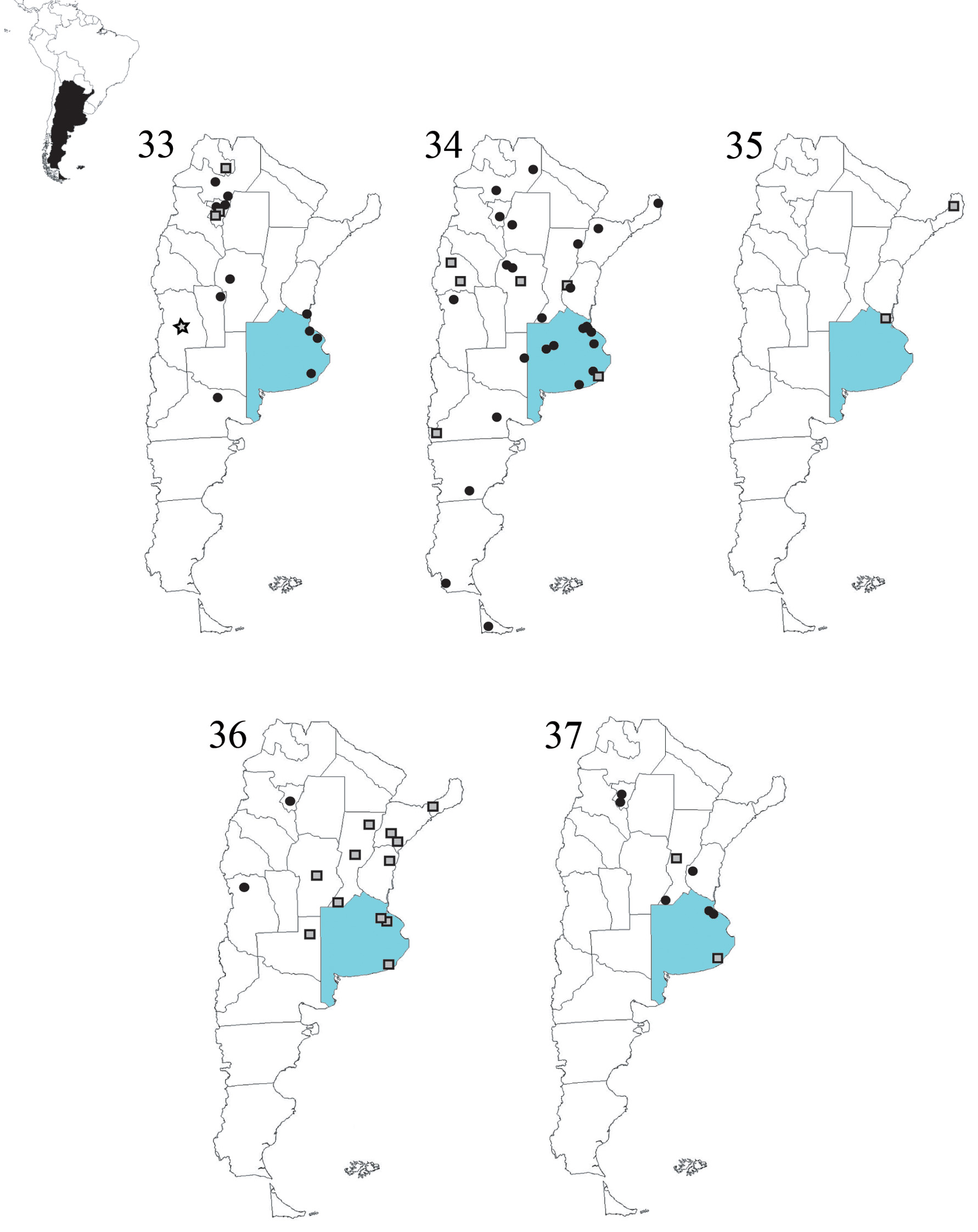
Haematobia irritans
species of insect

Cultural entomology

woodworm
thumb|upright=1.2|The common furniture beetle (Anobium punctatum) in situ

Cerambus
In Greek mythology, Cerambus (Ancient Greek: Κέραμβος, Kerambos), a son of Euseiros (himself son of Poseidon) and the nymph Eidothea of Othreis.

waxworms
thumb|right|250px|Adult specimen of the lesser wax moth (Achroia grisella)
thumb|right|250px|Adult specimen of the Galleria mellonella|greater wax moth (Galleria mellonella)
thumb|right|250px|G. mellonella larva