Category
page 1Iron(II) minerals

pyrite
The mineral pyrite ( ), or iron pyrite, also known as '''Fool's Gold''', is an iron sulfide with the chemical formula FeS2 (iron (II) disulfide). Pyrite is the most abundant sulfide mineral.

olivine
The mineral olivine () is a magnesium iron silicate with the chemical formula . It is a type of nesosilicate or orthosilicate. The primary component of the Earth's upper mantle, it is a common mineral in Earth's subsurface, but weathers quickly on the surface. Olivine has many uses, such as the gemstone peridot (or chrysolite), as well as industrial applications like metalworking processes.
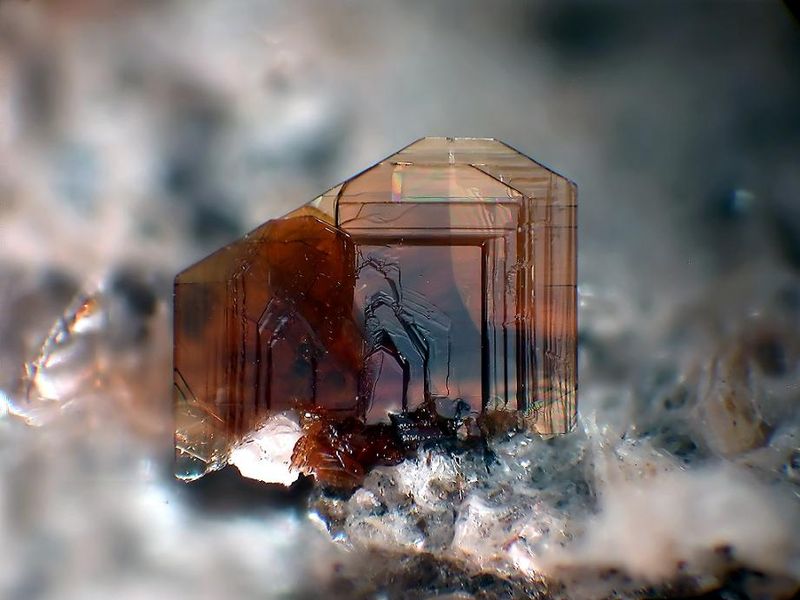
biotite series
Biotite is a common group of phyllosilicate minerals within the mica group, with the approximate chemical formula . It is primarily a solid-solution series between the iron-endmember annite, and the magnesium-endmember phlogopite; more aluminous end-members include siderophyllite and eastonite. Biotite was regarded as a mineral species by the International Mineralogical Association until 1998, when its status was changed to a mineral group. The term biotite is still used to describe unanalysed dark micas in the field. Biotite was named by J.F.L. Hausmann in 1847 in honor of the French physicis

ilmenite
Ilmenite is a titanium-iron(II) oxide mineral with the idealized formula . It is a weakly magnetic black or steel-gray solid. Ilmenite is the most important ore of titanium and the main source of titanium dioxide, which is used as white pigment in paints, printing inks, fabrics, plastics, paper, sunscreen, food and cosmetics.

actinolite
thumb|upright=0.3|Gem-quality actinolite blade, from Mogok, Burma

chromite
Chromite is a crystalline mineral composed primarily of iron(II) oxide and chromium(III) oxide compounds. It can be represented by the chemical formula of FeCr2O4. It is an oxide mineral belonging to the spinel group. The element magnesium can substitute for iron in variable amounts as it forms a solid solution with magnesiochromite (MgCr2O4). Substitution of the element aluminium can also occur, leading to hercynite (FeAl2O4). Chromite today is mined particularly to make stainless steel through the production of ferrochrome (FeCr), which is an iron-chromium alloy.

wolframite
Wolframite is an iron, manganese, and tungstate mineral with a chemical formula of that is the intermediate mineral between ferberite ( rich) and hübnerite ( rich). Along with scheelite, the wolframite series are the most important tungsten ore minerals. Wolframite is found in quartz veins and pegmatites associated with granitic intrusives. Associated minerals include cassiterite, scheelite, bismuth, quartz, pyrite, galena, sphalerite, and arsenopyrite.

marcasite
The mineral marcasite, sometimes called "white iron pyrite", is iron sulfide (FeS2) with orthorhombic crystal structure. It is physically and crystallographically distinct from pyrite, which is iron sulfide with cubic crystal structure. Both structures contain the disulfide S22− ion, having a short bonding distance between the sulfur atoms. The structures differ in how these di-anions are arranged around the Fe2+ cations. Marcasite is lighter and more brittle than pyrite. Specimens of marcasite often crumble and break up due to the unstable crystal structure.

siderite
Siderite is a mineral composed of iron(II) carbonate (FeCO3). Its name comes from the Ancient Greek word (), meaning "iron". A valuable iron ore, it consists of 48% iron and lacks sulfur and phosphorus. Zinc, magnesium, and manganese commonly substitute for the iron, resulting in the siderite-smithsonite, siderite-magnesite, and siderite-rhodochrosite solid solution series.

serpentine mineral subgroup
rock-forming hydrous magnesium iron phyllosilicate

rhodonite
Rhodonite is a manganese inosilicate, with the formula (Mn, Fe, Mg, Ca)SiO3, and member of the pyroxenoid group of minerals, crystallizing in the triclinic system. The term rhodonite was first introduced by Germar. . It commonly occurs as cleavable to compact masses with a rose-red color often tending to brown due to surface oxidation. The rose-red hue is caused by the manganese cation (Mn).
thumb|left|Pink rhodonite contrasting with black manganese oxides is sometimes used as gemstone material as seen in this specimen from Humboldt County, [[Nevada.]]
Rhodonite crystals often have a thick tab

vivianite
thumb|alt=text|Vivianite from South Dakota, US
thumb|alt=text|Vivianite and childrenite from the [[Siglo XX mine (tin mine in Bolivia)]]
thumb|alt=text|Vivianite from Bavaria (Germany)
thumb|alt=text|Vivianite and albite from Brazil

enstatite
Enstatite is a mineral; the magnesium endmember of the pyroxene silicate mineral series enstatite (MgSiO3) – ferrosilite (FeSiO3). The magnesium rich members of the solid solution series are common rock-forming minerals found in igneous and metamorphic rocks. The intermediate composition, , has historically been known as hypersthene, although this name has been formally abandoned and replaced by orthopyroxene. When determined petrographically or chemically the composition is given as relative proportions of enstatite (En) and ferrosilite (Fs) (e.g., En80Fs20).

columbite
Columbite, also called niobite, niobite-tantalite and columbate, with a general chemical formula of , is a black mineral group that is an ore of niobium. It has a submetallic luster, a high density, and is a niobate of iron and manganese. Niobite has many applications in aerospace, construction and the medical industry. Dating columbite minerals is primarily completed by uranium–lead dating, a slow process.

cordierite
Cordierite (mineralogy) or iolite (gemology) is a magnesium iron aluminium cyclosilicate. Iron is almost always present, and a solid solution exists between Mg-rich cordierite and Fe-rich sekaninaite with a series formula: to . A high-temperature polymorph exists, indialite, which is isostructural with beryl and has a random distribution of Al in the rings. Cordierite is also synthesized and used in high temperature applications such as catalytic converters and pizza stones.

staurolite
Staurolite is a reddish brown to black, mostly opaque, nesosilicate mineral with a white streak. It crystallizes in the monoclinic crystal system, has a Mohs hardness of 7 to 7.5 and the chemical formula: Fe2+2Al9O6(SiO4)4(O,OH)2. Magnesium, zinc and manganese substitute in the iron site and trivalent iron can substitute for aluminium.
gadolinite
Gadolinite, sometimes known as ytterbite, is a silicate mineral consisting principally of the silicates of cerium, lanthanum, neodymium, yttrium, beryllium, and iron with the formula . It is called gadolinite-(Ce) or gadolinite-(Y), depending on the prominent composing element (Y if yttrium predominates, and Ce if cerium). It may contain 35.5% yttria sub-group rare earths, 2.2% ceria earths, as much as to 11.6% BeO, and traces of thorium. It is found in Sweden, Norway, and the US (Texas and Colorado).

fayalite
Fayalite (, commonly abbreviated to Fa) is the iron-rich end-member of the olivine solid-solution series. In common with all minerals in the olivine group, fayalite crystallizes in the orthorhombic system (space group Pbnm) with cell parameters a = 4.82 Å, b = 10.48 Å and c = 6.09 Å.
axinite
Axinite is a brown to violet-brown, or reddish-brown bladed group of minerals composed of calcium aluminium boro-silicate, . Axinite is pyroelectric and piezoelectric.

glaucophane
Glaucophane is a mineral and a mineral group belonging to the sodic amphibole supergroup of the double chain inosilicates, with the chemical formula Na2(Mg3Al2)Si8O22(OH)2.
ankerite
Ankerite, also known as brown spar () is a calcium, iron, magnesium, manganese carbonate mineral of the group of rhombohedral carbonates with the chemical formula . In composition it is closely related to dolomite, but differs from this in having magnesium replaced by varying amounts of iron(II) and manganese. It forms a series with dolomite and kutnohorite.

phlogopite
Phlogopite is a yellow, greenish, or reddish-brown member of the mica family of phyllosilicates. It is also known as magnesium mica.
hypersthene
Hypersthene is a common rock-forming inosilicate mineral belonging to the group of orthorhombic pyroxenes. Its chemical formula is . It is found in igneous and some metamorphic rocks as well as in stony and iron meteorites. Many references have formally abandoned this term, preferring to categorise this mineral as enstatite or ferrosilite. It forms a solid solution series with the minerals enstatite and ferrosilite, being a mid-way member between the two. Pure enstatite contains no iron, while pure ferrosilite contains no magnesium; hypersthene is the name given to the mineral when a significa

hedenbergite
Hedenbergite, CaFeSi2O6 (), is the iron-rich end member of the pyroxene group having a monoclinic crystal system. The mineral is extremely rarely found as a pure substance, and usually has to be synthesized in a lab. It was named in 1819 after M.A. Ludwig Hedenberg, who was the first to define hedenbergite as a mineral. Contact metamorphic rocks high in iron are the primary geologic setting for hedenbergite. This mineral is unique because it can be found in chondrites and skarns (calc–silicate metamorphic rocks). As a member of the pyroxene family, it has generated considerable interest due to
jamesonite
Jamesonite (also axotomous antimony glance, domingite, comuccite, pfaffite, grey antimony or feather ore) is a sulphosalt mineral, a lead, iron, antimony sulphide with formula Pb4FeSb6S14. With the addition of manganese it forms a series with benavidesite. It is a dark grey metallic mineral which forms acicular prismatic monoclinic crystals. It is soft with a Mohs hardness of 2.5 and has a specific gravity of 5.5 – 5.6. It is one of the few sulphide minerals to form fibrous or needle like crystals. It can also form large prismatic crystals similar to stibnite with which it can be associated. I
zinnwaldite
Zinnwaldite, KLiFeAl(AlSi3)O10(OH,F)2, potassium lithium iron aluminium silicate hydroxide fluoride, is a silicate mineral in the mica group. The IMA status is as a series between siderophyllite (KFe2Al(Al2Si2)O10(F,OH)2) and polylithionite (KLi2AlSi4O10(F,OH)2) and not considered a valid mineral species.
melanterite
Melanterite is a mineral form of hydrous iron(II) sulfate: FeSO4·7H2O. It is the iron analogue of the copper sulfate chalcanthite. It alters to siderotil by loss of water. It is a secondary sulfate mineral which forms from the oxidation of primary sulfide minerals such as pyrite and marcasite in the near-surface environment. It often occurs as a post mine encrustation on old underground mine surfaces. It also occurs in coal and lignite seams exposed to humid air and as a rare sublimate phase around volcanic fumaroles. Associated minerals include pisanite, chalcanthite, epsomite, pickeringite,
humite
Humite is a mineral found in the volcanically ejected masses of Vesuvius. It was first described in 1813 and named for Abraham Hume (1749–1838).

grunerite
Grunerite is a mineral of the amphibole group of minerals with formula Fe7Si8O22(OH)2. It is the iron endmember of the grunerite-cummingtonite series. It forms as fibrous, columnar or massive aggregates of crystals. The crystals are monoclinic prismatic. The luster is glassy to pearly with colors ranging from green, brown to dark grey. The Mohs hardness is 5 to 6 and the specific gravity is 3.4 to 3.5.

armalcolite
Armalcolite () is a titanium-rich mineral with the chemical formula (Mg,Fe2+)Ti2O5. It was first found at Tranquility Base on the Moon in 1969 during the Apollo 11 mission, and is named for Armstrong, Aldrin and Collins, the three Apollo 11 astronauts. Together with tranquillityite and pyroxferroite, it is one of three new minerals that were discovered on the Moon. Armalcolite was later identified at various locations on Earth and has been synthesized in the laboratory. (Tranquillityite and pyroxferroite were also later found at various locations on Earth). The synthesis requires low pressures

lazulite
Lazulite or Azure spar is a transparent to semi-opaque, blue mineral that is a phosphate of magnesium, iron, and aluminium, with the chemical formula . Lazulite forms one endmember of a solid solution series with the darker, iron-rich scorzalite.
astrophyllite
Astrophyllite is a very rare, brown to golden-yellow hydrous potassium iron titanium silicate mineral. Belonging to the astrophyllite group, astrophyllite may be classed either as an inosilicate, phyllosilicate, or an intermediate between the two. It forms an isomorphous series with kupletskite, to which it is visually identical and often intimately associated. Astrophyllite is of interest primarily to scientists and collectors.

cummingtonite
Cummingtonite ( ) is a metamorphic amphibole with the chemical composition , magnesium iron silicate hydroxide.
chamosite
Chamosite is the Fe2+ end member of the chlorite group. A hydrous aluminium silicate of iron, which is produced in an environment of low-to-moderate-grade metamorphosed iron deposits, as grey or black crystals in oolitic iron ore. Like other chlorites, it is a product of the hydrothermal alteration of pyroxenes, amphiboles and biotite in igneous rock. The composition of chlorite is often related to that of the original igneous mineral, so that more Fe-rich chlorites are commonly found as replacements of the Fe-rich ferromagnesian minerals (Deer et al., 1992).
troilite
Troilite () is a rare iron sulfide mineral with the simple formula of FeS. It is the iron-rich endmember of the pyrrhotite group. Pyrrhotite has the formula Fe(1−x)S (x = 0 to 0.2) which is iron deficient. As troilite lacks the iron deficiency which gives pyrrhotite its characteristic magnetism, troilite is non-magnetic.
ferberite
Ferberite is the iron endmember of the manganese–iron wolframite solid solution series. The manganese endmember is hübnerite. Ferberite is a black monoclinic mineral composed of iron(II) tungstate, FeWO4.
berthierite
Berthierite is a mineral, a sulfide of iron and antimony with formula . It is steel grey in colour with a metallic lustre, which an iridescent tarnish can cover. Because of its appearance, it is often mistaken for stibnite (, an antimony trisulfide mineral, free of sulfide).

wüstite
thumb|Crystal structure of Wüstite

antigorite
Antigorite is a lamellated, monoclinic mineral in the phyllosilicate serpentine subgroup with the ideal chemical formula of (Mg,Fe2+)3Si2O5(OH)4. It is the high-pressure polymorph of serpentine and is commonly found in metamorphosed serpentinites. Antigorite, and its serpentine polymorphs, play an important role in subduction zone dynamics due to their relative weakness and high weight percent of water (up to 13 weight % H2O). It is named after its type locality, the Geisspfad serpentinite, Valle Antigorio in the border region of Italy/Switzerland and is commonly used as a gemstone in jewelry

omphacite
Omphacite is a member of the clinopyroxene group of silicate minerals with formula: (Ca, Na)(Mg, Fe2+, Al)Si2O6. It is a variably deep to pale green or nearly colorless variety of clinopyroxene. It normally appears in eclogite, which is the high-pressure metamorphic rock of basalt. Omphacite is the solid solution of Fe-bearing diopside and jadeite. It crystallizes in the monoclinic system with prismatic, typically twinned forms, though usually anhedral. Its space group can be P2/n or C2/c depending on the thermal history. It exhibits the typical near 90° pyroxene cleavage. It is brittle with s

melilite
thumb|300px|right|A view down onto the sheets of the A2B(T2O7) melilite structure. The A sites are yellow spheres, the B sites are pale orange tetrahedra, and the T sites are blue tetrahedra. Oxygen atoms (not shown) are on the corners of the tetrahedra.
chloritoid
Chloritoid is a silicate mineral of metamorphic origin. It is an iron magnesium manganese alumino-silicate hydroxide with formula . It occurs as greenish grey to black platy micaceous crystals and foliated masses. Its Mohs hardness is 6.5, unusually high for a platy mineral, and it has a specific gravity of 3.52 to 3.57. It typically occurs in phyllites, schists and marbles.

phosphophyllite
Phosphophyllite is a rare phosphate mineral with the chemical formula . It is prized among mineral collectors for its delicate bluish green colour, but rarely cut due to its difficult properties.
halotrichite
Halotrichite, also known as feather alum, is a highly hydrated sulfate of aluminium and iron. Its chemical formula is . It forms fibrous monoclinic crystals. The crystals are water-soluble.
anapaite
Anapaite is a calcium–iron phosphate mineral with formula: Ca2Fe2+(PO4)2·4H2O. It is a mineral that typically occurs in cavities in fossil bearing sedimentary rocks. It is also found in phosphate bearing iron ores and rarely in pegmatites. It is commonly found with goethite, siderite and vivianite.
aenigmatite
Aenigmatite, also known as cossyrite after Cossyra, the ancient name of Pantelleria, is a sodium, iron, titanium inosilicate mineral. The chemical formula is Na2Fe2+5TiSi6O20 and its structure consists of single tetrahedral chains with a repeat unit of four and complex side branches. It forms brown to black triclinic lamellar crystals. It has Mohs hardness of 5.5 to 6 and specific gravity of 3.74 to 3.85. Aenigmatite forms a solid-solution series with wilkinsonite, Na2Fe2+4Fe3+2Si6O20.
tranquillityite
Tranquillityite is a silicate mineral with formula (Fe2+)8Ti3Zr2 Si3O24. It is mostly composed of iron, oxygen, silicon, zirconium and titanium with smaller fractions of yttrium and calcium. It is named after the Mare Tranquillitatis (Sea of Tranquility), the place on the Moon where the rock samples were found during the 1969 Apollo 11 mission. It was the last mineral brought from the Moon which was thought to be unique, with no counterpart on Earth, until it was discovered in Australia in 2011.
aheylite
Aheylite is a rare phosphate mineral with formula (Fe2+Zn)Al6[(OH)4|(PO4)2]2·4(H2O). It occurs as pale blue to pale green triclinic crystal masses. Aheylite was made the newest member of the turquoise group in 1984 by International Mineralogical Association Commission on New Minerals and Mineral Names.

triplite
Triplite is a rare phosphate mineral with formula: . It occurs in phosphate-rich granitic pegmatites typically as irregular brown opaque masses. Triplite was first described in 1813 for an occurrence in Chanteloube, Limousin, France. The name is from the Greek triplos for triple, in reference to the three cleavage directions. In color and appearance, it is very similar to rhodocrosite, another manganese bearing mineral. Chemically, it is also quite similar to triploidite the difference being that triplite is fluorine dominant while triploidite is hydroxide dominant.

bronzite
thumb|Bronzite variety from the Bare Hills copper mine, Baltimore County, Maryland, USA (size: 9.6 x 7.5 x 4.9 cm)
thumb|Bronzitite, thin section of a rock made of olivine and pyroxene, mostly bronzite. Photomicrograph, viewed with polarized light.
pigeonite
Pigeonite is a mineral in the clinopyroxene subgroup of the pyroxene group. It has a general formula of . The calcium cation fraction can vary from 5% to 25%, with iron and magnesium making up the rest of the cations.
scorzalite
Scorzalite () is a dark blue phosphate mineral containing iron, magnesium, and aluminium phosphate. Scorzalite forms one endmember of a solid solution series with the lighter, more magnesium-rich lazulite.

clinohumite
Clinohumite is an uncommon member of the humite group, a magnesium silicate according to the chemical formula (Mg, Fe)9(SiO4)4(F,OH)2. The formula can be thought of as four olivine (Mg2SiO4), plus one brucite (Mg(OH)2). Indeed, the mineral is essentially a hydrated olivine and occurs in altered ultramafic rocks and carbonatites. Most commonly found as tiny indistinct grains, large euhedral clinohumite crystals are sought by collectors and occasionally fashioned into bright, yellow-orange gemstones. Only two sources of gem-quality material are known: the Pamir Mountains of Tajikistan, and the T
hapkeite
Hapkeite is a mineral discovered in the Dhofar 280 meteorite found in 2000 in Oman on the Arabian Peninsula. The meteorite is believed to originate from the Moon; specifically, it appears to be a fragment of lunar highland breccia. Hapkeite's composition is of silicon and iron, and it is similar to other silicon-iron minerals found on Earth. An impact on the Moon is thought to have launched the partially molten or vaporized material into orbit.
siderotil
Siderotil is an iron(II) sulfate hydrate mineral with formula: FeSO4·5H2O which forms by the dehydration of melanterite. Copper commonly occurs substituting for iron in the structure. It typically occurs as fibrous or powdery encrustations, but may also occur as acicular triclinic crystals.

pyroxferroite
Pyroxferroite (Fe2+,Ca)SiO3 is a single chain inosilicate. It is mostly composed of iron, silicon and oxygen, with smaller fractions of calcium and several other metals. Together with armalcolite and tranquillityite, it is one of the three minerals which were discovered on the Moon during the 1969 Apollo 11 mission. It was then found in Lunar and Martian meteorites as well as a mineral in the Earth's crust. Pyroxferroite can also be produced by annealing synthetic clinopyroxene at high pressures and temperatures. The mineral is metastable and gradually decomposes at ambient conditions, but thi

kësterite
Kësterite is a sulfide mineral with a chemical formula of . In its lattice structure, zinc and iron atoms share the same lattice sites. Kesterite is the zinc-rich variety whereas the zinc-poor form is called ferrokesterite or stannite. Owing to their similarity, kesterite is sometimes called isostannite. The synthetic form of kesterite is abbreviated as CZTS (from copper-zinc-tin sulfide). The name kesterite is sometimes extended to include this synthetic material and also CZTSe, which contains selenium instead of sulfur. Along with perovskite, recent advances have made kesterite promising mat
childrenite
Childrenite is a rare hydrated phosphate mineral with elements iron, manganese, aluminium, phosphorus, oxygen and hydrogen. Its chemical formula is and it has a molecular weight of 229.83 g/mol. Its specific gravity is 3.2 and it has a Mohs hardness of 4.5 to 5. It is usually translucent and non-fluorescent, with imperfect cleavage. It has a vitreous lustre with a white streak, and is brown or yellow in color. It has a conchoidal, uneven fracture, and an orthorhombic crystal system.

triphylite
Triphylite is a lithium iron(II) phosphate mineral with the chemical formula LiFePO4. It is a member of the triphylite group and forms a complete solid solution series with the lithium manganese(II) phosphate, lithiophilite. Triphylite crystallizes in the orthorhombic crystal system. It rarely forms prismatic crystals and is more frequently found in hypidiomorphic rock. It is bluish- to greenish-gray in color, but upon alteration becomes brown to black.
tsumcorite
Tsumcorite is a rare hydrated lead arsenate mineral that was discovered in 1971, and reported by Geier, Kautz and Muller. It was named after the TSUMeb CORporation mine at Tsumeb, in Namibia, in recognition of the Corporation's support for mineralogical investigations of the orebody at its Mineral Research Laboratory.