Category
page 1Magnesium minerals

talc
Talc, or talcum, is a clay mineral composed of hydrated magnesium silicate, with the chemical formula . Talc in powdered form, often combined with corn starch, is used as baby powder. This mineral is used as a thickening agent and lubricant. It is an ingredient in ceramics, paints, and roofing material. It is a main ingredient in many cosmetics. It occurs as foliated to fibrous masses, and in an exceptionally rare crystal form. It has a perfect basal cleavage and an uneven flat fracture, and it is foliated with a two-dimensional platy form.

garnet group
Garnets () are a group of silicate minerals that have been used since the Bronze Age as gemstones and abrasives.

dolomite
carbonate mineral – CaMg(CO₃)₂

olivine
The mineral olivine () is a magnesium iron silicate with the chemical formula . It is a type of nesosilicate or orthosilicate. The primary component of the Earth's upper mantle, it is a common mineral in Earth's subsurface, but weathers quickly on the surface. Olivine has many uses, such as the gemstone peridot (or chrysolite), as well as industrial applications like metalworking processes.

spinel
thumb|Polyhedral representation of spinel MgAl2O4
Spinel () is the magnesium/aluminium member of the larger spinel group of minerals. It has the formula in the cubic crystal system. Its name comes from the Latin word , a diminutive form of spine, in reference to its pointed crystals.

magnesium oxide
chemical compound naturally occurring as periclase
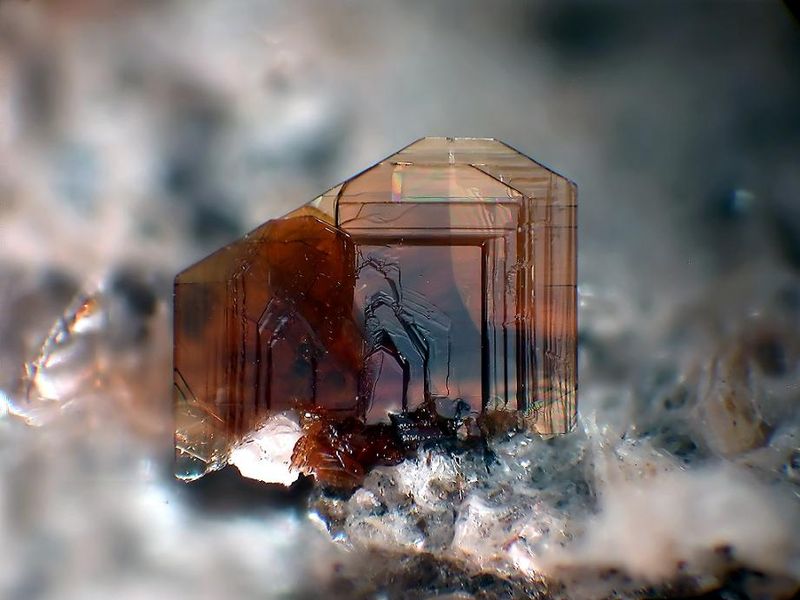
biotite series
Biotite is a common group of phyllosilicate minerals within the mica group, with the approximate chemical formula . It is primarily a solid-solution series between the iron-endmember annite, and the magnesium-endmember phlogopite; more aluminous end-members include siderophyllite and eastonite. Biotite was regarded as a mineral species by the International Mineralogical Association until 1998, when its status was changed to a mineral group. The term biotite is still used to describe unanalysed dark micas in the field. Biotite was named by J.F.L. Hausmann in 1847 in honor of the French physicis

magnesite
Magnesite is a mineral with the chemical formula (magnesium carbonate). Iron, manganese, cobalt, and nickel may occur as admixtures, but only in small amounts. Magnesite occurs naturally in both cryptocrystalline and crystalline forms depending on the conditions of formation.

actinolite
thumb|upright=0.3|Gem-quality actinolite blade, from Mogok, Burma

chromite
Chromite is a crystalline mineral composed primarily of iron(II) oxide and chromium(III) oxide compounds. It can be represented by the chemical formula of FeCr2O4. It is an oxide mineral belonging to the spinel group. The element magnesium can substitute for iron in variable amounts as it forms a solid solution with magnesiochromite (MgCr2O4). Substitution of the element aluminium can also occur, leading to hercynite (FeAl2O4). Chromite today is mined particularly to make stainless steel through the production of ferrochrome (FeCr), which is an iron-chromium alloy.

diopside
Diopside is a monoclinic pyroxene mineral with composition . It forms complete solid solution series with hedenbergite () and augite, and partial solid solutions with orthopyroxene and pigeonite. It forms variably colored, but typically dull green crystals in the monoclinic prismatic class. It has two distinct prismatic cleavages at 87 and 93° typical of the pyroxene series. It has a Mohs hardness of six, a Vickers hardness of 7.7 GPa at a load of 0.98 N, and a specific gravity of 3.25 to 3.55. It is transparent to translucent with indices of refraction of nα=1.663–1.699, nβ=1.671–1.705, and n

augite
Augite, also known as Augurite, is a common rock-forming pyroxene mineral with formula . The crystals are monoclinic and prismatic. Augite has two prominent cleavages, meeting at angles near 90 degrees.

montmorillonite
Montmorillonite is a very soft phyllosilicate group of minerals that form when they precipitate from water solution as microscopic crystals, known as clay. It is named after Montmorillon in France. Montmorillonite, a member of the smectite group, is a 2:1 clay, meaning that it has two tetrahedral sheets of silica sandwiching a central octahedral sheet of alumina. The particles are plate-shaped with an average diameter around 1 μm and a thickness of 0.96 nm; magnification of about 25,000 times, using an electron microscope, is required to resolve individual clay particles. Members of this group

vermiculite
Vermiculite is a hydrous phyllosilicate mineral which undergoes significant expansion when heated. Exfoliation occurs when the mineral is heated sufficiently; commercial furnaces can routinely produce this effect. Vermiculite forms by the weathering or hydrothermal alteration of biotite or phlogopite.
Large commercial vermiculite mines exist in the United States, Russia, South Africa, China, and Brazil.

serpentine mineral subgroup
rock-forming hydrous magnesium iron phyllosilicate

rhodonite
Rhodonite is a manganese inosilicate, with the formula (Mn, Fe, Mg, Ca)SiO3, and member of the pyroxenoid group of minerals, crystallizing in the triclinic system. The term rhodonite was first introduced by Germar. . It commonly occurs as cleavable to compact masses with a rose-red color often tending to brown due to surface oxidation. The rose-red hue is caused by the manganese cation (Mn).
thumb|left|Pink rhodonite contrasting with black manganese oxides is sometimes used as gemstone material as seen in this specimen from Humboldt County, [[Nevada.]]
Rhodonite crystals often have a thick tab

hornblende
Hornblende is a complex inosilicate series of minerals. It is not a recognized mineral in its own right, but the name is used as a general or field term, to refer to a dark amphibole. Hornblende minerals are common in igneous and metamorphic rocks.
%20-%20Alchuri%2C%20Shigar%20Valley%2C%20Gilgit-Baltistan%2C%20Pakistan.jpg)
vesuvianite
Vesuvianite, also known as idocrase, is a green, brown, yellow, or blue silicate mineral. Vesuvianite occurs as tetragonal crystals in skarn deposits and limestones that have been subjected to contact metamorphism. It was first discovered within included blocks or adjacent to lavas on Mount Vesuvius, hence its name. Attractive-looking crystals are sometimes cut as gemstones. Localities which have yielded fine crystallized specimens include Mount Vesuvius and the Ala Valley near Turin, Piedmont.
glauconite
Glauconite is an iron potassium phyllosilicate (mica group) mineral of characteristic green color which is very friable and has very low weathering resistance.

carnallite
Carnallite (also carnalite) is an evaporite mineral, a hydrated potassium magnesium chloride with formula KCl.MgCl2·6(H2O). It is variably colored yellow to white, reddish, and sometimes colorless or blue. It is usually massive to fibrous with rare pseudohexagonal orthorhombic crystals. The mineral is deliquescent (absorbs moisture from the surrounding air to the point of forming an aqueous solution) and specimens must be stored in an airtight container.

enstatite
Enstatite is a mineral; the magnesium endmember of the pyroxene silicate mineral series enstatite (MgSiO3) – ferrosilite (FeSiO3). The magnesium rich members of the solid solution series are common rock-forming minerals found in igneous and metamorphic rocks. The intermediate composition, , has historically been known as hypersthene, although this name has been formally abandoned and replaced by orthopyroxene. When determined petrographically or chemically the composition is given as relative proportions of enstatite (En) and ferrosilite (Fs) (e.g., En80Fs20).

tremolite
Tremolite is a member of the amphibole group of silicate minerals with composition Ca2(Mg5.0-4.5Fe2+0.0-0.5)Si8O22(OH)2. Tremolite forms by metamorphism of sediments rich in dolomite and quartz, and occurs in two distinct forms, crystals and fibers. Tremolite forms a series with actinolite and ferro-actinolite. Pure magnesium tremolite is creamy-white, but the color grades to dark green with increasing iron content. It has a hardness on Mohs scale of 5 to 6. Nephrite, one of the two minerals known as the gemstone jade, is a green crystalline variety of tremolite.

pyrope
thumb|Pyrope garnet in eclogite - Shibino, Ural Mountains, Russia.
The mineral pyrope is a member of the garnet group. Pyrope is the only member of the garnet family to always display red colouration in natural samples, and it is from this characteristic that it gets its name: from the Greek words for fire and eye. Despite being less common than most garnets, it is a widely used gemstone with numerous alternative names, some of which are misnomers. Chrome pyrope, and Bohemian garnet are two alternative names, the usage of the latter being discouraged by the Gemological Institute of America. Mi
boracite
Boracite is a magnesium borate mineral with formula: Mg3B7O13Cl. It occurs as blue green, colorless, gray, yellow to white crystals in the orthorhombic - pyramidal crystal system. Boracite also shows pseudo-isometric cubical and octahedral forms. These are thought to be the result of transition from an unstable high temperature isometric form on cooling. Penetration twins are not unusual. It occurs as well formed crystals and dispersed grains often embedded within gypsum and anhydrite crystals. It has a Mohs hardness of 7 to 7.5 and a specific gravity of 2.9. Refractive index values are nα = 1

cordierite
Cordierite (mineralogy) or iolite (gemology) is a magnesium iron aluminium cyclosilicate. Iron is almost always present, and a solid solution exists between Mg-rich cordierite and Fe-rich sekaninaite with a series formula: to . A high-temperature polymorph exists, indialite, which is isostructural with beryl and has a random distribution of Al in the rings. Cordierite is also synthesized and used in high temperature applications such as catalytic converters and pizza stones.

staurolite
Staurolite is a reddish brown to black, mostly opaque, nesosilicate mineral with a white streak. It crystallizes in the monoclinic crystal system, has a Mohs hardness of 7 to 7.5 and the chemical formula: Fe2+2Al9O6(SiO4)4(O,OH)2. Magnesium, zinc and manganese substitute in the iron site and trivalent iron can substitute for aluminium.

chrysotile
Chrysotile (/ˈkrɪsəˌtʌɪl/, /ˈkrɪsəˌtaɪl/, or /ˈkrɪsətɪl/) or white asbestos is the most commonly encountered form of asbestos, accounting for approximately 95% of the asbestos in the United States and a similar proportion in other countries. It is a soft, fibrous silicate mineral in the serpentine subgroup of phyllosilicates; as such, it is distinct from other asbestiform minerals in the amphibole group. Its idealized chemical formula is Mg(SiO)(OH). The material has physical properties which make it desirable for inclusion in building materials, but poses serious health risks when dispersed i
brucite
Brucite is the mineral form of magnesium hydroxide, with the chemical formula Mg(OH)2. It is a common alteration product of periclase in marble; a low-temperature hydrothermal vein mineral in metamorphosed limestones and chlorite schists; and formed during serpentinization of dunites. Brucite is often found in association with serpentine, calcite, aragonite, dolomite, magnesite, hydromagnesite, artinite, talc and chrysotile.

forsterite
Forsterite (Mg2SiO4; commonly abbreviated as Fo; also known as white olivine) is the magnesium-rich end-member of the olivine solid solution series. It is isomorphous with the iron-rich end-member, fayalite. Forsterite crystallizes in the orthorhombic system (space group Pbnm) with cell parameters a 4.75 Å (0.475 nm), b 10.20 Å (1.020 nm) and c 5.98 Å (0.598 nm).

glaucophane
Glaucophane is a mineral and a mineral group belonging to the sodic amphibole supergroup of the double chain inosilicates, with the chemical formula Na2(Mg3Al2)Si8O22(OH)2.

sepiolite
Sepiolite, also known in English by the German name meerschaum ( , ; ; meaning "sea foam"), is a soft white clay mineral, often used to make tobacco pipes (known as meerschaum pipes). A complex magnesium silicate, a typical chemical formula for which is Mg4Si6O15(OH)2·6H2O, it can be present in fibrous, fine-particulate, and solid forms.
palygorskite
Palygorskite or attapulgite is a magnesium aluminium phyllosilicate with the chemical formula ) that occurs in a type of clay soil common to the Southeastern United States. It is one of the types of fuller's earth. Some smaller deposits of this mineral can be found in Mexico, where its use is tied to the manufacture of Maya blue in pre-Columbian times.
hypersthene
Hypersthene is a common rock-forming inosilicate mineral belonging to the group of orthorhombic pyroxenes. Its chemical formula is . It is found in igneous and some metamorphic rocks as well as in stony and iron meteorites. Many references have formally abandoned this term, preferring to categorise this mineral as enstatite or ferrosilite. It forms a solid solution series with the minerals enstatite and ferrosilite, being a mid-way member between the two. Pure enstatite contains no iron, while pure ferrosilite contains no magnesium; hypersthene is the name given to the mineral when a significa

illite
thumb|Structure of illite mica – USGS
ankerite
Ankerite, also known as brown spar () is a calcium, iron, magnesium, manganese carbonate mineral of the group of rhombohedral carbonates with the chemical formula . In composition it is closely related to dolomite, but differs from this in having magnesium replaced by varying amounts of iron(II) and manganese. It forms a series with dolomite and kutnohorite.

phlogopite
Phlogopite is a yellow, greenish, or reddish-brown member of the mica family of phyllosilicates. It is also known as magnesium mica.

epsomite
Epsomite, Epsom salt, or magnesium sulfate heptahydrate, is a hydrous magnesium sulfate mineral with formula .

kainite
Kainite ( or ) (KMg(SO4)Cl·3H2O) is an evaporite mineral in the class of "Sulfates (selenates, etc.) with additional anions, with H2O" according to the Nickel–Strunz classification. It is a hydrated potassium-magnesium sulfate-chloride, naturally occurring in irregular granular masses or as crystalline coatings in cavities or fissures. This mineral is dull and soft, and is colored white, yellowish, grey, reddish, or blue to violet. Its name is derived from Greek [kainos] ("(hitherto) unknown"), as it was the first mineral discovered that contained both sulfate and chloride as anions. Kainite f

anthophyllite
Anthophyllite is an orthorhombic amphibole mineral: ☐Mg2Mg5Si8O22(OH)2 (☐ is for a vacancy, a point defect in the crystal structure), magnesium iron inosilicate hydroxide. Anthophyllite is polymorphic with cummingtonite. Some forms of anthophyllite are lamellar or fibrous and are classed as asbestos. The name is derived from the Latin word anthophyllum, meaning clove, an allusion to the most common color of the mineral. The Anthophyllite crystal is characterized by its perfect cleavage along directions 126 degrees and 54 degrees.
chabazite
Chabazite () is a tectosilicate mineral series in the zeolite group, closely related to gmelinite, with the chemical formula , where M is one or more metal cations. Recognized minerals in the series include Chabazite-Ca, Chabazite-K, Chabazite-Na, and Chabazite-Sr, depending on the prominence of the indicated cation.
.jpg)
riebeckite
Riebeckite is a sodium-rich member of the amphibole group of silicate minerals, chemical formula Na2(Fe2+3Fe3+2)Si8O22(OH)2. It forms a solid solution series with magnesioriebeckite. It crystallizes in the monoclinic system, usually as long prismatic crystals showing a diamond-shaped cross section, but also in fibrous, bladed, acicular, columnar, and radiating forms. Its Mohs hardness is 5.0–6.0, and its specific gravity is 3.0–3.4. Cleavage is perfect, two directions in the shape of a rhombus; fracture is uneven, splintery. It is often translucent to nearly opaque.
periclase
Periclase is a magnesium mineral that occurs naturally in contact metamorphic rocks and is a major component of most basic refractory bricks. It is a cubic form of magnesium oxide (MgO). In nature it usually forms a solid solution with wüstite (FeO) and is then referred to as ferropericlase or magnesiowüstite.

garnierite mineral group
thumb|Garnierite
humite
Humite is a mineral found in the volcanically ejected masses of Vesuvius. It was first described in 1813 and named for Abraham Hume (1749–1838).
.png)
ringwoodite
thumb|Scanning electron microscope|SEM image of Ringwoodite (RGW) discovered in the Suizhou L6 [[chondrite meteorite. See image for details. ]]

armalcolite
Armalcolite () is a titanium-rich mineral with the chemical formula (Mg,Fe2+)Ti2O5. It was first found at Tranquility Base on the Moon in 1969 during the Apollo 11 mission, and is named for Armstrong, Aldrin and Collins, the three Apollo 11 astronauts. Together with tranquillityite and pyroxferroite, it is one of three new minerals that were discovered on the Moon. Armalcolite was later identified at various locations on Earth and has been synthesized in the laboratory. (Tranquillityite and pyroxferroite were also later found at various locations on Earth). The synthesis requires low pressures

kieserite
Kieserite, or magnesium sulfate monohydrate, is a hydrous magnesium sulfate mineral with formula (MgSO4·H2O).

lazulite
Lazulite or Azure spar is a transparent to semi-opaque, blue mineral that is a phosphate of magnesium, iron, and aluminium, with the chemical formula . Lazulite forms one endmember of a solid solution series with the darker, iron-rich scorzalite.

cummingtonite
Cummingtonite ( ) is a metamorphic amphibole with the chemical composition , magnesium iron silicate hydroxide.

polyhalite
Polyhalite is an evaporite mineral, a hydrated sulfate of potassium, calcium and magnesium with formula: . Polyhalite crystallizes in the triclinic system, although crystals are very rare. The normal habit is massive to fibrous. It is typically colorless, white to gray, although it may be brick red due to iron oxide inclusions. It has a Mohs hardness of 3.5 and a specific gravity of 2.8.
It is used as a valuable fertilizer.

hydromagnesite
Hydromagnesite is a hydrated magnesium carbonate mineral with the formula .

arfvedsonite
Arfvedsonite () or soda hornblende (partiellement obsolète) is a sodium amphibole mineral with composition: [Na][Na2][(Fe2+)4Fe3+][(OH)2|Si8O22]. It crystallizes in the monoclinic prismatic crystal system and typically occurs as greenish black to bluish grey fibrous to radiating or stellate prisms.

magnesiotaaffeite-2N'2S
Taaffeite (; BeMgAl4O8) is a mineral, named after its discoverer Richard Taaffe (1898–1967) who found the first sample, a cut and polished gem, in October 1945 in a jeweler's shop in Dublin, Ireland. As such, it is the only gemstone to have been initially identified from a faceted stone. Taaffeite is a million times rarer than diamonds and comes in shades of purple, pink, red. Most pieces of the gem, prior to Taaffe, had been misidentified as spinel. For many years afterwards, it was known only in a few samples, and it is still one of the rarest gemstone minerals in the world.
adelite
The rare mineral adelite, is a calcium, magnesium, arsenate with chemical formula CaMgAsO4OH. It forms a solid solution series with the vanadium-bearing mineral gottlobite. Various transition metals substitute for magnesium and lead replaces calcium leading to a variety of similar minerals in the adelite–duftite group.

antigorite
Antigorite is a lamellated, monoclinic mineral in the phyllosilicate serpentine subgroup with the ideal chemical formula of (Mg,Fe2+)3Si2O5(OH)4. It is the high-pressure polymorph of serpentine and is commonly found in metamorphosed serpentinites. Antigorite, and its serpentine polymorphs, play an important role in subduction zone dynamics due to their relative weakness and high weight percent of water (up to 13 weight % H2O). It is named after its type locality, the Geisspfad serpentinite, Valle Antigorio in the border region of Italy/Switzerland and is commonly used as a gemstone in jewelry

omphacite
Omphacite is a member of the clinopyroxene group of silicate minerals with formula: (Ca, Na)(Mg, Fe2+, Al)Si2O6. It is a variably deep to pale green or nearly colorless variety of clinopyroxene. It normally appears in eclogite, which is the high-pressure metamorphic rock of basalt. Omphacite is the solid solution of Fe-bearing diopside and jadeite. It crystallizes in the monoclinic system with prismatic, typically twinned forms, though usually anhedral. Its space group can be P2/n or C2/c depending on the thermal history. It exhibits the typical near 90° pyroxene cleavage. It is brittle with s

chondrodite
Chondrodite is a nesosilicate mineral with formula . Although it is a fairly rare mineral, it is the most frequently encountered member of the humite group of minerals. It is formed in hydrothermal deposits from locally metamorphosed dolomite. It is also found associated with skarn and serpentinite.
It was discovered in 1817 at Pargas in Finland, and named from the Greek for "granule", which is a common habit for this mineral.
saponite
Saponite is a trioctahedral mineral of the smectite group. Its chemical formula is . It is soluble in sulfuric acid. It was first described in 1840 by Svanberg. Varieties of saponite are griffithite, bowlingite and sobotkite.

jacobsite
Jacobsite is a manganese iron oxide mineral. It is in the spinel group and forms a solid solution series with magnetite. The chemical formula is (Mn,Mg)Fe2O4 or with oxidation states and substitutions:
(Mn2+,Fe2+,Mg)(Fe3+,Mn3+)2O4.
thumb|left|Jacobsite, N'Chwaning Mines, Kuruman, Kalahari manganese fields, [[Northern Cape Province, South Africa. Size 3.8 x 3.5 x 3.2 cm]]

melilite
thumb|300px|right|A view down onto the sheets of the A2B(T2O7) melilite structure. The A sites are yellow spheres, the B sites are pale orange tetrahedra, and the T sites are blue tetrahedra. Oxygen atoms (not shown) are on the corners of the tetrahedra.