Category
page 1Mathematical physics

numerical analysis
study of algorithms that use numerical approximation for the problems of mathematical analysis
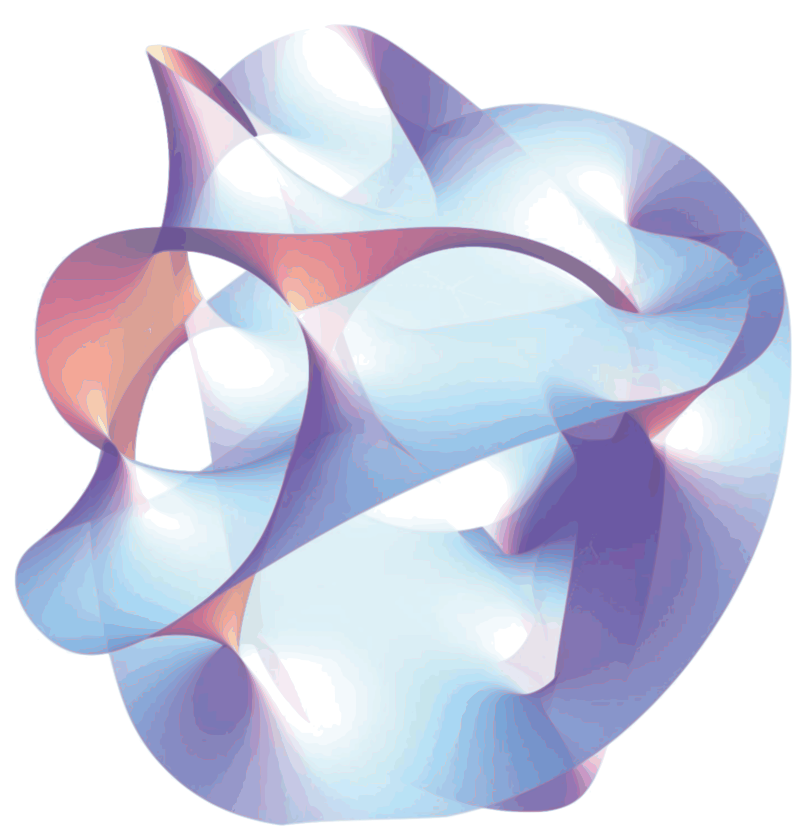
string theory
physical theory of quantized one-dimensional objects with conformal symmetry, which can describe gravitation, gauge theory and other phenomena

uncertainty principle
fundamental principle in quantum physics

quantum field theory
theoretical framework combining classical field theory, special relativity, and quantum mechanics

mathematical physics
use of mathematics to solve physics problems

Fourier transform
mathematical transform that expresses a function of time as a function of frequency

Laplace transform
the integral transform ∫₀^∞ d𝑠 𝑓(𝑡)exp(−𝑠𝑡)
vector calculus
calculus of vector-valued functions

field
physical quantity, represented by a number or tensor, that has a value for each point in space-time

Lorentz transformation
space-time coordinate transformation that conserves the form of Maxwell’s equations
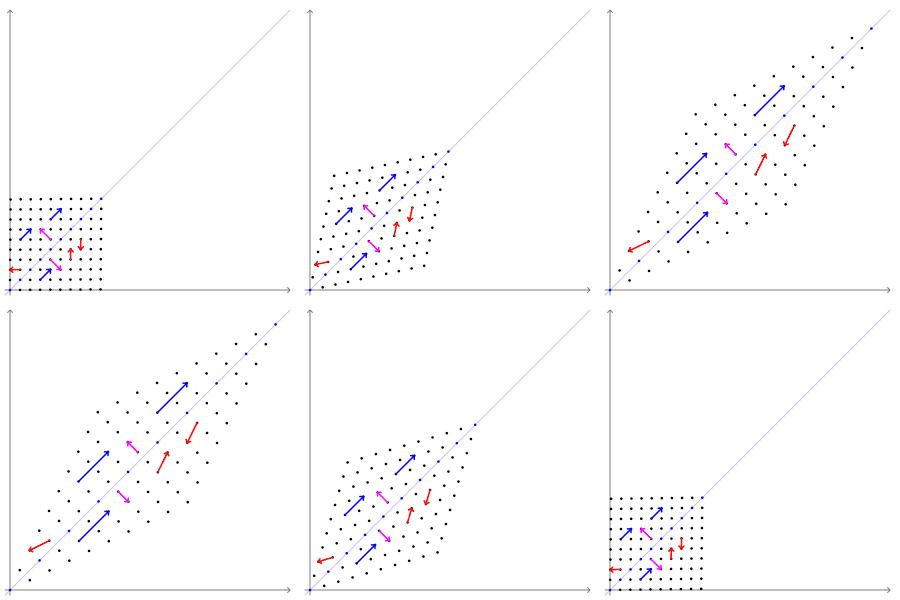
eigenvectors and eigenvalues
vectors that map to their scalar multiples, and the associated scalars

partial differential equation
differential equation that contains unknown multivariable functions and their partial derivatives
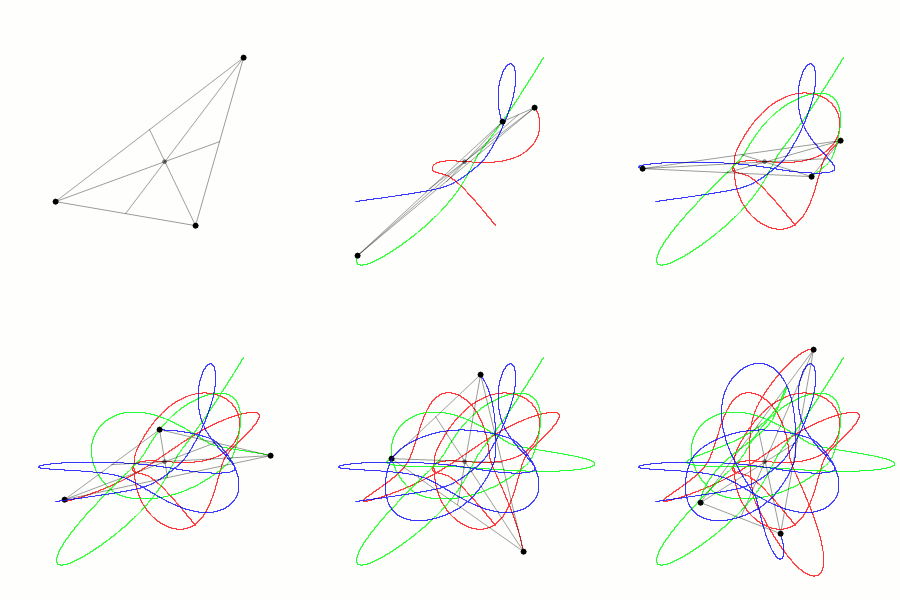
three-body problem
classical mechanics problem of three massive point particles interacting via Newtonian gravity; special case of the 𝑛‐body problem for 𝑛=3
zero-point energy
lowest possible energy of a quantum system or field
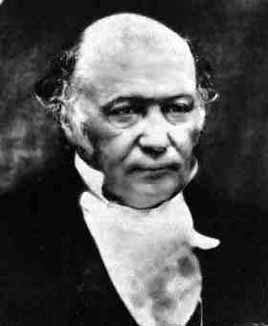
Hamiltonian mechanics
formulation of classical mechanics in terms of phase space and Hamiltonian function

superposition principle
fundamental physics principle stating that physical solutions of linear systems are linear

Fourier analysis
branch of mathematics regarding periodic and continuous signals
analytical mechanics
formalism of mechanics based on the least action principle
Pauli matrices
matrices important in quantum mechanics and the study of spin
Klein–Gordon equation
relativistic wave equation in quantum mechanics
Poisson's equation
partial differential equation of elliptic type with broad utility in mechanical engineering and theoretical physics
Einstein notation
shorthand notation for tensor operations
group velocity
physical quantity
pendulum
idealized concept of a pendulum
quantization
procedure to construct a quantum system whose classical limit corresponds to a given classical system
gauge theory
physical theory having a gauge symmetry
Ehrenfest theorem
theorem that the time evolution of the expectation value of a quantum observable is proportional to that of the commutator between the observable and the Hamiltonian (plus that of any explicit time dependence of the operator, if any)
mathematical formulation of quantum mechanics
mathematical structures that allow quantum mechanics to be explained
Green's function
Green's functions
Christoffel symbol
in Riemannian geometry, the coefficient of the Levi-Civita connection of a Riemannian metric

tractrix
thumb|500px|Tractrix created by the end of a pole (lying flat on the ground). Its other end is first pushed then dragged by a finger as it spins out to one side.
Calabi–Yau manifold
Riemannian manifold with SU(n) holonomy

renormalization
Renormalization is a collection of techniques in quantum field theory, statistical field theory, and the theory of self-similar geometric structures, that is used to treat infinities arising in calculated quantities by altering values of these quantities to compensate for effects of their self-interactions. But even if no infinities arose in loop diagrams in quantum field theory, it could be shown that it would be necessary to renormalize the mass and fields appearing in the original Lagrangian.
rotation matrix
matrix representing a Euclidean rotation
perturbation theory
mathematical methods used to find an approximate solution to a problem which cannot be solved exactly
path integral
formal sum or integral over all histories of a quantum system
Laplace–Runge–Lenz vector
vector used chiefly to describe the shape and orientation of the orbit of one astronomical body around another, such as a planet revolving around a star
classical field theory
physical theory describing classical fields
Legendre transformation
involutive transformation on real-valued convex functions of one real variable
double pendulum
pendulum with another pendulum attached to its end

diffeomorphism
In mathematics, a diffeomorphism is an isomorphism of differentiable manifolds. It is an invertible function that maps one differentiable manifold to another such that both the function and its inverse are continuously differentiable.
perturbation theory
quantum mechanics
potential theory
branch of mathematic studying harmonic functions
WKB approximation
method for finding approximate solutions to linear differential equations with spatially varying coefficients
Lagrangian
functional of dynamical variables whose variation yields the equations of motion in Lagrangian mechanics
Electromagnetic wave equation
partial differential equation used in physics
special unitary group
group of unitary matrices with determinant of 1
radius of convergence
mathematical concept
mirror symmetry
conjectured relation between pairs of Calabi–Yau manifolds; situation where two Calabi–Yau manifolds look very different geometrically but are nevertheless equivalent when employed as extra dimensions of string theory
change of variables
technique in algebra in which the original variables are replaced with functions of other variables
observable
In physics, an observable is a physical property or physical quantity that can be measured. In classical mechanics, an observable is a real-valued "function" on the set of all possible system states, e.g., position and momentum. In quantum mechanics, an observable is described by a linear operator.
For example, these operators might represent submitting the system to various electromagnetic fields and eventually reading a value.
Fermi's golden rule
formula that describes the transition rate from one energy eigenstate of a quantum system into other energy eigenstates
Dannie Heineman Prize for Mathematical Physics
award conferred by the American Physical Society
Boltzmann machine
type of stochastic neural network
Clebsch–Gordan coefficient
coefficients in angular momentum eigenstates of quantum systems
conformal field theory
quantum field theory enjoying conformal symmetry
imaginary time
Wick-rotated time coordinates in relativistic field theory
spin glass
material state characterized by magnetic disorder

propagator
In quantum mechanics and quantum field theory, the propagator is a function that specifies the probability amplitude for a particle to travel from one place to another in a given period of time, or to travel with a certain energy and momentum. In Feynman diagrams, which serve to calculate the rate of collisions in quantum field theory, virtual particles contribute their propagator to the rate of the scattering event described by the respective diagram. Propagators may also be viewed as the inverse of the wave operator appropriate to the particle, and are, therefore, often called ''(causal) Gre
relativistic quantum mechanics
quantum mechanics taking into account particles near or at the speed of light