Category
page 1Medical mnemonics

headache
A headache, also known as cephalalgia, is the symptom of pain in the face, head, or neck. It can occur as a migraine, tension-type headache, or cluster headache. There is an increased risk of depression in those with severe headaches.

elbow
The elbow is the region between the upper arm and the forearm that surrounds the elbow joint. The elbow includes prominent landmarks such as the olecranon, the cubital fossa (also called the chelidon, or the elbow pit), and the lateral and the medial epicondyles of the humerus. The elbow joint is a hinge joint between the arm and the forearm; more specifically between the humerus in the upper arm and the radius and ulna in the forearm which allows the forearm and hand to be moved towards and away from the body.
The term elbow is specifically used for humans and other primates, and in other ver

melanoma

atropine
Atropine is a tropane alkaloid and anticholinergic medication used to treat certain types of nerve agent and pesticide poisonings as well as some types of slow heart rate, and to decrease saliva production during surgery. It is typically given intravenously or by injection into a muscle. Eye drops are also available which are used to treat uveitis and early amblyopia. The intravenous solution usually begins working within a minute and lasts half an hour to an hour. Large doses may be required to treat some poisonings.

mesencephalon
The midbrain or mesencephalon is the uppermost portion of the brainstem connecting the diencephalon and cerebrum with the pons.'''''' It consists of the cerebral peduncles, tegmentum, and tectum.
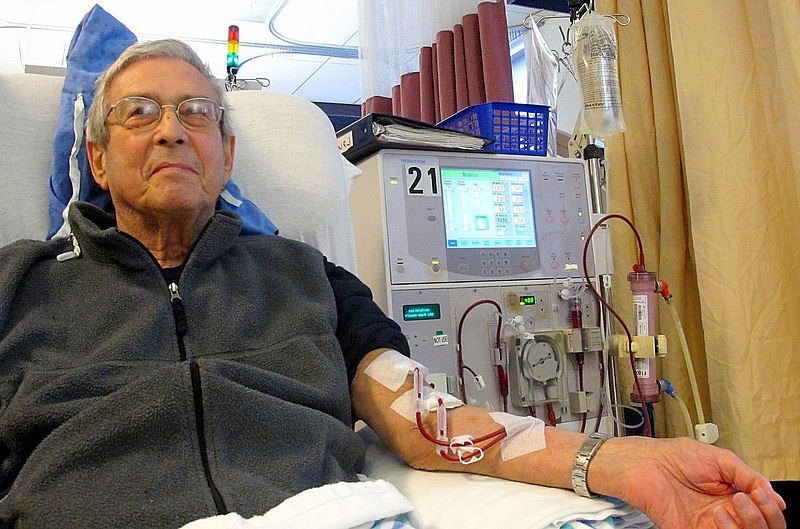
renal dialysis
removal of nitrogenous waste and toxins from the body in place of or to augment the kidney

trigeminal nerve
nerve in human face
.jpg)
phencyclidine

emergency medicine
medical specialty concerned with care for patients who require immediate medical attention

cephalosporin antibiotic
thumb|class=skin-invert-image|Structure of the classical cephalosporins
The cephalosporins (sg. ) are a class of β-lactam antibiotics originally derived from the fungal genus Acremonium, which was previously known as Cephalosporium.

Apgar score
a integrated approach to determining the health status of newborns in the context of child mortality.

hypercalcemia
Hypercalcemia, also spelled hypercalcaemia, is a high calcium (Ca2+) level in the blood serum. The normal range for total calcium is 2.1–2.6 mmol/L (8.8–10.7 mg/dL, 4.3–5.2 mEq/L), with levels greater than 2.6 mmol/L defined as hypercalcemia. Those with a mild increase that has developed slowly typically have no symptoms. In those with greater levels or rapid onset, symptoms may include abdominal pain, bone pain, confusion, depression, weakness, kidney stones or an abnormal heart rhythm including cardiac arrest.
differential diagnosis
distinguishing of a particular disease or condition from others that present similar clinical features

scalp
The scalp is the area of the head where head hair grows. It is made up of skin, layers of connective and fibrous tissues, and the membrane of the skull. Anatomically, the scalp is part of the epicranium, a collection of structures covering the cranium. The scalp is bordered by the face at the front, and by the neck at the sides and back. The scientific study of hair and scalp is called trichology.
persistent vegetative state
disorder of consciousness caused by severe brain damage
DiGeorge syndrome
T cell deficiency disease that is the result of a large deletion of chromosome 22, which includes the DGS gene needed for development of the thymus and related glands with subsequent lack of T-cell production

hypocalcaemia
reactive arthritis
arthritis that is an autoimmune disease which develops due to an infection located elsewhere in the body
acute pancreatitis
Human disease
eye examination
series of tests assessing vision and pertaining to the eyes
anticholinergic
Anticholinergics (anticholinergic agents) are substances that block the action of the acetylcholine (ACh) neurotransmitter at synapses in the central and peripheral nervous system.
Meckel's diverticulum
congenital disorder of digestive system
erythema nodosum
skin disease
epiphyseal plate
part of a long bone where growth takes place
erector spinae muscles
muscle group in humans
afferent nerve fiber
anatomical structure
efferent nerve fiber
axonal projections that exit a particular region
glucogenic amino acid
amino acids that can be converted into glucose through gluconeogenesis
multiple endocrine neoplasia
human disease
cavernous sinus
one of the dural venous sinuses
NPH insulin
pharmaceutical drug
Organophosphate poisoning
Bodily harm caused by consumptions of organophosphates.
breast self-examination
procedure which is aimed to keep a check on breasts, to avoid late identification of any breast disorder
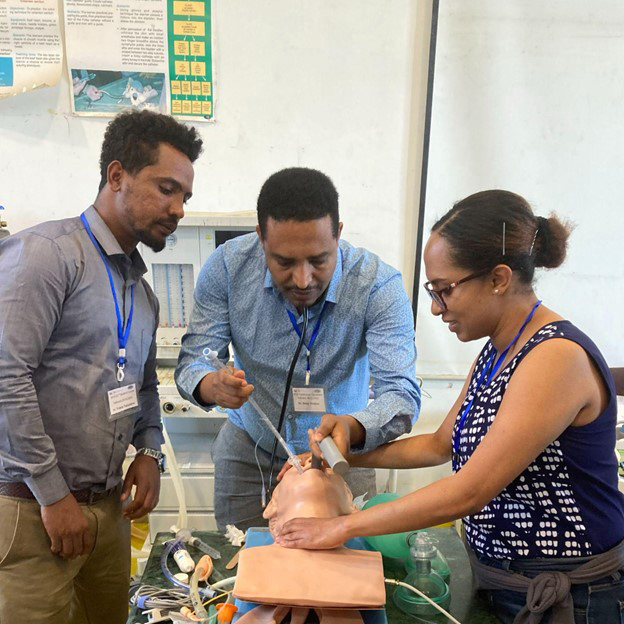
Advanced trauma life support
ATLS
Child-Pugh score
Scoring system to assess the prognosis of chronic liver disease
shoulder dystocia
birthing obstruction complication
Hypothenar eminence
group of three muscles of the palm

toxidrome
{| class="wikitable" style = "float: right; margin-left:15px; text-align:center"
|+ Toxidrome
|-
!Symptoms|| BP || HR || RR || Temp || Pupil size|| Bowel sounds ||Diaphoresis
|-
| anticholinergic || up || up || up || up || up || down || down
|-
| cholinergic || ~ || ~ || ~ || ~ || down || up || up
|-
| hallucinogenic || up || up || up || ~ || up || up || ~
|-
| sympathomimetic || up || up || up || up || up || up || up
|-
| sedative–hypnotic || down || down || down || down || ~ || down || down
|}
A toxidrome (a portmanteau of toxic and syndrome, coined in 1970 by Mofenson and Gree
anion gap in blood
difference between certain measured cations and the measured anions in serum, plasma, or urine
Ketogenic amino acid
type of amino acid
labor induction
artificial stimulation of obstetric labor
erythroderma
Erythroderma is an inflammatory skin disease with redness and scaling that affects nearly the entire cutaneous surface. This term applies when 90% or more of the skin is affected.

HLA-B27
{| id="drugInfoBox" style="float: right; clear: right; margin: 0 0 0.5em 1em; background: #ffffff;" class="toccolours" border=0 cellpadding=0 align="right" width="240px"
|- align="center"
| colspan="3" | thumb|HLA-B*2705-peptide (chain A shown in green cartoon, chain B shown in yellow cartoon) complexed to a fragment of the influenza nucleoprotein NP383-391 (orange, sticks). PDB ID 2BST
|- style="text-align: center; line-height: 0.75;background:#eeeeee"
| colspan="3" color="white" | B*2705-β2MG with bound peptide
|- style="text-align: center; line-height: 1.00;background:#eeeeee"
| colspan="
superior orbital fissure
foramen in the skull allowing for passage of cranial nerves, the ophthalmic vein, and sympathetic nerves
ABC
initialism mnemonics
intercostal arteries
arteries supplying the space between the ribs

Inguinal triangle
region of the abdominal wall, also known by the eponym Hesselbach's triangle

Bishop score
pre-labor scoring system to assist in predicting whether induction of labor will be required
RICE
medical acronym
CHADS2 score
estimation of stroke risk in some patients
caloric reflex test
test of the vestibulo-ocular reflex
omental foramen
part of the human abdomen
mental status examination
way of observing and describing a patient's current state of mind
GNAS complex locus
mammalian protein found in Homo sapiens
nasociliary nerve
Branch of the ophthalmic nerve

shoulder problem
pain, dislocation or other issues with the shoulder or shoulder joint
vitelline duct
narrow tube connecting the yolk sac with the midgut of the embryo
cholinergic crisis
over-stimulation at a neuromuscular junction due to an excess of acetylcholine
Centor criteria
set of criteria which may be used to identify the likelihood of a bacterial infection in adult patients complaining of a sore throat
pulmonary auscultation
listening to lung sounds, one of the parts of respiratory examination