Category
page 1Medical signs
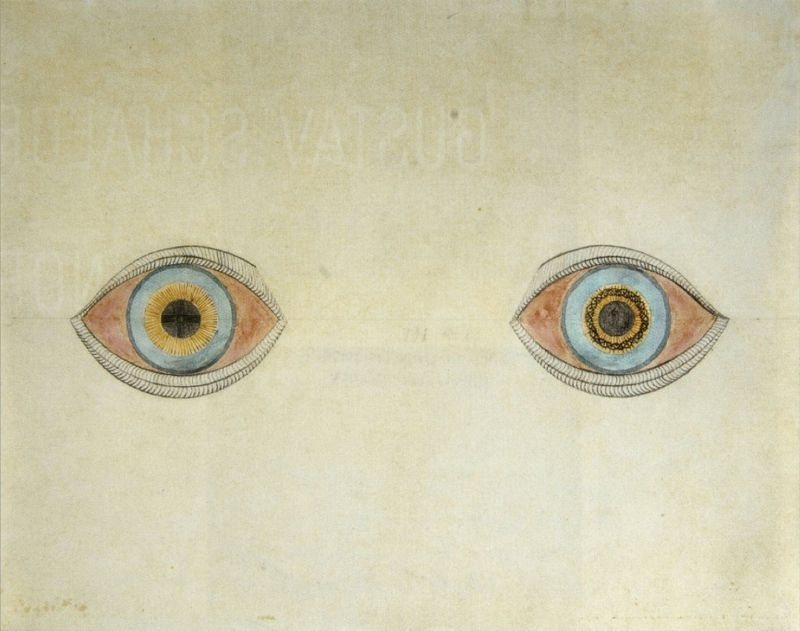
hallucination
A hallucination is a perception in the absence of an external context stimulus that has the compelling sense of reality. They are distinguishable from several related phenomena, such as dreaming (REM sleep), which does not involve wakefulness; pseudohallucination, which does not mimic real perception, and is accurately perceived as unreal; illusion, which involves distorted or misinterpreted real perception; and mental imagery, which does not mimic real perception, and is under voluntary control. Hallucinations also differ from "delusional perceptions", in which a correctly sensed and interpre

flatulence
Flatulence is the expulsion of gas from the intestines via the anus, commonly referred to as farting. "Flatus" is the medical word for gas generated in the stomach or bowels. A proportion of intestinal gas may be swallowed environmental air; hence, flatus is not entirely generated in the stomach or bowels. The scientific study of this area of medicine is termed flatology.

edema
Edema (American English), also spelled oedema (Commonwealth English), and also known as fluid retention, swelling, dropsy and hydropsy, is the build-up of fluid in the body's tissue. Most commonly, the legs or arms are affected. Symptoms may include skin that feels tight, the area feeling heavy, and joint stiffness. Other symptoms depend on the underlying cause.

body mass index
measure of relative weight based on an individual's mass and height

urination
Urination is the release of urine from the bladder through the urethra in placental mammals, or through the cloaca in other vertebrates. It is the urinary system's form of excretion. It is also known medically as micturition, voiding, uresis, or, rarely, emiction, and known colloquially by various names including peeing, weeing, pissing, and euphemistically number one. The process of urination is under voluntary control in healthy humans and other animals, but may occur as a reflex in infants, some elderly individuals, and those with neurological injury. It is normal for adult humans to urinat

defecation
alt=European bee-eater defecating|thumb|European bee-eater defecating
right|frame|Human anatomy of the anorecturm (anus and [[rectum)]]

neoplasm
A neoplasm () is a type of abnormal and excessive growth of tissue. The process that occurs to form or produce a neoplasm is called neoplasia. The growth of a neoplasm is uncoordinated with that of the normal surrounding tissue, and persists in growing abnormally, even if the original trigger is removed. This abnormal growth usually forms a mass, which may be called a tumour or tumor.

nystagmus
Nystagmus is a condition of involuntary (or voluntary, in some cases) eye movement. People can be born with it but more commonly acquire it in infancy or later in life. In many cases it may result in reduced or limited vision.

cyanosis
Cyanosis is the change of tissue color to a bluish-purple hue, as a result of decrease in the amount of oxygen bound to the hemoglobin in the red blood cells of the capillary bed. Cyanosis is apparent usually in the body tissues covered with thin skin, including the mucous membranes, lips, nail beds, and ear lobes. Some medications may cause discoloration such as medications containing amiodarone or silver. Furthermore, mongolian spots, large birthmarks, and the consumption of food products with blue or purple dyes can also result in the bluish skin tissue discoloration and may be mistaken for

bruise
A bruise, also known as a contusion, is a type of hematoma of tissue, the most common cause being capillaries damaged by trauma, causing localized bleeding that extravasates into the surrounding interstitial tissues. Most bruises occur close enough to the epidermis such that the bleeding causes a visible discoloration. The bruise then remains visible until the blood is either absorbed by tissues or cleared by immune system action. Bruises which do not blanch under pressure can involve capillaries at the level of skin, subcutaneous tissue, muscle, or bone.
.jpg)
heterochromia
Heterochromia is a variation in coloration most often used to describe color differences of the iris, but can also be applied to color variation of hair or skin. Heterochromia is determined by the production, delivery, and concentration of melanin (a pigment). It may be inherited, or caused by genetic mosaicism, chimerism, disease, or injury. It occurs in humans and certain breeds of domesticated animals.

anticoagulant
An anticoagulant, commonly known as a blood thinner, is a chemical substance that prevents or reduces the coagulation of blood, prolonging the clotting time. Some occur naturally in blood-eating animals, such as leeches and mosquitoes, which help keep the bite area unclotted long enough for the animal to obtain blood.

heart rate
number of contractions (beats) of the heart per minute (bpm)
visual acuity
clarity of vision

thrombocytopenia
In hematology, thrombocytopenia is a condition characterized by abnormally low levels of platelets (also known as thrombocytes) in the blood. Low levels of platelets in turn may lead to prolonged or excessive bleeding. It is the most common coagulation disorder among intensive care patients and is seen in a fifth of medical patients and a third of surgical patients.

miosis
Miosis, or myosis (), is excessive constriction of the pupil. The opposite condition, mydriasis, is the dilation of the pupil. Anisocoria is the condition of one pupil being more dilated than the other.

mydriasis
Mydriasis is the dilation of the pupil, usually having a non-physiological cause, or sometimes a physiological pupillary response. Non-physiological causes of mydriasis include disease, trauma, or the use of certain types of drugs. It may also be of unknown cause.
lesion
A lesion is any damage or abnormal change in the tissue of an organism, usually caused by injury or diseases. The term lesion is derived from the Latin , meaning "injury". Lesions may occur in plants and animals.
linea nigra
dark vertical line that appears on the abdomen during pregnancy
purpura
Purpura () is a condition of red or purple discolored spots on the skin that do not blanch on applying pressure. The spots are caused by bleeding underneath the skin secondary to platelet disorders, vascular disorders, coagulation disorders, or other causes. They measure 3–10 mm, whereas petechiae measure less than 3 mm, and ecchymoses greater than 1 cm.
abdominal obesity
excess fat around the stomach and abdomen
acanthosis nigricans
skin condition
personalized medicine
medical procedure that separates patients into different groups
vital signs
group of the 4-6 important medical signs that indicate the status of the body’s vital functions

hematochezia
Hematochezia is a form of blood in stool, in which fresh blood passes through the anus while defecating. It differs from melena, which commonly refers to blood in stool originating from upper gastrointestinal bleeding (UGIB). The term derives from Greek αἷμα ("blood") and χέζειν ("to defaecate"). Hematochezia is commonly associated with lower gastrointestinal bleeding, but may also occur from a brisk upper gastrointestinal bleed. The difference between hematochezia and rectorrhagia is that rectal bleeding is not associated with defecation; instead, it is associated with expulsion of fresh brig
intracranial pressure
pressure inside the skull and thus in the brain tissue and cerebrospinal fluid
body fat percentage
biomedical measurand
hepatosplenomegaly
Hepatosplenomegaly (commonly abbreviated HSM) is the simultaneous enlargement of both the liver (hepatomegaly) and the spleen (splenomegaly). Hepatosplenomegaly can occur as the result of acute viral hepatitis, infectious mononucleosis, and histoplasmosis or it can be the sign of a serious and life-threatening lysosomal storage disease. Systemic venous hypertension can also increase the risk for developing hepatosplenomegaly, which may be seen in those patients with right-sided heart failure.
waist-hip ratio
dimensionless ratio of the circumference of the waist to that of the hips

pallor
Pallor is a pale color of the skin that can be caused by illness, emotional shock or stress, stimulant use, or anemia, and is the result of a reduced amount of oxyhaemoglobin and may also be visible as pallor of the conjunctivae of the eyes on physical examination.
myoclonus
Myoclonus is a brief, involuntary, irregular (lacking rhythm) twitching of a muscle, a joint, or a group of muscles, different from clonus, which is rhythmic or regular. Myoclonus (myo- "muscle", clonus "spasm") describes a medical sign and, generally, is not a diagnosis of a disease. It belongs to the hyperkinetic movement disorders, among tremor and chorea for example. These myoclonic twitches, jerks, or seizures are usually caused by sudden muscle contractions (positive myoclonus) or brief lapses of contraction (negative myoclonus). The most common circumstance under which they occur is whi

pyuria
Pyuria is the condition of urine containing white blood cells or pus. Defined as the presence of 6–10 or more neutrophils per high power field of unspun, voided mid-stream urine, it can be a sign of a bacterial urinary tract infection. Pyuria may be present in people with sepsis, or in older people with pneumonia. Others additionally require discoloration, clouding or change in the smell of urine for a pyuria to be present. Without these additional features, there is said to be leukocyturia.
.svg)
hypokinesia
Hypokinesia is one of the classifications of movement disorders, and refers to decreased bodily movement. Hypokinesia is characterized by a partial or complete loss of muscle movement due to a disruption in the basal ganglia. Hypokinesia is a symptom of Parkinson's disease shown as muscle rigidity and an inability to produce movement. It is also associated with mental health disorders and prolonged inactivity due to illness, amongst other diseases.
clonus
thumb|Ankle clonus
Clonus is a set of involuntary and rhythmic muscular contractions and relaxations. Clonus is a sign of certain neurological conditions, particularly associated with upper motor neuron lesions involving descending motor pathways and, in many cases, is accompanied by spasticity (another form of hyperexcitability). Unlike small spontaneous twitches known as fasciculations (usually caused by lower motor neuron pathology), clonus causes large motions that are usually initiated by a reflex. Studies have shown clonus beat frequency to range from three to eight Hz on average and may
pathognomonic
Pathognomonic (synonym pathognomic) is a term, often used in medicine, that means "characteristic for a particular disease". A pathognomonic sign is a particular sign whose presence means that a particular disease is present beyond any doubt. The absence of a pathognomonic sign does not rule out the disease. Labelling a sign or symptom "pathognomonic" represents a marked intensification of a "diagnostic" sign or symptom.
muscle atrophy
process that is characterized by a decrease in protein content, fiber diameter, force production and fatigue resistance.

xanthoma
A xanthoma (pl. xanthomas or xanthomata) (condition: xanthomatosis) is a deposition of yellowish cholesterol-rich material that can appear anywhere in the body in various disease states. They are cutaneous manifestations of lipidosis in which lipids accumulate in large foam cells within the skin. They are associated with hyperlipidemias, both primary and secondary types.

osteopenia
thumb|Osteopenia exists on a spectrum of normal to dangerously low bone density (osteoporosis).
McBurney's point
point over the right side of the abdomen that is one-third of the distance from the anterior superior iliac spine to the umbilicus
heart rate variability
variation in the time intervals between heartbeats
Caput medusae
appearance of distended and engorged superficial epigastric veins
partial thromboplastin time
test for coagulation of the blood
anasarka
Anasarca is a severe and generalized form of edema, with subcutaneous tissue swelling throughout the body. Unlike typical edema, which almost everyone will experience at some time and can be relatively benign, anasarca is a pathological process reflecting a severe disease state and can involve the cavities of the body in addition to the tissues.

chancre
thumb|Chancres on the face and hand. Up-left: upper lip, Up-right: lower lip, Bottom-right: right upper eyelid, Bottom-right: thumb.
thumb|right|Chancre on the underside of the penis
A chancre ( ) is a painless genital ulcer most commonly formed during the primary stage of syphilis. This infectious lesion forms around 21 days after the initial exposure to Treponema pallidum, the gram-negative spirochaete bacterium causing syphilis, but can range from 10 to 90 days. Without treatment it may persist for two to six weeks before healing. Chancres transmit syphilis through direct physical contact.
auditory hallucination
hearing sounds without finding external stimuli, but having the characteristic of actually hearing sounds

hyperpigmentation
Hyperpigmentation is a condition characterized by the darkening of an area of the skin or nails due to an excess production of melanin, the pigment responsible for skin color. This increase in melanin can result from a variety of factors, including sun exposure, inflammation, trauma, certain medications, or underlying medical conditions.
human body temperature
typical temperature range found in humans
alogia
In psychology, alogia (; from Greek ἀ-, "without", and λόγος, "speech" + New Latin -ia) is poor thinking inferred from speech and language usage.
There may be a general lack of additional, unprompted content seen in normal speech, so replies to questions may be brief and concrete, with less spontaneous speech. This is termed poverty of speech
or laconic speech.
The amount of speech may be normal but conveys little information because it is vague, empty, stereotyped, overconcrete, overabstract, or repetitive.
This is termed poverty of content
or poverty of content of speech.
Under Scale for
Kernig's sign
medical condition
straight leg raise
test to determine whether a patient has a herniated disc
Brudziński's sign
simple neurological reaction that can be used to test patients for meningitis
café au lait spot
Type of birthmark
adynamia
Adynamia means lack of strength or vigor due to a pathological condition. It is often associated with a range of neurological diseases such as multiple sclerosis and medial-frontal lobe lesions. It may be episodical, hereditary, or periodic (all types are ICD-10-CM code G72.3).
subcutaneous emphysema
condition occuring when gas or air travels under the skin
symptom or sign
clinical symptom or sign as a first-order metaclass: to be used as P31 values for all symptom or sign classes, and instances are classes (e. g. sneezing or coughing)
macular retinal edema
Human disease
pulse pressure
difference between the systolic and diastolic pressure readings
hyperesthesia
Hyperesthesia is a condition that involves an abnormal increase in sensitivity to stimuli of the senses. Stimuli of the senses can include sound that one hears, foods that one tastes, textures that one feels, and so forth. Increased touch sensitivity is referred to as "tactile hyperesthesia", and increased sound sensitivity is called "auditory hyperesthesia". In the context of pain, hyperaesthesia can refer to an increase in sensitivity where there is both allodynia and hyperalgesia.
ideas of reference and delusions of reference
belief that certain gestures, environmental cues, innocuous events, comments and so forth are directed at oneself
cryoglobulinemia
Cryoglobulinemia is a rare medical condition characterized by the presence of cryoglobulins in the blood. Cryoglobulins are abnormal proteins composed of immunoglobulins and sometimes complement components. Cryoglobulins specifically form gel-like solids by clumping together and becoming insoluble at temperatures below 37 °C.