Category
page 1Modern art
%2C%20oil%20on%20canvas%2C%20100.3%20x%2073.6%20cm%2C%20Museum%20of%20Modern%20Art%20New%20York..jpg)
cubism
thumb|upright=1.15|Pablo Picasso, 1910, Girl with a Mandolin (Fanny Tellier), oil on canvas, 100.3 × 73.6 cm, [[Museum of Modern Art, New York]]

modernism
Modernism was an early 20th-century movement in literature, visual arts, performing arts, and music that emphasized experimentation, abstraction, and subjective experience. Philosophy, politics, architecture, and social issues were all aspects of this movement. Modernism centered around beliefs in a "growing alienation" from prevailing "morality, optimism, and convention" and a desire to change how "human beings in a society interact and live together".
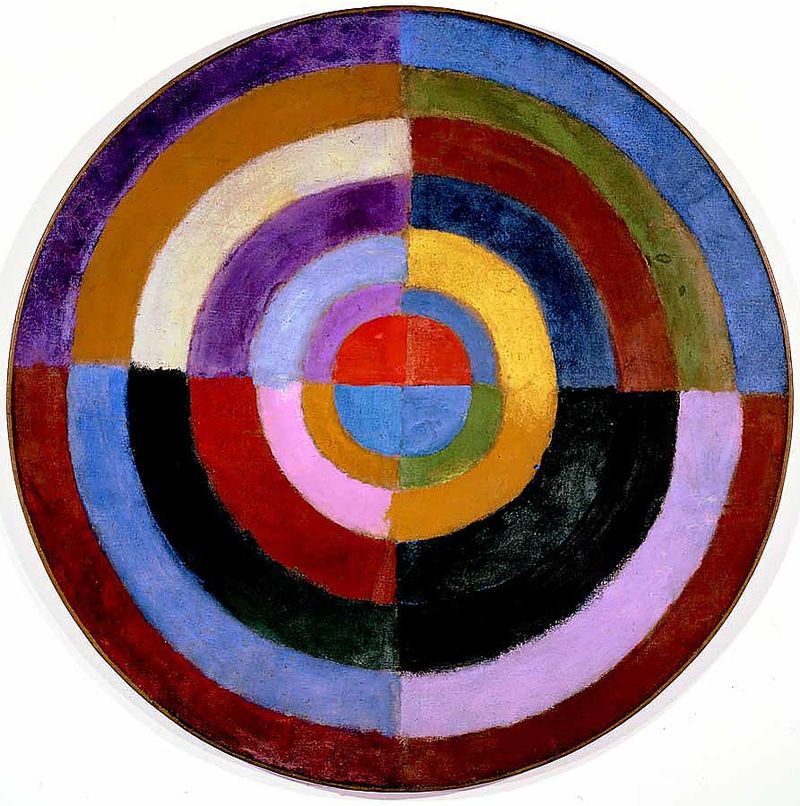
abstract art
art with a degree of independence from visual references in the world
%2C%20Museum%20of%20Modern%20Art%2C%20New%20York.jpg)
Futurism
thumb|300px|Gino Severini, 1912, Dynamic Hieroglyphic of the Bal Tabarin, oil on canvas with sequins, 161.6 × 156.2 cm (63.6 × 61.5 in.), [[Museum of Modern Art, New York]]
thumb|300px|Italian futurists Luigi Russolo, [[Carlo Carrà, Filippo Tommaso Marinetti, Umberto Boccioni and Gino Severini in front of Le Figaro, Paris, February 9, 1912]]

Art Nouveau
international philosophy and style of art, architecture and applied art

Symbolism
late nineteenth-century art movement of French, Russian and Belgian origin seeking to represent absolute truths symbolically through language and metaphorical images

avant-garde
thumb|right|300px|Avant-garde cinema, The Love of Zero (1928), a short film directed by the artist Robert Florey

Gertrude Stein
American author (1874–1946)
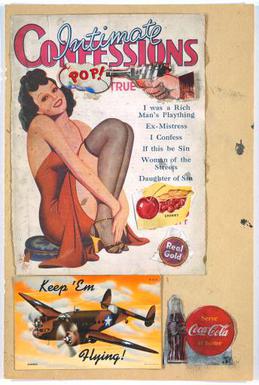
pop art
art movement

Art Deco
influential visual arts design style which first appeared in France during the 1920s

Minimalism

abstract expressionism
American post–World War II art movement

Constructivism
artistic and architectural philosophy

De Stijl
Dutch artistic movement

modern art
artistic works produced during the period extending roughly from the 1860s to the 1970s

Neo-impressionism
Neo-Impressionism is a term coined by French art critic Félix Fénéon in 1886 to describe an art movement founded by Georges Seurat. Seurat's most renowned masterpiece, A Sunday Afternoon on the Island of La Grande Jatte, marked the beginning of this movement when it first made its appearance at an exhibition of the Société des Artistes Indépendants (Salon des Indépendants) in Paris. Around this time, the peak of France's modern era emerged and many painters were in search of new methods. Followers of Neo-Impressionism, in particular, were drawn to modern urban scenes as well as landscapes and

Arts and Crafts movement
international design movement

Montparnasse
thumb|Montparnasse cemetery
Montparnasse () is an area in the south of Paris, France, on the left bank of the river Seine, centred at the crossroads of the Boulevard du Montparnasse and the Rue de Rennes, between the Rue de Rennes and boulevard Raspail. It is split between the 6th, 14th, and 15th arrondissements of the city. Montparnasse has been part of Paris

decadence
thumb|An orgy in Imperial Rome, by Henryk Siemiradzki
thumb|Romans during the Decadence, by [[Thomas Couture]]
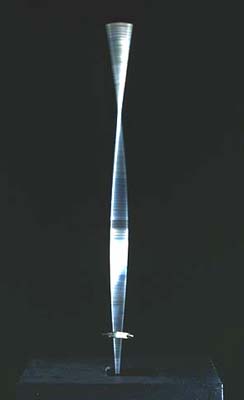
kinetic art
art genre of artworks that contains movement

degenerate art
term used by the German Nazi regime to describe modern art

United Buddy Bears
sculpture series

Japonisme
thumb|Young Ladies Looking at Japanese Objects by the painter James Tissot in 1869 is a representation of the popular curiosity about all Japanese items that started with the opening of the country in the [[Meiji Restoration of the 1860s.]]
Japonisme is a French term that refers to the popularity and influence of Japanese art and design among a number of Western European artists in the nineteenth century following the forced reopening of foreign trade with Japan in 1858. Japonisme was first described by French art critic and collector Philippe Burty in 1872.

Decadent movement
late-19th-century artistic and literary movement centered in Western Europe
art film
film genre
New Objectivity
attitude of public life in Weimar Germany as well as the art, literature, music, and architecture created to adapt to it

social realism
art showing conditions of the working class

primitivism
thumb|300px|In a Tropical Forest Combat of a Tiger and a Buffalo (1908–1909), by Henri Rousseau
In the arts of the Western world, Primitivism is a mode of aesthetic idealization that means to recreate the experience of the primitive time, place, and person, either by emulation or by re-creation. In Western philosophy, Primitivism proposes that the people of a primitive society possess a morality and an ethics that are superior to the urban value system of civilized people.

Aestheticism
Aestheticism (also known as the aesthetic movement) was an art movement in the late 19th century that valued the appearance of literature, music, fonts, and the arts over their functions. According to Aestheticism, art should be produced to be beautiful, rather than to teach a lesson, create a parallel, or perform another didactic purpose, a sentiment expressed in the slogan "art for art's sake." Aestheticism flourished, in the 1870s and 1880s, gaining prominence and the support of notable writers, such as Walter Pater and Oscar Wilde. Those seen as guided by the movement were known as Aesthet

COBRA
artist collective and art movement
%2C%201922%2C%20Nature%20morte%20verticale%20(Vertical%20Still%20Life)%2C%20oil%20on%20canvas%2C%20146.3%20x%2089.3%20cm%2C%20Kunstmuseum%2C%20Basel.jpg)
purism
thumb|200px|Le Corbusier, 1922, Nature morte verticale (Vertical Still Life), oil on canvas, , [[Kunstmuseum Basel]]
Purism, referring to the arts, was a movement that took place between 1918 and 1925 that influenced French painting and architecture. Purism was led by Amédée Ozenfant and Charles-Édouard Jeanneret (Le Corbusier). Ozenfant and Le Corbusier formulated an aesthetic doctrine born from a criticism of Cubism and called it Purism: where objects are represented as elementary forms devoid of detail. The main concepts were presented in their short essay "Après le Cubisme" (After Cubism)
hyperrealism
art movement
Situationist International
international organization of social revolutionaries
action painting
style of painting

neo-expressionism
Neo-expressionism is a style of late modernist or early-postmodern painting and sculpture that emerged in the late 1970s. Neo-expressionists were sometimes called Transavantgarde, Junge Wilde or Neue Wilden ('The new wild ones'; 'New Fauves' would better meet the meaning of the term). It is characterized by intense subjectivity and rough handling of materials.
.jpg)
vorticism
thumb|right|Edward Wadsworth, Vorticist Study, 1914, [[Museo Thyssen-Bornemisza, Madrid]]

cloisonnism
thumb|Paul Gauguin, [[The Yellow Christ (Le Christ jaune)1889, oil on canvasAlbright-Knox Art Gallery, Buffalo, New York]]
Cloisonnism is a style of post-Impressionist painting with bold and flat forms separated by dark contours. The term was coined by critic Édouard Dujardin on the occasion of the Salon des Indépendants, in March 1888. Artists Émile Bernard, Louis Anquetin, Paul Gauguin, Paul Sérusier, and others started painting in this style in the late 19th century. The name evokes the technique of cloisonné, where wires (cloisons or "compartments") are soldered to the body of the piece, f
Arte Povera
Italian art movement

Neo-romanticism
thumb|300px| Pena Palace in [[Sintra, Portugal one of the points of reference for Neo-Romantic architecture]]
The term neo-romanticism is used to cover a variety of movements in philosophy, literature, music, painting, and architecture, as well as social movements, that exist after and incorporate elements from the era of Romanticism.
counterculture of the 1960s
cultural phenomenon that developed first in the United States and United Kingdom and spread throughout much of the Western world between the early 1960s and the early 1970s
found object
art created from undisguised, but often modified, objects or products that are not normally considered art
environmental art
genre of art engaging nature and ecology
Young Poland
1890–1918 modernist arts movement in Poland
Mexican muralism
global movement inspired by Mexican muralism

Rayonism
thumb|300px|right|Mikhail Larionov, Red Rayonism, 1913

Catalan modernism
Modernisme (, Catalan for "modernism"), also known as Catalan modernism and Catalan art nouveau, is the historiographic denomination given to an art and literature movement associated with the search of a new entitlement of Catalan culture, one of the most predominant cultures within Spain. Nowadays, it is considered a movement based on the cultural revindication of a Catalan identity. Its main form of expression was Modernista architecture, but it also encompassed many other arts, such as painting and sculpture, and especially the design and the decorative arts (cabinetmaking, carpentry, forg
Russian avant-garde
influential wave of modern art that flourished in Russia about 1890 to 1930
School of Paris
art movement
Color Field
art movement emerging in New York during the 1940s, using large fields of flat, solid color, with less emphasis on brushstrokes
Armory Show
1913 International Exhibition of Modern Art
Ashcan School
American art movement
Poetic realism
French film movement

Macchiaioli
thumb|right|Hay Stacks by Giovanni Fattori, a leading artist in the Macchiaioli movement
The Macchiaioli () were a group of Italian painters active in Tuscany in the second half of the nineteenth century. They strayed from antiquated conventions taught by the Italian art academies, and did much of their painting outdoors in order to capture natural light, shade, and colour. This practice relates the Macchiaioli to the French Impressionists who came to prominence a few years later, although the Macchiaioli pursued somewhat different purposes. The most notable artists of this movement were Giuse
geometric abstraction
form of abstract art involving geometry
%20-%20panoramio.jpg)
anti-art
thumb|''Artist's Shit'' (Italian: ) is a 1961 artwork by the Italian artist [[Piero Manzoni, which consists of 90 tin cans, each reportedly filled with of faeces. One of his friends, Enrico Baj, said that the cans were meant as "an act of defiant mockery of the art world, artists, and art criticism".]]

Precisionism
thumb|right|250px|Charles Demuth, Aucassin and Nicolette, oil on canvas, 1921
International Exhibition of Modern Decorative and Industrial Arts
world's fair held in Paris in 1925
Sergei Shchukin
Russian art collector (1854-1936)
International Typographic Style
20th century European graphic design style
concrete art
art movement