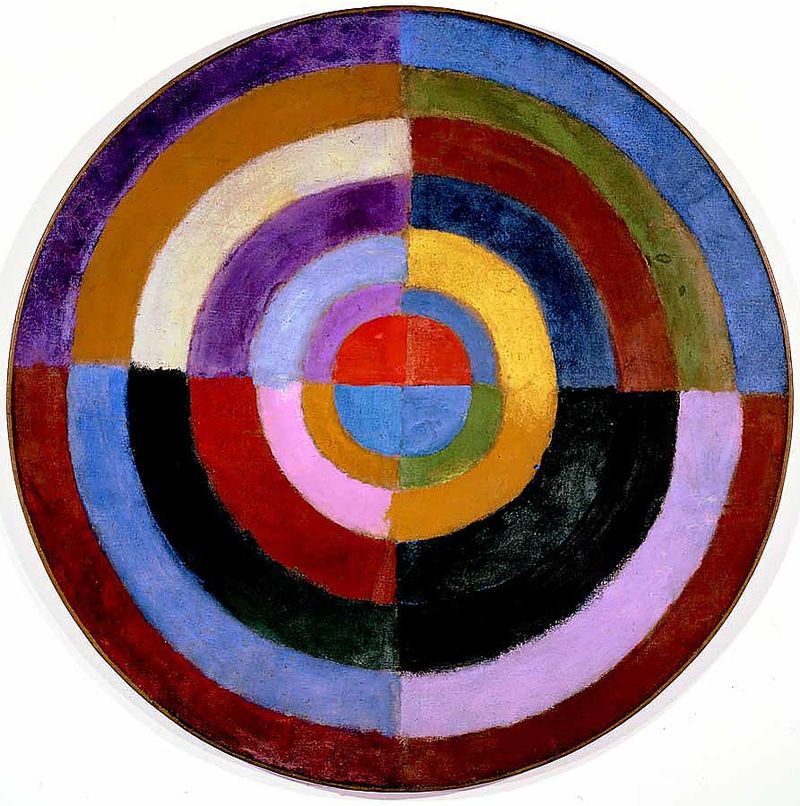
File:Robert_Delaunay,_1913,_Premier_Disque,_134_cm,_52.7_inches,_Private_collection.jpg · Wikimedia Commons · See Wikimedia Commons
abstract art
Sign in to saveart with a degree of independence from visual references in the world
Abstract art is art that doesn't try to represent things as they look in real life, instead focusing on colors, shapes, and forms for their own sake. It matters because it opened up new possibilities for what art could be and express, moving beyond the requirement to depict recognizable subjects.
AI-generated from the Wikipedia summary — may contain errors.
Wikidata facts
- Instance of
- art style
- Subclass of
- modern art
- Image
- Hilma af Klint Svanen.jpg
Show 8 more facts
- on focus list of Wikimedia project
- Wikipedia:Vital articles/Level/4
- P8168
- Pascal Berenguer
- Commons category
- Abstract art
- topic's main category
- Category:Abstract art
- has characteristic
- abstraction
- different from
- abstraction
- hashtag
- abstractart
- significant person
- Wassily Kandinsky
via Wikidata · CC0
~22 min read
Encyclopedic overview
Robert Delaunay, 1912–13, Le Premier Disque, 134 cm (52.7 in.), private collection Abstract art uses visual language of shape, form, color, and line to create a composition which may exist with a degree of independence from visual references in the world. Abstract art, non-figurative art, non-objective art, and non-representational art are all closely related terms. They have similar, but perhaps not identical, meanings.
Western art had been, from the Renaissance up to the middle of the 19th century, underpinned by the logic of perspective and an attempt to reproduce an illusion of visible reality. By the end of the 19th century, many artists felt a need to create a new kind of art that would encompass the fundamental changes taking place in technology, science, and philosophy. The sources from which individual artists drew their theoretical arguments were diverse and reflected the social and intellectual preoccupations in all areas of Western culture at that time.
Excerpted from Wikipedia’s “abstract art” article, available under the CC BY-SA 4.0 licence.
Gallery (12)
Available in 84 languages
- Español
- Français
- Deutsch
- 中文
- 日本語
- Русский
- Português
- Italiano
- العربية
- हिन्दी
- Afrikaans
- Armenian
- Asturian
- Azerbaijani
- Bahasa Indonesia
- Bangla
- Bashkir
- Basque
Show 65 more
- be_x_old
- Belarusian
- Bosnian
- Bulgarian
- Catalan
- Central Kurdish
- Chuvash
- Croatian
- Czech
- Danish
- Egyptian Arabic
- Esperanto
- Estonian
- Filipino
- Finnish
- Galician
- Georgian
- Greek
- Hebrew
- Hungarian
- Icelandic
- Ido
- Javanese
- Kazakh
- Kyrgyz
- Latin
- Latvian
- Lithuanian
- lld
- Malayalam
- Mongolian
- Nederlands
- Newari
- Norwegian
- Norwegian Nynorsk
- Pashto
- Piedmontese
- Polski
- Punjabi
- Romanian
- Rusyn
- Scots
- Serbian
- Serbian (Latin)
- simple
- Sindhi
- Sinhala
- Slovak
- Slovenian
- Svenska
- Swahili
- Tajik
- Tamil
- Telugu
- Tiếng Việt
- Türkçe
- Ukrainian
- Urdu
- Uzbek
- Wu Chinese
- Yakut
- zh_yue
- فارسی
- ไทย
- 한국어
via Wikidata sitelinks · CC0