%2C%201922%2C%20Nature%20morte%20verticale%20(Vertical%20Still%20Life)%2C%20oil%20on%20canvas%2C%20146.3%20x%2089.3%20cm%2C%20Kunstmuseum%2C%20Basel.jpg)
purism
Sign in to saveAlso known as purismus (architektura)
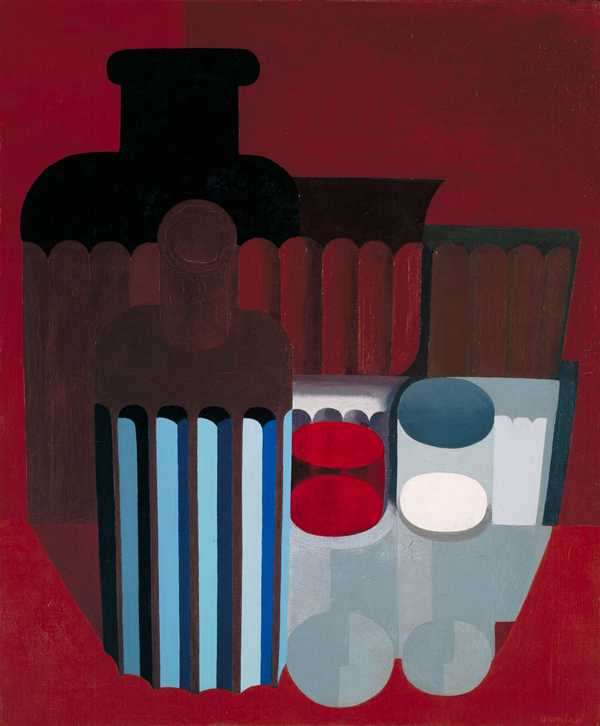
thumb|200px|Le Corbusier, 1922, Nature morte verticale (Vertical Still Life), oil on canvas, , [[Kunstmuseum Basel]] Purism, referring to the arts, was a movement that took place between 1918 and 1925 that influenced French painting and architecture. Purism was led by Amédée Ozenfant and Charles-Édouard Jeanneret (Le Corbusier). Ozenfant and Le Corbusier formulated an aesthetic doctrine born from a criticism of Cubism and called it Purism: where objects are represented as elementary forms devoid of detail. The main concepts were presented in their short essay "Après le Cubisme" (After Cubism)
Described at
Purism | Tate
Tate glossary definition for purism: Movement formed around 1918 which proposed a kind of painting in which objects are represented as powerful basic forms stripped of detail
tate.org.uk →The movement was founded by Edouard Jeanneret (better known as the modern architect Le Corbusier) and Amédée Ozenfant . They set out the theory of purism in their book Après le Cubisme ( After Cubism ) published in 1918. They criticised the fragmentation of the object in cubism and the way in which cubism had become, in their view, decorative by that time. Instead they proposed a kind of painting in which objects were represented as powerful basic forms stripped of detail. Fernand Léger was another key artist associated with purism. Purism reached a climax in Le Corbusier’s Pavillon de l’Esprit Nouveau (Pavilion of the New Spirit), built in 1925 for the International Exposition of Decorative and Industrial Arts in Paris. This was hung with work by the three principals and also included the cubists, Juan Gris and Jacques Lipchitz . After this the key relationship between Ozenfant and Le Corbusier broke up. Does this text contain inaccurate information or language that you feel we should improve or change? We would like to hear from you.
Excerpt from a page describing this subject · 4,029 chars · not written by Vinony
Wikidata facts
- Instance of
- architectural style
- Part of
- cubism
- Field of work
- architecture
- Country
- France
- Founded by
- Le Corbusier
Show 7 more facts
- described at URL
- www.tate.org.uk/art/art-terms/p/purism
- topic's main category
- Category:Purism
- inception
- 1918-00-00
- end time
- 1925-00-00
- Commons category
- Purism
- different from
- linguistic purism
- start time
- 1918-00-00
Sources (2)
via Wikidata · CC0
~4 min read
Encyclopedic overview
6 sectionsContents
- Post World War I
- ''L'Esprit Nouveau''
- Purist Manifesto
- See also
- References
- External links
thumb|200px|Le Corbusier, 1922, Nature morte verticale (Vertical Still Life), oil on canvas, , [[Kunstmuseum Basel]] Purism, referring to the arts, was a movement that took place between 1918 and 1925 that influenced French painting and architecture. Purism was led by Amédée Ozenfant and Charles-Édouard Jeanneret (Le Corbusier). Ozenfant and Le Corbusier formulated an aesthetic doctrine born from a criticism of Cubism and called it Purism: where objects are represented as elementary forms devoid of detail. The main concepts were presented in their short essay "Après le Cubisme" (After Cubism) published in 1918.
==Post World War I== thumb|right|Le Corbusier, 1921, Nature morte (Still Life), oil on canvas, 54 x 81 cm, Musée National d'Art Moderne Le Corbusier and Ozenfant were the creators of Purism. Fernand Léger was a principal associate. Purism was an attempt to restore regularity in a war-torn France post World War I. Unlike what they saw as 'decorative' fragmentation of objects in Cubism, Purism proposed a style of painting where elements were represented as robust simplified forms with minimal detail, while embracing technology and the machine.
Excerpted from Wikipedia’s “purism” article, available under the CC BY-SA 4.0 licence.