Category
page 1Otorhinolaryngology

throat
In vertebrate anatomy, the throat is the front part of the neck, internally positioned in front of the vertebrae. It contains the pharynx and larynx. An important section of it is the epiglottis, separating the esophagus from the trachea (windpipe), preventing food and drinks being inhaled into the lungs. The throat contains various blood vessels, pharyngeal muscles, the nasopharyngeal tonsil, the tonsils, the palatine uvula, the trachea, the esophagus, and the vocal cords. Mammal throats consist of two bones, the hyoid bone and the clavicle. The "throat" is sometimes thought to be synonymous

pharynx
The pharynx (: pharynges) is the part of the throat behind the mouth and nasal cavity, and above the esophagus and trachea (the tubes going down to the stomach and the lungs respectively). It is found in vertebrates and invertebrates, though its structure varies across species. The pharynx carries food to the esophagus and air to the larynx. The flap of cartilage called the epiglottis stops food from entering the larynx.

sense of smell
sense that detects odors

tonsillitis
Tonsillitis is inflammation of the tonsils in the upper part of the throat. It can be acute or chronic. Acute tonsillitis typically has a rapid onset. Symptoms may include sore throat, fever, enlargement of the tonsils, trouble swallowing, and enlarged lymph nodes around the neck. Complications include peritonsillar abscess (quinsy).

palate
The palate () is the roof of the mouth in humans and other mammals. It separates the oral cavity from the nasal cavity. A similar structure is found in crocodilians, but in most other tetrapods, the oral and nasal cavities are not truly separated. The palate is divided into two parts, the anterior, bony hard palate and the posterior, fleshy soft palate (or velum).

maxilla
In vertebrates, the maxilla (: maxillae ) is the upper fixed (not fixed in Neopterygii) bone of the jaw formed from the fusion of two maxillary bones. In humans, the upper jaw includes the hard palate in the front of the mouth. The two maxillary bones are fused at the intermaxillary suture, forming the anterior nasal spine. This is similar to the mandible (lower jaw), which is also a fusion of two mandibular bones at the mandibular symphysis. The mandible is the movable part of the jaw.

otolaryngology
thumb|A 40-watt CO2 laser used in otorhinolaryngology
thumb|Royal National Throat, Nose and Ear Hospital founded in 1874, in [[London]]

eardrum
In the anatomy of humans and various other tetrapods, the eardrum, also called the tympanic membrane or myringa, is a thin, cone-shaped membrane that separates the external ear from the middle ear. Its function is to transmit changes in pressure of sound from the air to the ossicles inside the middle ear, and thence to the oval window in the fluid-filled cochlea. The ear thereby converts and amplifies vibration in the air to vibration in cochlear fluid. The malleus bone bridges the gap between the eardrum and the other ossicles.
rhinitis
Rhinitis, also known as coryza, is irritation and inflammation of the mucous membrane inside the nose. Common symptoms are a stuffy nose, runny nose, sneezing, and post-nasal drip.

nosebleed

vocal folds
folds of throat tissues that help to create sounds through vocalization

nasal bone
facial bone

croup
Croup ( ), also known as croupy cough, is a type of respiratory infection that is usually caused by a virus. The infection leads to swelling inside the trachea, which interferes with normal breathing and produces the classic symptoms of "barking/brassy" cough, inspiratory stridor, and a hoarse voice. Fever and runny nose may also be present. These symptoms may be mild, moderate, or severe. It often starts or is worse at night and normally lasts one to two days.

optic nerve
second cranial nerve, which connects the eyes to the brain

hyoid bone
horseshoe-shaped bone situated in the anterior midline of the neck between the chin and the thyroid cartilage
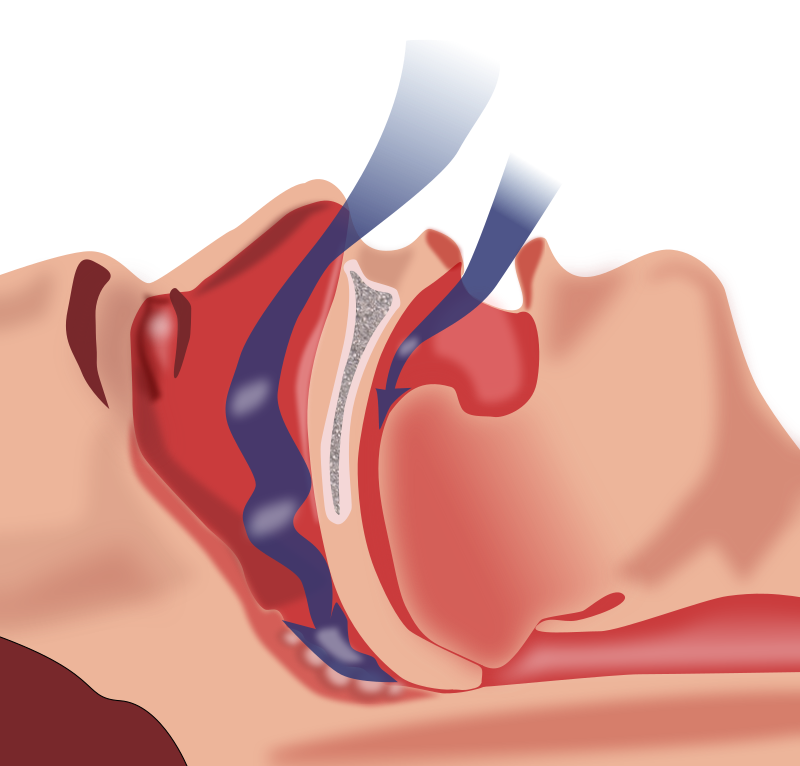
sleep apnea
sleep disorder characterized by repeated cessation and commencing of breathing that disrupts sleep
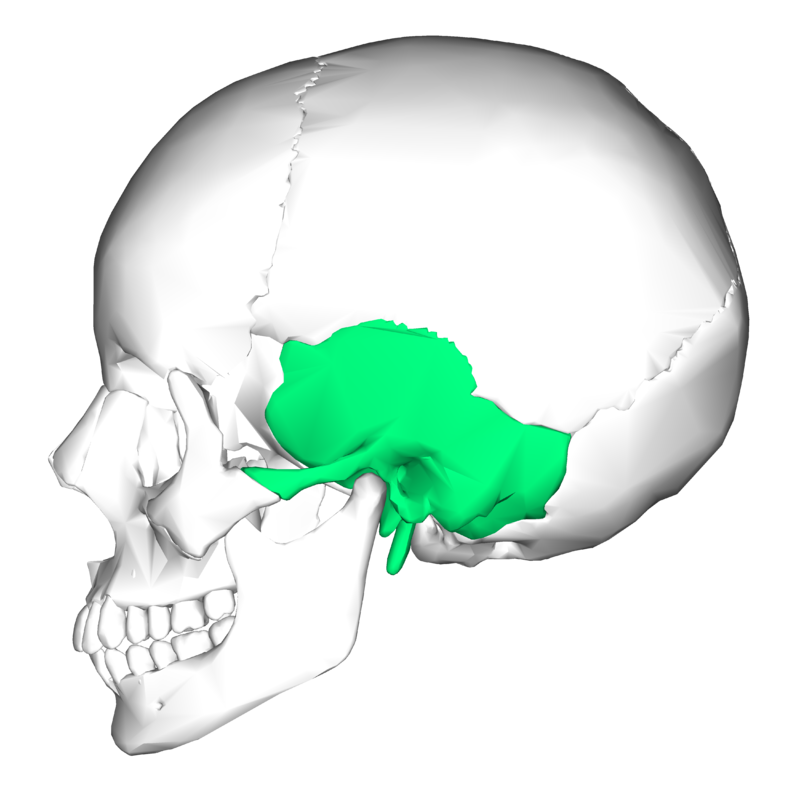
temporal bone
bones situated at the sides and base of the skull, and lateral to the temporal lobes of the cerebrum
.jpg)
pharyngitis
Pharyngitis is inflammation of the back of the throat, known as the pharynx. It typically results in a sore throat and fever. Other symptoms may include a runny nose, cough, headache, difficulty swallowing, swollen lymph nodes, and a hoarse voice. Symptoms usually last 3–5 days, but can be longer depending on cause. Complications can include sinusitis and acute otitis media. Pharyngitis is a type of upper respiratory tract infection.

sphenoid bone
unpaired bone situated at the front middle of the skull in front of the temporal bone and basilar part of the occipital bone

malleus
The malleus, or hammer, is a hammer-shaped small bone or ossicle of the middle ear. It connects with the incus, and is attached to the inner surface of the eardrum. The word is Latin for 'hammer' or 'mallet'. It transmits the sound vibrations from the eardrum to the incus (anvil).
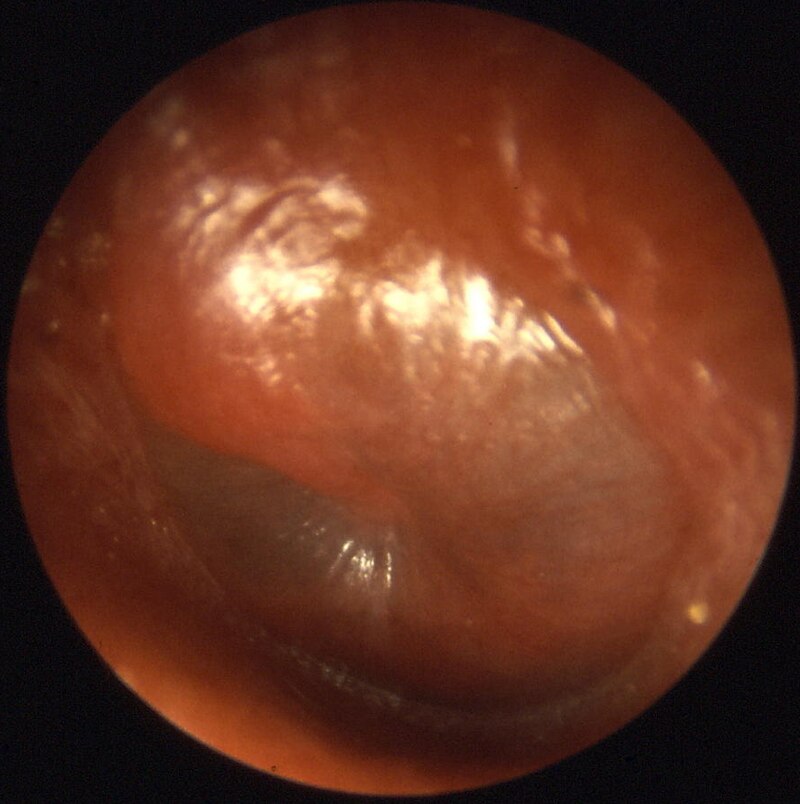
otitis media
otitis, processo that involves inflammation and accumulation of fluid of the middle ear

ethmoid bone
a bone in the skull separating the brain from the nasal cavity

cleft lip and cleft palate
congenital malformations caused by the failure of embryonic structures of the lip and/or palate to fuse
nasal cavity
large, air-filled space above and behind the nose in the middle of the face

palatine bone
facial bone

nostril
A nostril (or naris , : nares ) is either of the two orifices of the nose. They enable the entry and exit of air and other gasses through the nasal cavities. In birds and mammals, they contain branched bones or cartilages called turbinates, whose function is to warm air on inhalation and remove moisture on exhalation. Fish do not breathe through noses, but they do have two small holes used for smelling, which can also be referred to as nostrils (with the exception of Cyclostomi, which have just one nostril).

trigeminal nerve
nerve in human face

adenoid
The adenoid, also known as the pharyngeal tonsil, or nasopharyngeal tonsil is the superior-most of the tonsils. It is a mass of lymphoid tissue located behind the nasal cavity, in the roof and the posterior wall of the nasopharynx, where the nose blends into the throat. In children, it normally forms a soft mound in the roof and back wall of the nasopharynx, just above and behind the uvula.

laryngitis
Laryngitis is inflammation of the larynx (voice box). Symptoms often include a hoarse voice to no voice at all and may include fever, cough, pain in the front of the neck, and trouble swallowing. Typically, these last under 2 weeks.
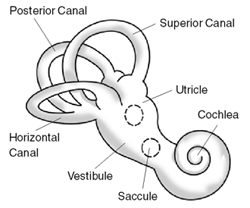
Meniere's disease
disorder of the inner ear, characterized by potentially severe and incapacitating episodes of vertigo, tinnitus, hearing loss, and a feeling of fullness in the ear

Bell's palsy
facial paralysis resulting from dysfunction in the cranial nerve VII (facial nerve)

incus
The incus (: incudes) or anvil in the ear is one of three small bones (ossicles) in the middle ear. The incus receives vibrations from the malleus, to which it is connected laterally, and transmits these to the stapes medially. The incus is named for its resemblance to an anvil ().
cochlea
thumb|3D model of cochlea and semicircular canals
The cochlea is the part of the inner ear involved in hearing. It is a spiral-shaped cavity in the bony labyrinth, in humans making 2.75 turns around its axis, the modiolus. A core component of the cochlea is the organ of Corti, the sensory organ of hearing, which is distributed along the partition separating the fluid chambers in the coiled tapered tube of the cochlea.

oculomotor nerve
cranial nerve III, for eye movements

middle ear
part of the ear that lies between the eardrum and the oval window

olfactory nerve
second pair of cranial nerves that transmit sense of smell from olfactory epithelium to the brain

inner ear
innermost part of the vertebrate ear

stapes
The stapes or stirrup is a bone in the middle ear of humans and other tetrapods which is involved in the conduction of sound vibrations to the inner ear. This bone is connected to the oval window by its annular ligament, which allows the footplate (or base) to transmit sound energy through the oval window into the inner ear. The stapes is the smallest and lightest bone in the human body, and is so-called because of its resemblance to a stirrup ().
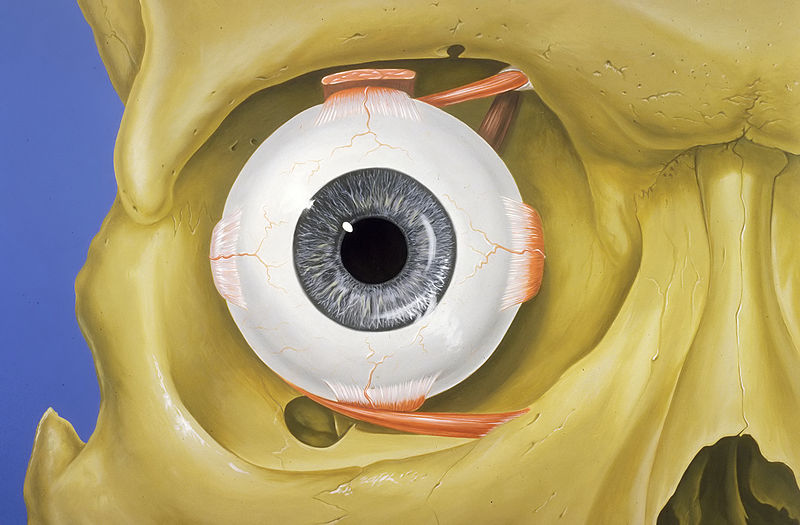
orbit
cavity or socket of the skull in which the eye and its appendages are situated

Eustachian tube
tube found in the middle ear which equalises pressure and drains mucus, connecting the middle ear to the throat
facial nerve
seventh cranial nerve

abducens nerve
cranial nerve controlling the movement of the lateral rectus muscle

hearing loss
form of hearing disorder

auditory ossicle
The ossicles (also called auditory ossicles) are three irregular bones in the middle ear of humans and other mammals, and are among the smallest bones in the human body. Although the term "ossicle" literally means "tiny bone" (from ) and may refer to any small bone throughout the body, it typically refers specifically to the malleus, incus and stapes ("hammer, anvil, and stirrup") of the middle ear.

cochlear implant
prosthesis used for severe and profound hearing loss
accessory nerve
11th cranial nerve

dysphagia
hypoglossal nerve
12th cranial nerve

paranasal sinus
air filled spaces in nasal cavity

tracheotomy
Tracheotomy (, ), or tracheostomy, is a surgical airway management procedure which consists of making an incision on the front of the neck to open a direct airway to the trachea. The resulting stoma (hole) can serve independently as an airway or as a site for a tracheal tube (or tracheostomy tube) to be inserted; this tube allows a person to breathe without the use of the nose or mouth.

inferior nasal concha
facial bone

parotid gland
animal organ
dysphonia
voice impairment

xerostomia
Xerostomia, also known as dry mouth, is a subjective complaint of dryness in the mouth, which may be associated with a change in the composition of saliva, reduced salivary flow, or have no identifiable cause.
lacrimal gland
paired, almond-shaped exocrine gland, one for each eye, that secretes the aqueous layer of the tear film
sternocleidomastoid muscle
paired muscle of the neck that traverses the neck between the manubrium sterni and the mastoid process
mouth cancer
gastrointestinal system cancer that is located in the oral cavity
glossopharyngeal nerve
9th cranial nerve, mixed nerve that carries afferent sensory and efferent motor information
vestibulocochlear nerve
eighth cranial nerve
internal carotid artery
Artery of the human brain