Category
page 1Plant dyes

Onion
The onion (Allium cepa , from Latin ), also known as the bulb onion or common onion, is a vegetable that is the most widely cultivated species of the genus Allium. The shallot is a botanical variety of the onion which was classified as a separate species until 2011. The onion's close relatives include garlic, scallion, leek, and chives.

Cocos nucifera
The coconut (Cocos nucifera) is a member of the palm family (Arecaceae) and the only living species of the genus Cocos. The term "coconut" (or the archaic "cocoanut") can denote the whole coconut palm tree or the large hard fruit. Originally native to Central Indo-Pacific, they are ubiquitous in coastal tropical regions.

pomegranate
The pomegranate (Punica granatum) is a fruit-bearing, deciduous shrub in the family Lythraceae, subfamily Punicoideae, that grows to between tall. Rich in symbolic and mythological associations in many cultures, it originated in the region spanning the Caucasus and Iranian plateau — including modern-day Iran,Turkmenistan, Afghanistan and Pakistan. Pomegranate was first domesticated by ancient Iranians in the Persian plateau and nearby regions about 5,000 years ago. It is extensively cultivated for its fruit.

Curcuma longa
Turmeric (), or Curcuma longa (), is a flowering plant in the ginger family Zingiberaceae. It is a perennial, rhizomatous, herbaceous plant native to the Indian subcontinent and Southeast Asia that requires temperatures between and high annual rainfall to thrive. Plants are gathered each year for their rhizomes, some for propagation in the following season and some for consumption or dyeing.

Acer
Acer is a genus of trees and shrubs commonly known as maples. The genus is placed in the soapberry family Sapindaceae. There are approximately 132 species, most of which are native to East Asia, with a number also appearing in Europe, northern Africa, and North America. Only one species, Acer laurinum, extends to the Southern Hemisphere. The type species of the genus is the sycamore maple Acer pseudoplatanus, one of the most common maple species in Europe. Most maples have easily identifiable palmate leaves (with a few exceptions, such as Acer carpinifolium, Acer laurinum, and Acer negundo) an

common dandelion
plant species

Juglans regia
species of plant

Sorghum bicolor
Sorghum bicolor, commonly called sorghum () and also known as broomcorn, great millet, Indian millet, Guinea corn, jowar, or milo, is a species in the grass genus Sorghum. It is typically an annual, but some cultivars are perennial. It grows in clumps that may reach over high. The grain is in diameter.

Garcinia mangostana
Mangosteen (Garcinia mangostana), sometimes rendered mangostan, and commonly known as the purple mangosteen, is a tropical evergreen tree with edible fruit native to the Malay Peninsula and Borneo. It has been cultivated extensively in tropical Asia since ancient times. It is grown mainly in Southeast Asia, southwest India and other tropical areas such as Colombia, Puerto Rico and Florida, where the tree has been introduced. The tree grows from tall.

Carthamus tinctorius
thumb|right|250px|Carthamus tinctoriusthumb|300px|right|Worldwide safflower production
thumb|Carthamus tinctorius - MHNT
.jpg)
Juglans
Walnut trees are any species of tree in the plant genus Juglans, the type genus of the family Juglandaceae, the seeds of which are referred to as walnuts. All species are deciduous trees, tall, with pinnate leaves , with 5–25 leaflets; the shoots have chambered pith, a character shared with the wingnuts (Pterocarya), but not the hickories (Carya) in the same family.

Tagetes
Tagetes () is a genus of 50 species of annual or perennial, mostly herbaceous plants in the family Asteraceae. They are among several groups of plants known in English as marigolds. The genus Tagetes was described by Carl Linnaeus in 1753.

Calendula officinalis
species of plant

Tectona grandis
Teak (Tectona grandis) is a tropical hardwood tree species in the family Lamiaceae. It is a large, deciduous tree that occurs in mixed hardwood forests. Tectona grandis has small, fragrant white flowers arranged in dense clusters (panicles) at the end of the branches. These flowers contain both types of reproductive organs (perfect flowers). The large, papery leaves of teak trees are often hairy on the lower surface. Teak wood has a leather-like smell when it is freshly milled and is particularly valued for its durability and water resistance. The wood is used for boat building, exterior const

yam
edible tuber
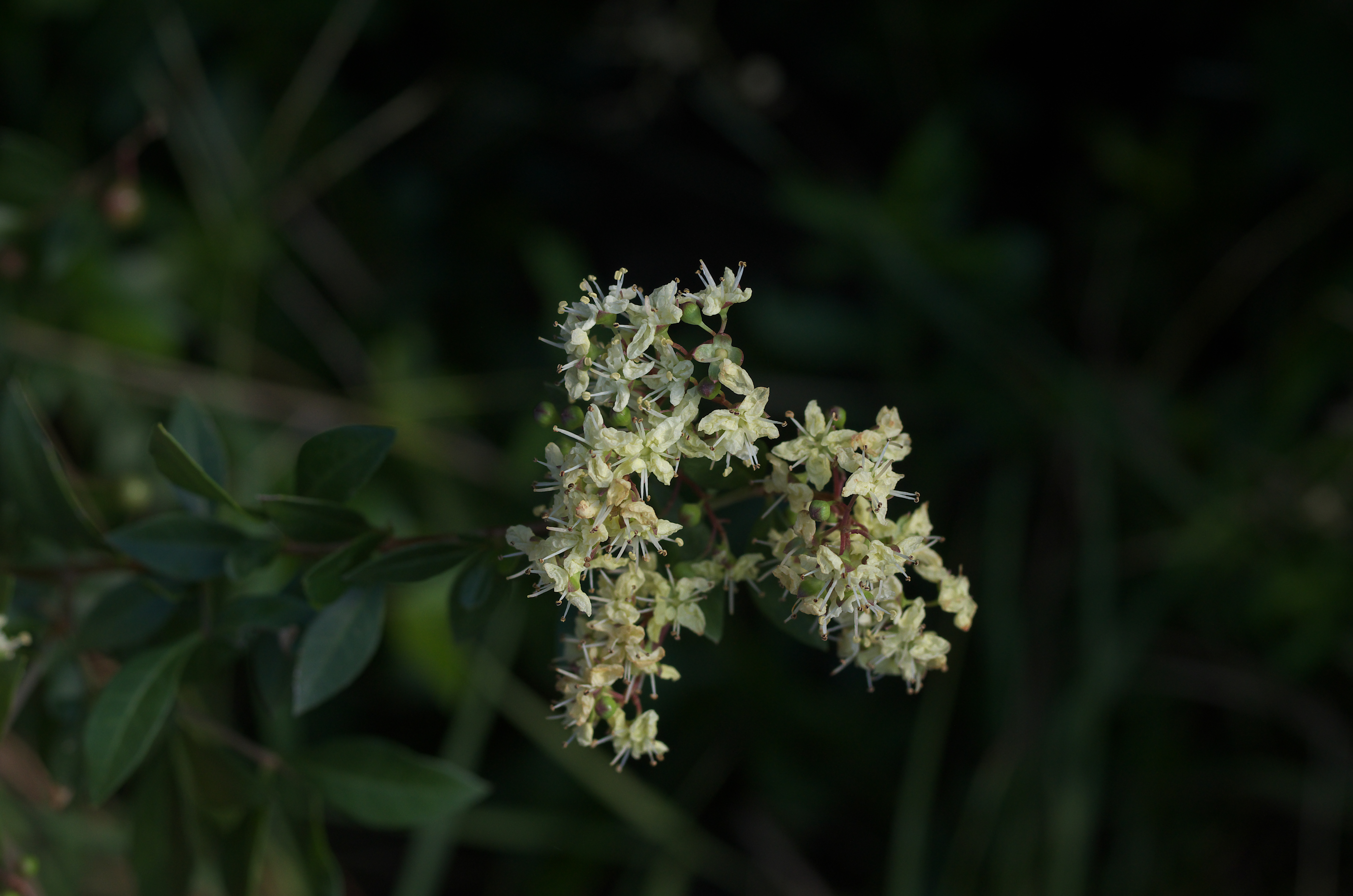
Lawsonia inermis
species of plant

Morinda citrifolia
species of plant

walnut
thumb|Walnuts

Populus alba
species of plant

Morus nigra
species of plant

Bixa orellana
species of South American plant

Opuntia
Opuntia, commonly called the prickly pear cactus, is a genus of flowering plants in the cactus family Cactaceae, many known for their flavorful fruit and showy flowers. Cacti are native to the Americas, and are well adapted to arid climates; however, they are still vulnerable to alterations in precipitation and temperature driven by climate change. The plant has been introduced to Australia, southern Europe, the Middle East, and parts of Africa.

Potentilla erecta
species of plant

Alnus incana
species of plant

Filipendula ulmaria
species of plant

Malva sylvestris
species of plant

Tanacetum vulgare
thumb|240px|Illustration of a tansy
Tansy (Tanacetum vulgare) is a perennial, herbaceous flowering plant in the genus Tanacetum in the aster family, native to temperate Europe and Asia. It has been introduced to other parts of the world, including North America, and in some areas has become invasive. It is also known as common tansy, bitter buttons, cow bitter, or golden buttons. The Latin word vulgare means "common".

Solidago
Solidago, commonly called goldenrod, is a genus of about 100 to 120 species of flowering plants in the family Asteraceae. Most are herbaceous perennial species found in open areas such as meadows, prairies, and savannas. They are mostly native to North America, including Mexico; a few species are native to South America and Eurasia. Some American species have also been introduced into Europe and other parts of the world.

Indigofera tinctoria
species of legume

Tagetes erecta
species of plant

Gardenia jasminoides
species of evergreen flowering plant

Isatis tinctoria
species of plant

Rubia tinctorum
species of plant

Reseda
genus of plants

Ligustrum vulgare
species of plant

Vachellia nilotica
species of plant

Angelica sylvestris
species of plant

Paubrasilia echinata
Paubrasilia echinata is a species of flowering plant in the legume family, Fabaceae, that is endemic to the Atlantic Forest of Brazil. It is a Brazilian timber tree commonly known as brazilwood (; Tupi: ) and is the national tree of Brazil. This plant has a dense, orange-red heartwood that takes a high shine, and it is the premier wood used for making bows for stringed instruments. The wood also yields a historically important red dye called brazilin, which oxidizes to brazilein.

Artemisia abrotanum
species of plant

curcumin
Curcumin is a bright yellow chemical produced by plants of the Curcuma longa species. It is the principal curcuminoid of turmeric (Curcuma longa), a member of the ginger family, Zingiberaceae. It is sold as an herbal supplement, cosmetics ingredient, food flavoring, and food coloring.

Juglans nigra
species of plant

Carya
Hickory is a common name for trees composing the genus Carya, which includes 19 species accepted by Plants of the World Online.

Cotinus coggygria
species of plant

Rubia
Rubia is the type genus of the Rubiaceae family of flowering plants, which also contains Coffea (coffee). It contains around 80 species of perennial scrambling or climbing herbs and subshrubs native to the Old World.

Terminalia chebula
species of flowering plant

Dracaena cinnabari
species of plant

Senegalia catechu
species of plant

Indigofera
Indigofera is a large genus of over 750 species of flowering plants belonging to the pea family Fabaceae. They are widely distributed throughout the tropical and subtropical regions of the world.

Genista tinctoria
species of plant
%20in%20Hyderabad%2C%20AP%20W%20IMG%200010.jpg)
Pulicaria
thumb|right|200px|Pulicaria wightiana in [[Hyderabad, India.]]
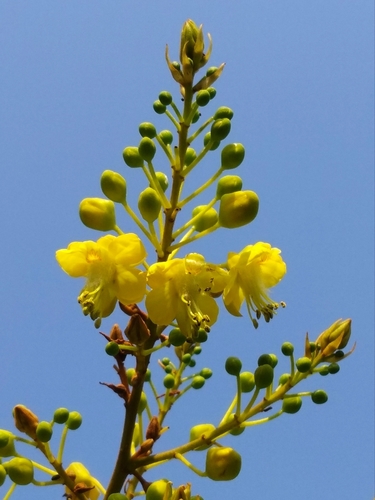
Biancaea sappan
species of plant

Tagetes patula
species in the daisy family (Asteraceae)

Phytolacca
Phytolacca is a genus of perennial plants native to North America, South America and East Asia. Some members of the genus are known as pokeweeds or similar names such as pokebush, pokeberry, pokeroot or poke sallet. Other names for species of Phytolacca include inkberry and ombú. The generic name is derived from the Greek word (phyton), meaning "plant," and the Latin word lacca, a red dye. Phytolaccatoxin and phytolaccagenin are present (in the leaves, stems, roots, blossoms, berries etc.) in many species which are poisonous to mammals if not prepared properly. The berries are eaten by birds,

Pterocarpus
thumb|Wood of P. officinalis
Pterocarpus is a pantropical tree genus in the Fabaceae family. It belongs to the subfamily Faboideae, and was recently assigned to the informal monophyletic Pterocarpus clade within the Dalbergieae. Most species of Pterocarpus yield valuable timber traded as padauk (or padouk), usually pronounced or ; other common names are mukwa or narra.

Alnus rubra
species of deciduous tree

Haematoxylum campechianum
species of plant
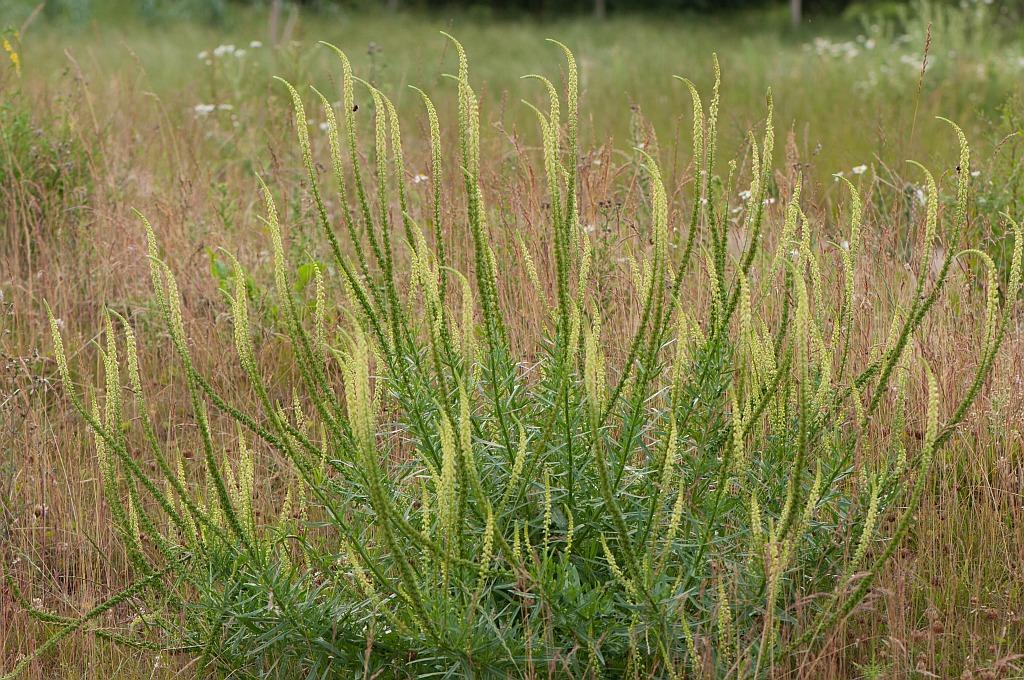
Reseda luteola
species of plant

Quercus velutina
tree species

Commelina communis
species of plant

Juglans cinerea
species of plant