Category
page 1Ratites

Common Ostrich
species of large flightless bird
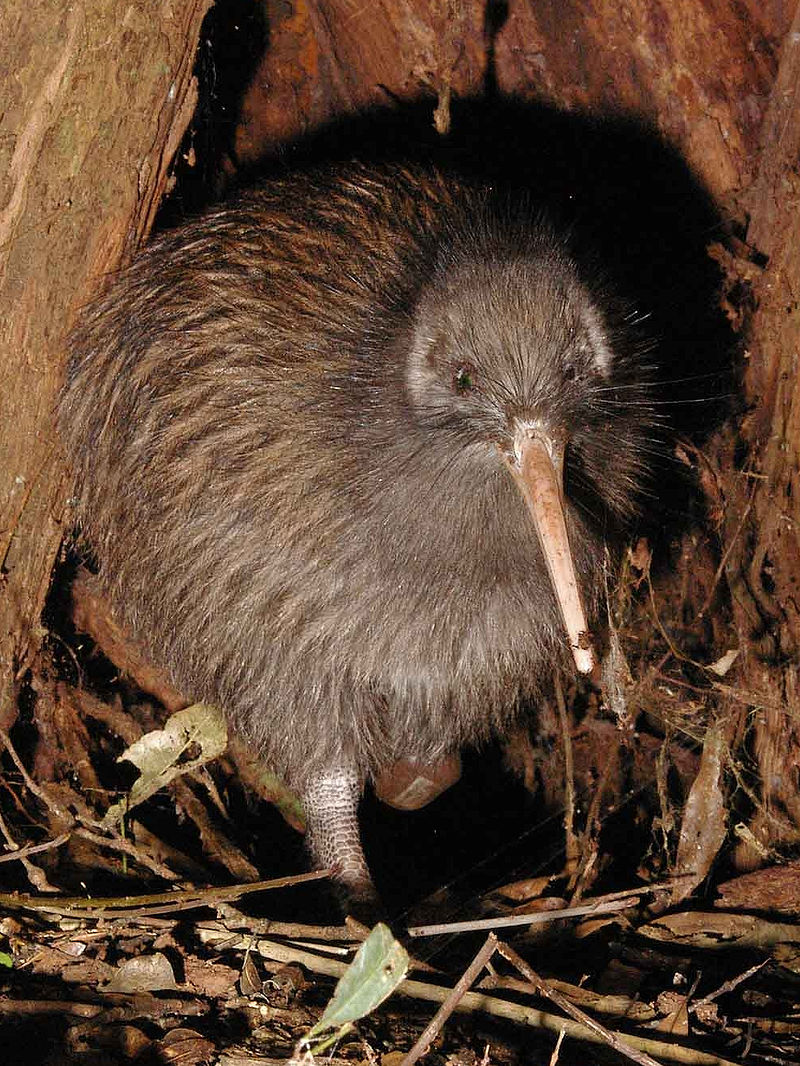
Apteryx
genus of birds

Rhea
genus of birds, ratites

Dinornithiformes
Moa (order Dinornithiformes) are an extinct group of flightless birds formerly endemic to New Zealand. During the Late Pleistocene-Holocene, there were nine species, in six genera. The two largest species, Dinornis robustus and Dinornis novaezelandiae, reached about in height with neck outstretched, and weighed about ; the smallest, the bush moa (Anomalopteryx didiformis), was about the size of a turkey. Estimates of the moa population when Polynesians settled New Zealand circa 1300 C.E. range from 58,000 to 2.5 million.
Struthio
Ostriches are large flightless birds. Two living species are recognised: the common ostrich, native to large parts of Sub-Saharan Africa, and the Somali ostrich, native to the Horn of Africa.

Struthioniformes
Struthioniformes is an order of birds with a single extant family, Struthionidae, containing the ostriches. Several other extinct families are known, spanning across the Northern Hemisphere, from the Early Eocene to the early Pliocene, including a variety of flightless forms like the Palaeotididae, Geranoididae, Eogruidae and Ergilornithidae, the latter two thought to be closely related to Struthionidae.

Somali Ostrich
species of bird

Casuariiformes
The Casuariiformes is an order of large flightless birds that has four surviving members: the three species of cassowary, and the only remaining species of emu. They are divided into either a single family, Casuariidae, or occasionally two, with the emu splitting off into its own family, Dromaiidae. The IOC World Bird List and Cornell Lab of Ornithology's Birds of the World both do not recognize Dromaiidae, placing the emu in the family Casuariidae.

southern brown kiwi
New Zealand endemic bird species

Lesser Rhea
species of bird

Great Spotted Kiwi
species of bird

North Island Brown Kiwi
species of bird

Casuariidae
The bird family Casuariidae has four surviving members: the three species of cassowary and the emu.

Dromaius
Dromaius (from Ancient Greek δρομαῖος; "swift one", "runner") is a genus of ratite present in Australia. There is one extant species, Dromaius novaehollandiae, commonly known as the emu.

Rowi
species of New Zealand flightless bird

grey-legged tinamou
species of bird

Red-legged Tinamou
species of bird

Barred Tinamou
species of bird

Curve-billed Tinamou
species of bird

Pale-browed Tinamou
species of bird

Dinornis
Dinornis (from Ancient Greek δεινός (deinós), meaning "terrible", and ὄρνις (órnis), meaning "bird"), also known as the giant moa, is an extinct genus of birds belonging to the moa family. As with other moa, it is a member of the order Dinornithiformes. It was endemic to New Zealand. Two species of Dinornis are considered valid, the North Island giant moa (Dinornis novaezealandiae) and the South Island giant moa (Dinornis robustus). In addition, two further species (new lineage A and lineage B) have been suggested based on distinct DNA lineages.
Dinornis novaezealandiae
species of bird
Dinornis robustus
One of two extinct moa in the genus Dinornis
Asian Ostrich
species of bird (fossil)
Megalapteryx didinus
species of bird

ratites
Ratites () are a polyphyletic group consisting of all birds within the infraclass Palaeognathae that lack keels and cannot fly. They are mostly large, long-necked, and long-legged, the exception being the kiwi, which is also the only nocturnal extant ratite.
Emeus crassus
species of bird
Anomalopteryx
genus of birds (extinct)
Pachyornis
Pachyornis (from Ancient Greek παχύς (pakhús), meaning "thick", and ὄρνις (órnis), meaning "bird") is an extinct genus of ratites from New Zealand which belongs to the moa family. Like all ratites, Pachyornis is a flightless bird with a sternum that lacks a keel. They also have a distinctive palate. The genus currently contains three recognised species: the type species, Pachyornis geranoides, P. elephantopus and P. australis. Two distinct genetic lineages, one each recovered from the North and South Island, could possibly expand this number to five in the future.
Pachyornis elephantopus
species of bird (fossil)
Pachyornis geranoides
extinct species of moa
Pachyornis australis
species of bird (fossil)
Emeidae
family of birds (fossil)
Proapteryx
Proapteryx micromeros is an extinct kiwi known from the 16–19 million-year-old early Miocene sediments of the St Bathans Fauna of Otago, New Zealand.
Diogenornis
Diogenornis is an extinct genus of ratites, that lived from the Middle Paleocene to the Early Eocene (Riochican to Casamayoran in the SALMA classification). It was described in 1983 by Brazilian scientist Herculano Marcos Ferraz de Alvarenga based on fossils found in the Itaboraí Formation in southeastern Brazil. The type species is D. fragilis. It grew to about two thirds the size of the modern greater rhea, at about of height.
Eogruidae
Eogruidae (also spelled Eogruiidae in some publications) is an extinct family of large, flightless birds that inhabited Asia from the Eocene to Pliocene epochs. Related to modern ostriches, it was formerly thought to be related to cranes, limpkins and trumpeters and that the similarities with ostriches were due to similar speciations to cursoriality, with both groups showing reduced numbers of toes to two in some taxa. It has been suggested that competition from true ostriches has caused the extinction of these birds, though this has never been formally tested and several ostrich taxa do occur
Opisthodactylus
Opisthodactylus is an extinct genus of rheiform bird from the Early to Middle Miocene Santa Cruz and Chichinales Formations and the Late Miocene (Montehermosan) Andalhuala Formation of Argentina. Three species are described: the type species, O. patagonicus, O. kirchneri and O. horacioperezi. The species O. kirchneri was described in 2017 by Noriega et al. Fossils of O. horacioperezi were found together with fossils of Patagorhacos terrificus.
Heterorhea
Heterorhea is an extinct genus of ratites in the rhea family. The type species is H. dabbenei. from the Late Pliocene Monte Hermoso Formation, Buenos Aires, Argentina. The holotype of the genus is missing.