Category
page 1Rocket fuels

aluminium

boron
Boron is a chemical element; it has symbol B and atomic number 5. In its crystalline form it is a brittle, dark, lustrous metalloid; in its amorphous form it is a brown powder. As the lightest element of the boron group it has three valence electrons for forming covalent bonds, resulting in many compounds such as boric acid, the mineral sodium borate, and the ultra-hard crystals of boron carbide and boron nitride.

ethanol
Ethanol (also called ethyl alcohol, grain alcohol, drinking alcohol, or simply alcohol) is an organic compound with the chemical formula . It is an alcohol, with its formula also written as , or EtOH, where Et is the pseudoelement symbol for ethyl. Ethanol is a volatile, flammable, colorless liquid with a pungent taste. As a psychoactive depressant, it is the active ingredient in alcoholic beverages, and the second most consumed drug globally behind caffeine.

ammonia

methanol
Methanol (also called methyl alcohol, wood alcohol, and wood spirit, amongst other names) is an organic chemical compound and the simplest aliphatic alcohol, with the chemical formula (a methyl group linked to a hydroxyl group, often abbreviated as MeOH). It is a light, volatile, colorless and flammable liquid with a distinctive alcoholic odor similar to that of ethanol (potable alcohol), but is more acutely toxic than the latter.
Methanol acquired the name wood alcohol because it was once produced through destructive distillation of wood. Today, methanol is mainly produced industrially by hyd

hydrazine
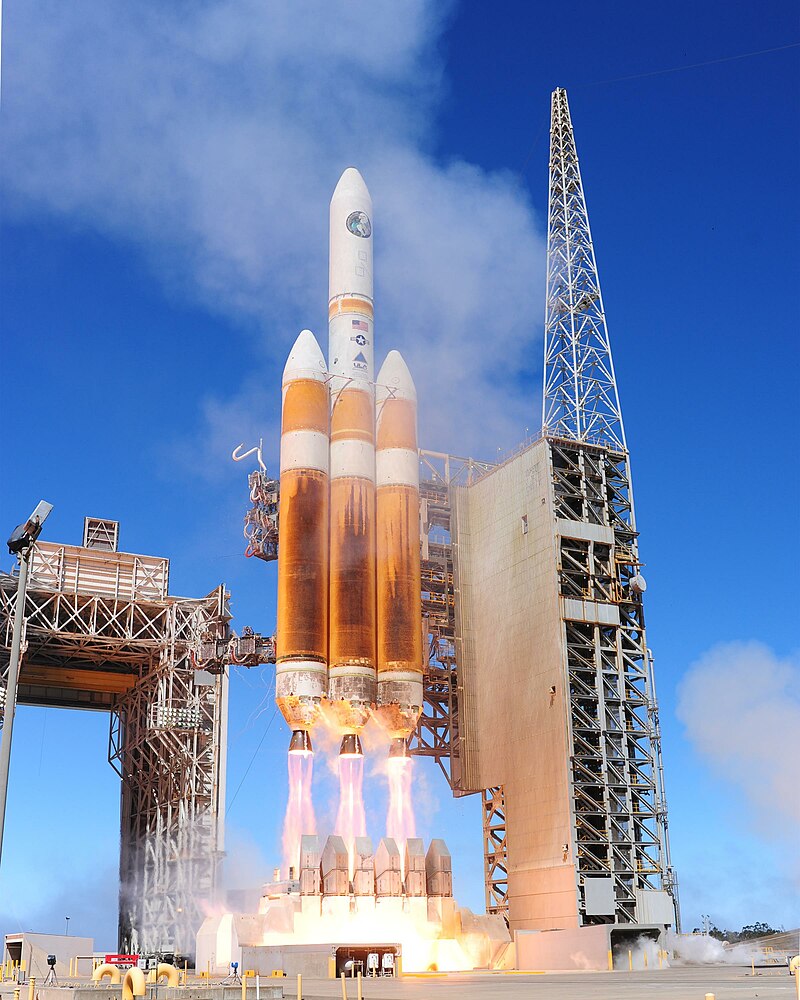
rocket propellant
chemical or mixture used as fuel for a rocket engine
propyne
Propyne (methylacetylene) is an alkyne with the chemical formula . It is a component of MAPD gas—along with its isomer propadiene (allene), which was commonly used in gas welding. Unlike acetylene, propyne can be safely condensed.

nitromethane
Nitromethane, sometimes shortened to simply "nitro", is an organic compound with the chemical formula . It is the simplest organic nitro compound. It is a polar liquid commonly used as a solvent in a variety of industrial applications such as in extractions, as a reaction medium, and as a cleaning solvent. As an intermediate in organic synthesis, it is used widely in the manufacture of pesticides, explosives, fibers, and coatings. Nitromethane is used as a fuel additive in various motorsports and hobbies, e.g. Top Fuel drag racing and miniature internal combustion engines in radio control, con

hydroxylamine
Hydroxylamine (also known as hydroxyammonia) is an inorganic compound with the chemical formula . The compound exists as hygroscopic colorless crystals. Hydroxylamine is almost always provided and used as either an aqueous solution or, more often, as one of its salts, such as hydroxylammonium sulfate, a water-soluble solid.
liquid hydrogen
liquid state of the element hydrogen
1,1-dimethylhydrazine
chemical compound

diborane(6)
Diborane(6), commonly known as diborane, is the inorganic compound with the formula . It is a highly toxic, colorless, and pyrophoric gas with a repulsively sweet odor. Given its simple formula, diborane is a fundamental boron compound. It has attracted wide attention for its unique electronic structure. Several of its derivatives are useful reagents.
triethylamine
Triethylamine is the chemical compound with the formula N(CH2CH3)3, commonly abbreviated Et3N. Like triethanolamine and the tetraethylammonium ion, it is often abbreviated TEA. It is a colourless volatile liquid with a strong fishy odor reminiscent of ammonia. Like diisopropylethylamine (Hünig's base), triethylamine is commonly employed in organic synthesis, usually as a base.
nitroethane
Nitroethane is an organic compound having the chemical formula C2H5NO2. Similar in many regards to nitromethane, nitroethane is an oily liquid at standard temperature and pressure. Pure nitroethane is colorless and has a fruity odor.
monomethylhydrazine
Monomethylhydrazine (MMH) is a highly toxic, volatile hydrazine derivative with the chemical formula . It is used as a rocket propellant in bipropellant rocket engines because it is hypergolic with various oxidizers such as nitrogen tetroxide () and nitric acid (). As a propellant, it is described in specification MIL-PRF-27404.
furfuryl alcohol
chemical compound
decaborane
Decaborane, also called decaborane(14), is the inorganic compound with the chemical formula B10H14. It is classified as a borane and more specifically a boron hydride cluster. This white crystalline compound is one of the principal boron hydride clusters, both as a reference structure and as a precursor to other boron hydrides. It is toxic and volatile, giving off a foul odor, like that of burnt rubber or chocolate.

hexanitrohexaazaisowurtzitane
Hexanitrohexaazaisowurtzitane, also called HNIW and CL-20, is a polycyclic nitroamine explosive with the formula . It has a better oxidizer-to-fuel ratio than conventional HMX or RDX. It releases 20% more energy than traditional HMX-based propellants.

RP-1
thumb|alt=Photo of person holding flask containing reddish liquid|An Erlenmeyer flask containing about of RP-1
triethylaluminum
Triethylaluminium is one of the simplest examples of an organoaluminium compound. Despite its name, the compound has the formula Al2(C2H5)6 (abbreviated as Al2Et6 or TEA). This colorless liquid is pyrophoric. It is an industrially important compound, closely related to trimethylaluminium.
pentaborane(9)
Pentaborane(9) is an inorganic compound with the formula . It is one of the most common boron hydride clusters, although it is a highly reactive compound. Because of its high reactivity with oxygen, it was once evaluated as rocket or jet fuel. Like many of the smaller boron hydrides, pentaborane is colourless, diamagnetic, and volatile. It is related to pentaborane(11) ().

triethylborane
Triethylborane (TEB), also called triethylboron, is an organoborane (a compound with a B–C bond). It is a colorless pyrophoric liquid. Its chemical formula is or , abbreviated . It is soluble in organic solvents tetrahydrofuran and hexane.

diethylenetriamine
Diethylenetriamine (abbreviated dien or DETA) and also known as 2,2’-Iminodi(ethylamine)) is an organic compound with the formula HN(CH2CH2NH2)2. This colourless hygroscopic liquid is soluble in water and polar organic solvents, but not simple hydrocarbons. Diethylenetriamine is structural analogue of diethylene glycol. Its chemical properties resemble those for ethylene diamine, and it has similar uses. It is a weak base and its aqueous solution is alkaline. DETA is a byproduct of the production of ethylenediamine from ethylene dichloride.
Aerozine-50
rocket propellant
hydroxyl-terminated polybutadiene
oligomer of butadiene
syntin
Syntin is a hydrocarbon with the molecular formula C10H16 used as a rocket fuel. It is a mixture of four stereoisomers (see below). It has a density of 0.851 g/mL, and a boiling point of 158 °C. Due to the presence of three strained cyclopropane rings, the molecule has a highly positive enthalpy of formation: ΔfH°(l)= 133 kJ/mol (980 kJ/kg, the average value for the isomeric mixture), bringing additional energy into the combustion process. It has advantages over the traditional hydrocarbon fuels, such as RP-1, due to higher density, lower viscosity and higher specific heat of oxidation.
Tonka
family of German-developed rocket propellants
C-Stoff
C-Stoff (; "substance C") was a reductant used in bipropellant rocket fuels (as a fuel itself) developed by Hellmuth Walter Kommanditgesellschaft in Germany during World War II. It was developed for use with T-Stoff (a high-test peroxide) as an oxidizer, which together with C-Stoff as the fuel, forms a hypergolic mixture.
DMAZ
2-Dimethylaminoethylazide (DMAZ) is a liquid rocket fuel being investigated for use as a spacecraft propellent to replace the toxic, carcinogenic monomethylhydrazine. It is a member of the competitive impulse non-carcinogenic hypergol (CINCH) family which were assessed as a replacement for hydrazine-derived propellants. DMAZ was also found to be sensitive to impact, direct flame, shock wave, heat in confined space, and electrostatic discharge.
Slush hydrogen
combination of liquid hydrogen and solid hydrogen
polybutadiene acrylonitrile
rocket propellant chemical used in solid rocket boosters
UH 25
liquid rocket propellant
Hydyne
Hydyne is a mixture of 60% unsymmetrical dimethylhydrazine (UDMH) and 40% diethylenetriamine (DETA), developed in 1957 at Rocketdyne for use in liquid-fuel rockets. Hydyne was used as the fuel for the first stage of the Juno I rocket that launched Explorer 1, the first successful satellite launch conducted by the United States. As part of Mixed Amine Fuel series of rocket fuels, it was designated as MAF-4.
Project Morpheus
NASA vertical landing and takeoff test vehicle