Category
page 1Sichuan cuisine

Amorphophallus konjac
species of plant
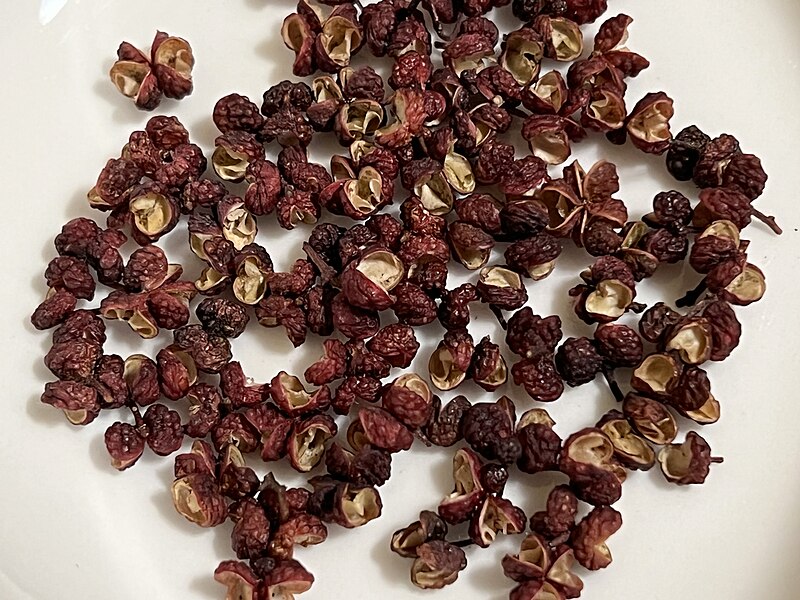
Sichuan pepper
spice, crude drug

wonton
A wonton () is a type of Chinese dumpling commonly found across regional styles of Chinese cuisine. It is also spelled wantan or wuntun, a transliteration from Cantonese (), and wenden from Shanghainese (). Even though there are many different styles of wonton served throughout China, Cantonese wontons are the most popular in the West due to the predominance of Cantonese restaurants overseas.
Kung Pao chicken
spicy stir-fried dish
hot pot
Chinese and Southeast Asian dish
scorched rice
crunchy, slightly browned cooked rice
Sichuan cuisine
cuisine originating from Sichuan province in southwestern China
mapo doufu
Sichuan province dish

yuxiang
thumb|Yuxiang eggplants, a typical Sichuan dish
Yuxiang () is a seasoning mixture in Chinese cuisine, and also refers to the resulting sauce in which meat or vegetables are cooked. It is said to have originated in Sichuan cuisine, and has since spread to other regional Chinese cuisines.

douhua
right|thumb|250px|Soy curd with sugar syrup sold in Kwai Chung, Hong Kong
Douhua is a Chinese sweet or savoury snack made with silken tofu. It is also referred to as doufuhua or tau foo fah, doufunao in northern China, tofu pudding, and soybean pudding.

Haidilao
thumb|A Haidilao restaurant in Suzhou, China
thumb|271x271px|Haidilao self service sauce bar.
thumb|Food layout at Haidilao
mala
Spicy Chinese sauce
dandan noodles
noodles from Sichuan, China
twice cooked pork
Sichuanese pork dish

doubanjiang
Doubanjiang (, IPA: ), also known as douban, toban-djan, broad bean chili sauce, or fermented chili bean paste, is a hot and savory Chinese bean paste made from fermented broad beans (fava beans), chili peppers, soybeans, salt, and flour. Characteristically used in Sichuan cuisine, it has been called "the soul of Sichuan cuisine." Sichuan dishes such as mapo tofu, huoguo (Sichuan hotpot), yuxiang flavoring, and shuizhu all use doubanjiang as a key ingredient. Other regions have their own versions: in Guangdong and Taiwan, for instance, Sichuan doubanjiang is called la-doubanjiang (, "la" (辣) m
laziji
Laziji () is one of the most iconic dishes of Sichuan cuisine. It consists of small pieces of marinated chicken that are deep-fried and then stir-fried with massive quantities of dried Sichuan pepper, dried red chilies, garlic, and ginger. Originating from the Geleshan region of Chongqing, it is a staple of "Jianghu Cuisine" (folk cooking) and is renowned for its intense mala (numbing and spicy) flavor profile.

zha cai
subspecies of plant
ants climbing a tree
Sichuan dish
zhangcha duck
Sichuan dish, prepared by hot-smoking a marinated duck over tea leaves
bon bon chicken
Sichuan chicken dish

Sichuan pickles
pickle in Chinese, and particularly Sichuan cuisine
yuxiangrousi
dish
Wuliangye
thumb|Wuliangye Yibin liquor store in Yangzhou
Wuliangye Yibin Co. Ltd. (), or simply Wuliangye () is a baijiu distillery headquartered in Yibin, Sichuan, China. The distillery's eponymous and proprietary spirit, Wuliyangye, is a nongxiang (濃香; strong aroma) baijiu made with a mix of five cereal grains: sorghum, rice, glutinous rice, wheat, and corn. Wuliangye is one of the most popular baijiu brands both in China and abroad and as of 2023 is the second most valuable spirits brand in the world. It ranked 15th on the World Brand Lab's 2023 list of "China's 500 Most Valuable Brands".
fuqi feipian
Spicy Sichuan beef dish
chili shrimp
stir-fried shrimp in chili sauce
Chen Kenichi
Japanese chef (1956-2023)
Fuchsia Dunlop
British chef
chaoshou
Suanla chaoshou is a dish of Sichuan cuisine that consists of a spicy sauce over boiled, meat-filled dumplings. Suanla means "hot and sour," and chaoshou is what these particular large wontons are called in the Chinese province of Sichuan.
Bingfen
thumb|A bowl of bingfen
Eight treasure rice
Chinese rice dish
Maocai
Maocai () is a stew-like dish originating from the Chinese city of Chengdu, in Sichuan. It is composed of a variety of vegetables as well as meat and/or fish in a stock made of mala sauce. Although it is similar to styles of hot pot common in this region, its chief difference lies in the fact that the ingredients are already cooked when served, and hence no simmering is done at the table.
left|thumb|Maocai
left|thumb|Raw vegetables and meat to be selected at a maocai restaurant
==Common ingredients==
Although there is great variation in the ingredients used in maocai, typically any of the foll
hot and sour noodle
Sichuan noodle dish