Category
page 1Steroid-responsive inflammatory conditions

asthma

gout
Gout ( ), also called rheumatic gout, is a form of inflammatory arthritis characterized by recurrent attacks of pain in a red, tender, hot, and swollen joint, caused by the deposition of needle-shaped crystals of the monosodium salt of uric acid. Pain typically comes on rapidly, reaching maximal intensity in less than 12 hours. In about half of cases, the joint at the base of the big toe is affected (Podagra). It may also result in tophi, kidney stones, or kidney damage.

systemic lupus erythematosus
Lupus, formally called systemic lupus erythematosus (SLE), is an autoimmune disease in which the body's immune system mistakenly attacks healthy tissue in many parts of the body. Symptoms vary among people and may be mild to severe. Common symptoms include painful and swollen joints, fever, chest pain, hair loss, mouth ulcers, swollen lymph nodes, feeling tired, and a red rash which is most commonly on the face. Often there are periods of illness, called flares, and periods of remission during which there are few symptoms. Children up to 18 years old develop a more severe form of SLE termed ch

Crohn's disease
type of inflammatory bowel disease

rheumatoid arthritis
autoimmune disease which attacks healthy cells and tissue located in joints

sarcoidosis
Sarcoidosis, also known as Besnier–Boeck–Schaumann disease, is a non-infectious granulomatous disease involving abnormal collections of inflammatory cells that form lumps known as granulomata. The disease usually begins in the lungs, skin, or lymph nodes. Less commonly affected are the eyes, liver, heart, and brain, though any organ can be affected. The signs and symptoms depend on the organ involved. Often, no symptoms or only mild symptoms are seen. When it affects the lungs, wheezing, coughing, shortness of breath, or chest pain may occur. Some may have Löfgren syndrome, with fever, enlarge
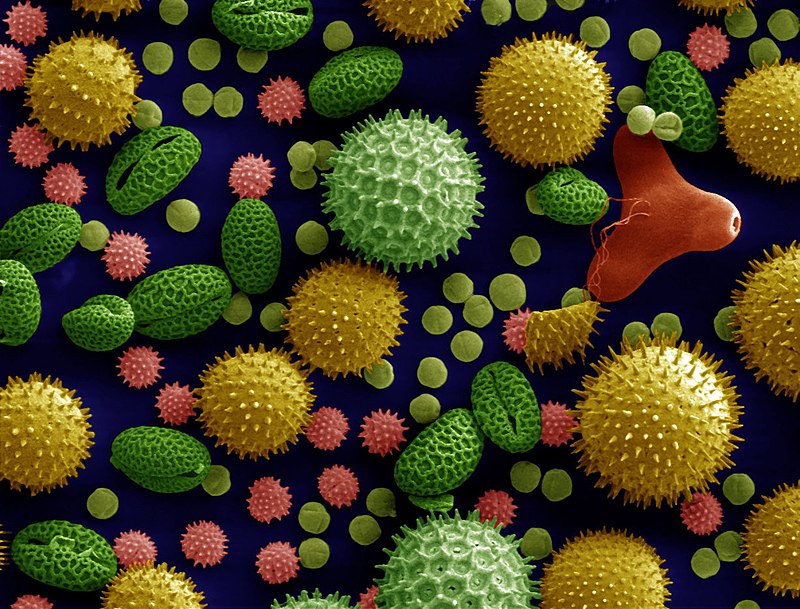
allergic rhinitis
inflammation in nose occurs when immune system overreacts to allergens in air

dermatitis

ulcerative colitis
inflammatory bowel disease that causes ulcers in the colon

atopic dermatitis
type of inflammation of the skin

pericarditis
Pericarditis () is inflammation of the pericardium, the fibrous sac surrounding the heart. Symptoms typically include sudden onset of sharp chest pain, which may also be felt in the shoulders, neck, or back. The pain is typically less severe when sitting up and more severe when lying down or breathing deeply. Other symptoms of pericarditis can include fever, weakness, palpitations, and shortness of breath. The onset of symptoms can occasionally be gradual rather than sudden.

uveitis
Uveitis () is inflammation of the uvea, the pigmented layer of the eye between the inner retina and the outer fibrous layer composed of the sclera and cornea. The uvea consists of the middle layer of pigmented vascular structures of the eye and includes the iris, ciliary body, and choroid. Uveitis is described anatomically, by the part of the eye affected, as anterior, intermediate or posterior, or panuveitic if all parts are involved. Anterior uveitis (iridocyclitis) is the most common, with the incidence of uveitis overall affecting approximately 1:4500, most commonly those between the ages
inflammatory bowel diseases
intestinal disease characterized by inflammation located in all parts of digestive tract
reactive arthritis
arthritis that is an autoimmune disease which develops due to an infection located elsewhere in the body
Behçet's disease
rare immune-mediated small-vessel systemic vasculitis in humans
giant cell arteritis
human disease

dermatomyositis
Dermatomyositis (DM) is a long-term inflammatory autoimmune disorder which affects the skin and the muscles. Its symptoms are generally a skin rash and worsening muscle weakness over time. These may occur suddenly or develop over months. Other symptoms may include weight loss, fever, lung inflammation, or light sensitivity. Complications may include calcium deposits in muscles or skin.
granulomatosis with polyangiitis
wegner granulomatosis
Takayasu's arteritis
large vessel granulomatous vasculitis, massive intimal fibrosis and vascular narrowing.
Churg-Strauss syndrome
a systemic vasculitis realized as blood vessel inflammation, with symptoms asthma along with hay fever, rash and gastrointestinal bleeding
polymyalgia rheumatica
syndrome with pain or stiffness, usually in the neck, shoulders, upper arms, and hips, but which may occur all over the body
polyarteritis nodosa
segmental transmural, necrotizing vasculitis
polymyositis
Polymyositis (PM) is a type of chronic inflammation of the muscles (inflammatory myopathy) related to dermatomyositis and inclusion body myositis. Its name is derived . The inflammation of polymyositis is mainly found in the endomysial layer of skeletal muscle, whereas dermatomyositis is characterized primarily by inflammation of the perimysial layer of skeletal muscles.
eosinophilic esophagitis
esophagitis characterized by inflammation involving eosinophils located in esophagus
autoimmune hepatitis
autoimmune disease of gastrointestinal tract that results in inflammation located in liver caused by the body's immune system attacking the liver cells

scleritis
Scleritis is a serious inflammatory disease that affects the white outer coating of the eye, known as the sclera. The disease is often contracted through association with other diseases of the body, such as granulomatosis with polyangiitis or rheumatoid arthritis. There are three types of scleritis: diffuse scleritis (the most common), nodular scleritis, and necrotizing scleritis (the most severe). Scleritis may be the first symptom of onset of connective tissue disease.
chorioretinitis
Chorioretinitis is an inflammation of the choroid (thin pigmented vascular coat of the eye) and retina of the eye. It is a form of posterior uveitis. Inflammation of these layers can lead to vision-threatening complications. If only the choroid is inflamed, not the retina, the condition is termed choroiditis. The ophthalmologist's goal in treating these potentially blinding conditions is to eliminate the inflammation and minimize the potential risk of therapy to the patient.
microscopic polyangiitis
inflammatory, necrotizing, systemic vasculitis that affects predominantly small vessels in multiple organs
relapsing polychondritis
human disease
Hashimoto's encephalopathy
human disease
microscopic colitis
colitis that can only be diagnosed by the examination of colon tissue under a microscope

Riedel's fibrosing thyroiditis
thyroid disease
IgG4-related disease
systemic fibroinflammatory disease, associated with elevated serum IgG4 levels in about 70% of cases
Eosinophilic fasciitis
form of fasciitis, the inflammatory diseases that affect the fascia, the connective tissues surrounding muscles, blood vessels and nerves
collagenous colitis
colitis characterized by a distinctive thickening of the subepithelial collagen table
autoimmune pancreatitis
type of chronic pancreatitis
central nervous system vasculitis
Human disease
limbic encephalitis
inflammation involving the limbic system in the brain
lymphocytic colitis
colitis characterized by an accumulation of lymphocytes in the colonic epithelium and connective tissue (lamina propria)