Category
page 1Viral diseases

hepatitis
Hepatitis is inflammation of the liver tissue. Some people or animals with hepatitis have no symptoms, whereas others develop yellow discoloration of the skin and whites of the eyes (jaundice), poor appetite, vomiting, tiredness, abdominal pain, and diarrhea. Hepatitis is acute if it resolves within six months, and chronic if it lasts longer than six months. Acute hepatitis can resolve on its own, progress to chronic hepatitis, or (rarely) result in acute liver failure. Chronic hepatitis may progress to scarring of the liver (cirrhosis), liver failure, and liver cancer.

wart
Warts are non-cancerous viral growths usually occurring on the hands and feet but which can also affect other locations, such as the genitals or face. One or many warts may appear. They are distinguished from cancerous tumors as they are caused by a viral infection, such as a human papillomavirus, rather than a cancer growth.

herpes zoster
Shingles, also known as herpes zoster or zona, is a viral disease characterized by a painful skin rash with blisters in a localized area. Typically the rash occurs in a single, wide mark either on the left or right side of the body or face. Two to four days before the rash occurs, there may be tingling or local pain in the area. Other common symptoms are fever, headache, and tiredness. The rash usually heals within two to four weeks, but some people develop ongoing nerve pain which can last for months or years, a condition called postherpetic neuralgia (PHN). In those with poor immune function

herpes simplex
Herpes simplex, often known simply as herpes, is a viral infection caused by the herpes simplex virus. Herpes infections are categorized by the area of the body that is infected. The two major types of herpes are oral herpes and genital herpes, though other forms also exist.

myalgic encephalomyelitis/chronic fatigue syndrome
medical condition involving extreme fatigue and a wide range of other symptoms

Epstein–Barr virus
virus of the herpes family
Nipah virus infection
disease caused by Nipah virus
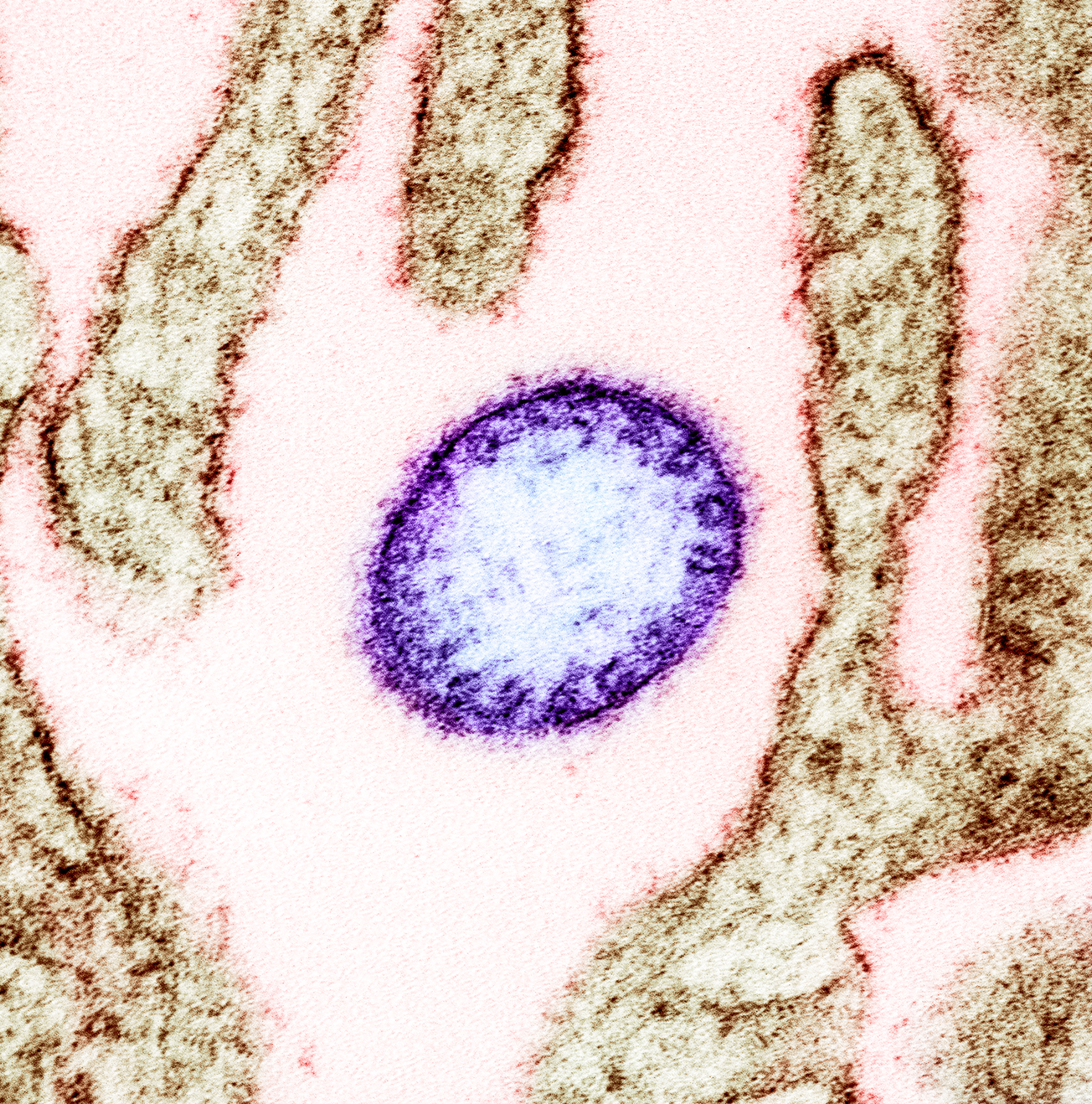
Nipah virus
Nipah virus is a bat-borne, zoonotic virus that causes Nipah virus infection in humans and other animals, a disease with a very high case fatality rate (40–75%). Numerous disease outbreaks caused by the Nipah virus have occurred in India, Malaysia, and Singapore. Nipah virus belongs to the genus Henipavirus along with the Hendra virus, which has also caused disease outbreaks.

viral infectious disease
human, animal or plant disease resulting from a viral infection

Orthohantavirus
Orthohantavirus is a genus of viruses that includes all hantaviruses (family Hantaviridae) that cause disease in humans, but are not spread by humans. Orthohantaviruses, hereafter referred to as hantaviruses, are naturally found primarily in rodents. In general, each hantavirus is carried by one rodent species and each rodent that carries a hantavirus carries one hantavirus species. Hantaviruses in their natural reservoirs usually cause an asymptomatic, persistent infection. In humans, however, hantaviruses cause two diseases: hemorrhagic fever with renal syndrome (HFRS) and hantavirus pulmona

Cytomegalovirus
Cytomegalovirus (CMV) (from cyto- 'cell' via Greek - 'container' + 'big, megalo-' + -virus via Latin 'poison') is a genus of viruses in the order Herpesvirales, in the family Herpesviridae, in the subfamily Betaherpesvirinae. Humans and other primates serve as natural hosts. The 11 species in this genus include human betaherpesvirus 5 (HCMV, human cytomegalovirus, HHV-5), which is the species that infects humans. Diseases associated with HHV-5 include mononucleosis and pneumonia, and congenital CMV in infants can lead to variety of birth defects, including those involving the eyes, ears, liver

Herpesviridae
Orthoherpesviridae, previously named and more widely known as Herpesviridae, is a large family of DNA viruses that cause infections and certain diseases in animals, including humans. The members of this family are commonly known as herpesviruses. The family name is derived from the Greek word ἕρπειν ( 'to creep'), referring to spreading cutaneous lesions, usually involving blisters, seen in flares of herpes simplex 1, herpes simplex 2 and herpes zoster (shingles). In 1971, the International Committee on the Taxonomy of Viruses (ICTV) established Herpesvirus as a genus with 23 viruses among fou

Herpes labialis
Herpes simplex virus that primarily affects the lip
erythema infectiosum
Human disease
rotavirus vaccine
type of vaccine

Parvovirus B19
human virus

Astrovirus
Astroviruses (Astroviridae) are a type of virus that was first discovered in 1975 using electron microscopes following an outbreak of diarrhea in humans. In addition to humans, astroviruses have now been isolated from numerous mammalian animal species (and are classified as genus Mamastrovirus) and from avian species such as ducks, chickens, and turkey poults (classified as genus Avastrovirus). Human astroviruses have been shown in numerous studies to be an important cause of gastroenteritis in young children worldwide. In animals, Astroviruses also cause infection of the gastrointestinal trac

Hendra virus
species of virus

human betaherpesvirus 5
species of virus
Borna disease
horse disease
HAM
human disease

Sin Nombre orthohantavirus
agent of hantavirus cardiopulmonary syndrome

perinatal infectious disease
human disease
Mayaro virus disease
infectious disease
laboratory diagnosis of viral infections
laboratory methods for determining whether a virus infection has occurred in an organism
Hantaan orthohantavirus
species of virus
Andes orthohantavirus
species of virus
Pogosta disease
medical condition
Ross River fever
Human disease
herpetic whitlow
painful blister of the periungual skin that is caused by herpes simplex virus type 1 or 2
Lujo virus
species of virus
adenoviral keratoconjunctivitis
common and highly contagious viral infection of the eye
Dobrava-Belgrade orthohantavirus
Viral disease
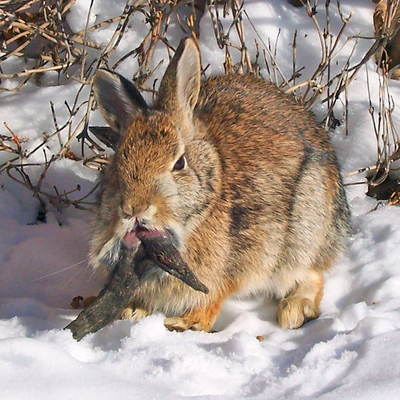
Shope papilloma virus
papilloma virus
Chandipura vesiculovirus
species of virus
infectious causes of cancer
pathogens as a cause of cancer
Liebermeister's rule
increment ratio between an adult individual's cardiac frequency and temperature when in fever

viral gastroenteritis
gastroenteritis caused by a virus
Lloviu viruses
taxon containing Lloviu cuevavirus
Sangassou orthohantavirus
Virus species
Tula orthohantavirus
species of virus