Category
page 1Zoonoses

virus
A virus is a submicroscopic infectious agent that replicates only inside the living cells of an organism. Viruses infect all life forms, from animals and plants to microorganisms, including bacteria and archaea. Viruses are found in almost every ecosystem on Earth and are the most numerous type of biological entity. Since Dmitri Ivanovsky's 1892 article describing a non-bacterial pathogen infecting tobacco plants and the discovery of the tobacco mosaic virus by Martinus Beijerinck in 1898, more than 16,000 of the millions of virus species have been described in detail. The study of viruses is

leprosy
Leprosy, also known as '''Hansen's disease (HD'), is a long-term infection by the bacteria Mycobacterium leprae or Mycobacterium lepromatosis''. Infection can lead to damage of the nerves, respiratory tract, skin, and eyes. This nerve damage may result in the loss of nociception, which can lead to the loss of parts of a person's extremities from repeated injuries or infection through unnoticed wounds. An infected person may also experience muscle weakness and loss of eyesight. Leprosy symptoms may begin within one year or take 20 years or more.

plague
specific contagious and frequently fatal human disease caused by Yersinia pestis

anthrax
Anthrax is an infection caused by the bacterium Bacillus anthracis or Bacillus cereus biovar anthracis. Infection typically occurs by contact with the skin, inhalation, or intestinal absorption. Symptom onset occurs between one day and two months after the infection is contracted. The skin form presents with a small blister with surrounding swelling that often turns into a painless ulcer with a black center. The inhalation form presents with fever, chest pain, and shortness of breath. The intestinal form presents with diarrhea (which may contain blood), abdominal pains, nausea, and vomiting.

African trypanosomiasis
parasitic disease

leishmaniasis
Leishmaniasis is a wide array of clinical manifestations caused by protozoal parasites of the Trypanosomatida genus Leishmania. It is generally spread through the bite of phlebotomine sandflies, Phlebotomus and Lutzomyia, and occurs most frequently in the tropics and sub-tropics of Africa, Asia, the Americas, and southern Europe. The disease can present in three main ways: cutaneous, mucocutaneous, or visceral. The cutaneous form presents with skin ulcers, while the mucocutaneous form presents with ulcers of the skin, mouth, and nose. The visceral form starts with skin ulcers and later present

leptospirosis

brucellosis
Brucellosis is a zoonosis (zoonotic disease) spread primarily via ingestion of unpasteurized milk from infected animals. It is also known as undulant fever, Malta fever, and Mediterranean fever.

Chagas disease
human disease
.jpg)
zoonosis
A zoonosis (; : zoonoses) or zoonotic disease is an infectious disease of humans caused by a pathogen (an infectious agent, such as a virus, bacterium, parasite, fungi or prion) which can jump from a non-human animal to a human. When humans infect non-humans, it is called reverse zoonosis or anthroponosis.
.jpg)
Salmonella
Salmonella is a genus of rod-shaped, (bacillus) Gram-negative bacteria of the family Enterobacteriaceae. The two known species of Salmonella are Salmonella enterica and Salmonella bongori. S. enterica is the type species and is further divided into six subspecies that include over 2,650 serotypes. Salmonella was named after Daniel Elmer Salmon (1850–1914), an American veterinary surgeon.
.jpg)
ascariasis

toxoplasmosis

dermatophytosis

dracunculiasis

salmonellosis

tularemia

food safety
scientific discipline describing handling, preparation, and storage of food in ways that prevent foodborne illness

Orthoebolavirus zairense
species of virus

giardiasis
Giardiasis is a parasitic disease caused by the protist enteropathogen Giardia duodenalis (also known as G. lamblia and G. intestinalis), especially common in children and travelers. Infected individuals experience steatorrhea, a type of diarrhea with fatty sticky stool; abdominal pain, weight loss, and weakness due to dehydration and malabsorption. Less common symptoms include skin rash, hives and joint swelling. Symptoms usually begin one to three weeks after exposure and, without treatment, may last two to six weeks or longer. Some infected individuals experience mild or no symptoms and rem

Q fever
disease caused by infection with Coxiella burnetii

Giardia lamblia
parasitic microorganism that causes giardiasis
tick-borne encephalitis
viral infectious disease involving the central nervous system
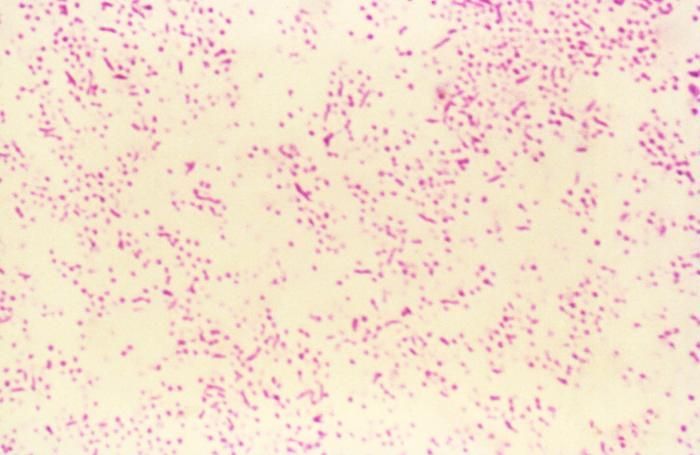
Campylobacter
Campylobacter is a type of bacteria that can cause a diarrheal disease in people. Its name means 'curved bacterium' because the germ typically appears in a comma or s shape. According to its scientific classification, it is a genus of gram-negative bacteria that is motile.

Babesiosis
Babesiosis or piroplasmosis is a malaria-like parasitic disease caused by infection with a eukaryotic parasite in the order Piroplasmida, typically a Babesia or Theileria, in the phylum Apicomplexa. Human babesiosis transmission via tick bite is most common in the Northeastern and Midwestern United States and parts of Europe, and sporadic throughout the rest of the world. It occurs in warm weather. People can get infected with Babesia parasites by the bite of an infected tick, by getting a blood transfusion from an infected donor of blood products, or by congenital transmission (an infected mo
cat-scratch disease
human disease

histoplasmosis
Histoplasmosis is a fungal infection caused by Histoplasma capsulatum. Symptoms of this infection vary greatly, but the disease affects primarily the lungs. Occasionally, other organs are affected; called disseminated histoplasmosis, it can be fatal if left untreated.
relapsing fever borreliosis
primary bacterial infectious disease that results in infection, has material basis in Borrelia, which is transmitted by tick or transmitted by body louse
epidemic typhus
human disease
Cryptococcus neoformans
species of fungus

Balantidium coli
species of ciliate protist
natural reservoir
living host, such as an animal or a plant, inside of which an infectious pathogen naturally lives and reproduces

cryptosporidiosis
Cryptosporidiosis, sometimes informally called crypto, is a parasitic disease caused by Cryptosporidium, a genus of protozoan parasites in the phylum Apicomplexa. It affects the distal small intestine and can affect the respiratory tract in both immunocompetent (i.e., individuals with a normal functioning immune system) and immunocompromised (e.g., persons with HIV/AIDS or autoimmune disorders) individuals, resulting in watery diarrhea with or without an unexplained cough. In immunosuppressed individuals, the symptoms are particularly severe and can be fatal. It is primarily spread through the

pasteurella multocida
species of bacterium
cercarial dermatitis
human disease

cryptococcosis
Cryptococcosis is a potentially fatal fungal infection of mainly the lungs, presenting as a pneumonia, and in the brain, where it appears as a meningitis. Coughing, difficulty breathing, chest pain and fever are seen when the lungs are infected. When the brain is infected, symptoms include headache, fever, neck pain, nausea and vomiting, light sensitivity and confusion or changes in behavior. It can also affect other parts of the body including skin, where it may appear as several fluid-filled nodules with dead tissue.
Escherichia coli O157:H7
Serotype of the bacteria Escherichia coli

Mycobacterium bovis
species of bacterium

sporotrichosis
Sporotrichosis, also known as '''rose handler's disease', is a fungal infection that may be localised to skin, lungs, bone and joint, or become systemic. It presents with firm painless nodules that later ulcerate. Following initial exposure to Sporothrix schenckii'', the disease typically progresses over a period of a week to several months. Serious complications may develop in people who have a weakened immune system.
Rocky Mountain spotted fever
human disease
scrub typhus
form of typhus caused by the intracellular parasite Orientia tsutsugamushi
viral load
amount of virus found in host tissue or a given volume of fluid
Verotoxin-producing Escherichia coli
strains of the bacterium Escherichia coli
One Health
collaborative global initiative to attain optimal health for people, animals and the environment
variant Creutzfeldt–Jakob disease
degenerative brain disease caused by prions
erysipelothrix rhusiopathiae infectious disease
In humans, Erysipelothrix rhusiopathiae infections most commonly present in a mild cutaneous form known as erysipeloid or fish poisoning. E. rhusiopathiae can cause an indolent cellulitis, more commonly in individuals who handle fish and raw meat. Erysipelothrix rhusiopathiae also causes Swine Erysipelas. It is common in domestic pigs and can be transmitted to humans who work with swine. It gains entry typically by abrasions in the hand. Bacteremia and endocarditis are uncommon but serious sequelae. Due to the rarity of reported human cases, E. rhusiopathiae infections are frequently misidenti
Rickettsia prowazekii
species of bacterium

balantidiasis
Balantidiasis is a protozoan infection caused by infection with Balantidium coli.
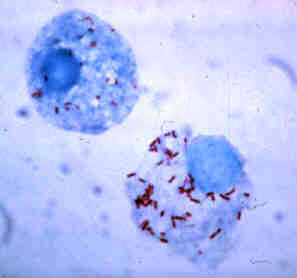
Rickettsia rickettsii
species of bacterium
Capnocytophaga canimorsus
Bacteria
human monocytic ehrlichiosis
human disease
gain of function research
field of bio-medical research
actinobacillosis
Actinobacillosis is a zoonotic disease caused by Actinobacillus. It is more commonly associated with animals than with humans.
cat bite
The bite of the domestic cat
Baylisascaris
Baylisascaris is a genus of roundworms that infect more than fifty animal species.
Streptococcus iniae
species of bacterium

cross-species transmission
transmission of an infectious agent between host organisms of two different species that may lead to a new outbreak
spillover infection
situation when a reservoir population with a high pathogen prevalence comes into contact with a novel host population, and may cause an epidemic in the latter
Clostridioides difficile infection
disease caused by C. difficile bacteria
super-spreading event
event where a disease host disproportionally infects more secondary contacts than others infected with the same disease