White, William T.
Aetobatus
Sign in to saveAetobatus (from Ancient Greek ἀετός (aetós), meaning "eagle", and βάτος (bátos), meaning "ray") is a genus of eagle rays native to the Atlantic, Pacific and Indian Oceans. It was formerly placed in Myliobatidae, but is now placed in its own family Aetobatidae based on salient differences from myliobatids, especially the pectoral fins joining the head at the level of the eyes.
In the Vinony graph
Within Vinony's link graph, Aetobatus is referenced by 48 other articles, and connects out to anatomical placement, Myliobatidae and Animalia.
It is catalogued under topics including Aetobatus, Batomorphi genera and Taxa described in 1816.
Its subject is documented across 25 Wikipedia language editions.
Species
マダラトビエイ属
GENUS
- KingdomAnimalia
- PhylumChordata
- ClassElasmobranchii
- OrderMyliobatiformes
- FamilyMyliobatidae
via GBIF
Museum specimens
- Specimen records
- 242
- With media
- 17
- Family
- Myliobatidae
- Collections
- SDNHM, FHSM, NHMUK, ROM, NMMNHS, UF
- Recorded in
- United States, ;, United Kingdom, Panama
Wikidata facts
- Instance of
- taxon
- Image
- Aetobatus narinari ilustr.jpg
Show 5 more facts
- Commons category
- Aetobatus
- topic's main category
- Category:Aetobatus
- taxon name
- Aetobatus
- taxon rank
- genus
- start time
- 59000000-0
Sources (1)
via Wikidata · CC0
~3 min read
Encyclopedic overview
3 sectionsContents
- Description
- See also
- References
Aetobatus (from Ancient Greek ἀετός (aetós), meaning "eagle", and βάτος (bátos), meaning "ray") is a genus of eagle rays native to the Atlantic, Pacific and Indian Oceans. It was formerly placed in Myliobatidae, but is now placed in its own family Aetobatidae based on salient differences from myliobatids, especially the pectoral fins joining the head at the level of the eyes.
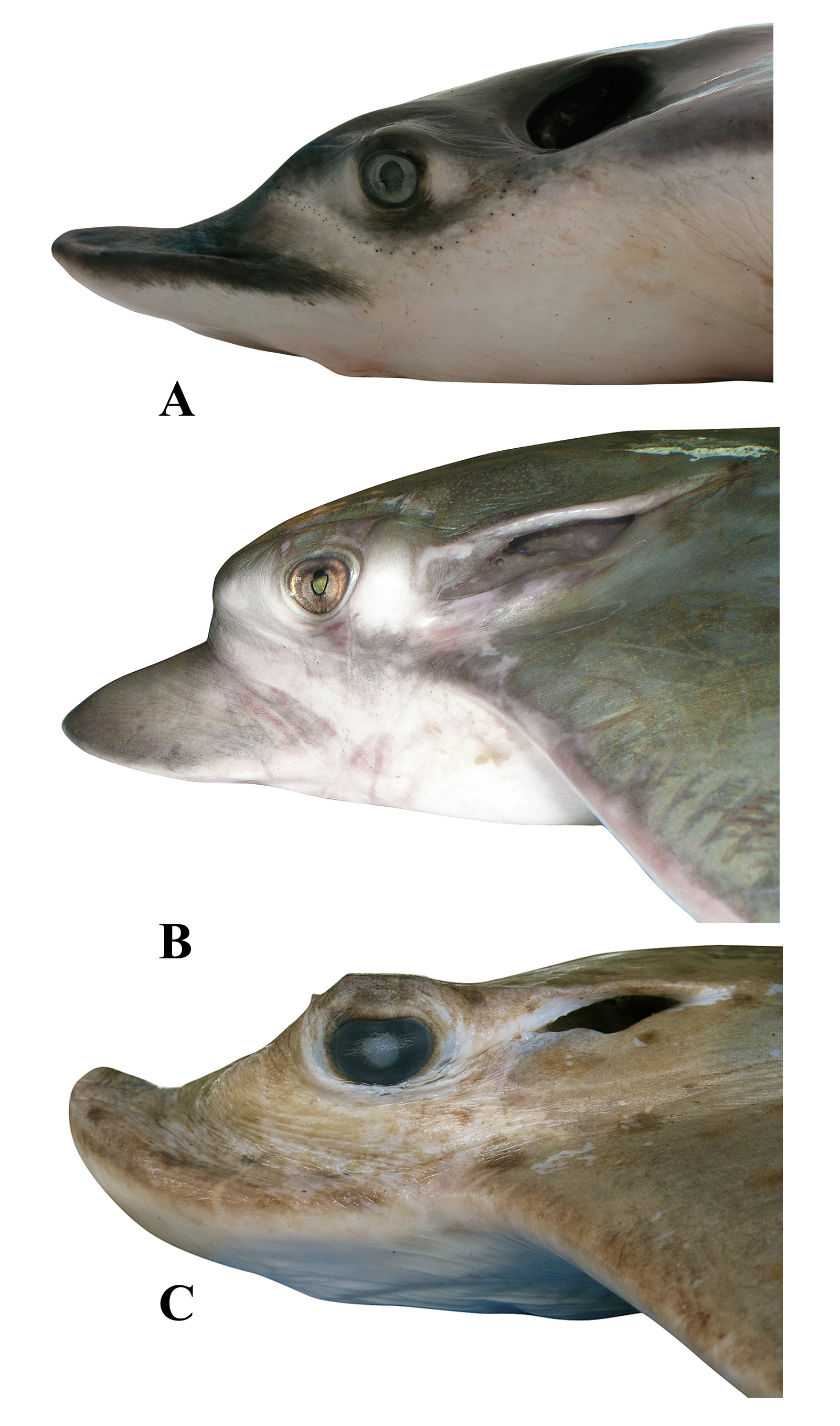
==Description== This genus is diagnosed by a large adult size, which is around wide and largely consisting of a wing-like rhomboidal "disc" (pectoral fins). The trunk is broad, depressed, and thick. The head protrudes forward anteriorly, is narrow, and elevated above the disc, which connects with the head at the level of the eyes. The spiracles are located dorsally and angles towards the sides. The mouth is broad, located ventrally, contains a single tooth plate row, and is surrounded by sensory pores and papillae. The internasal flap possesses a deep "V" shaped notch. A single dorsal fin arises near the base of the very long whip-like tail, which is armed by one or more stinging barbs.
Excerpted from Wikipedia’s “Aetobatus” article, available under the CC BY-SA 4.0 licence.