File:Ammit.svg · Wikimedia Commons · See Wikimedia Commons
Ammit
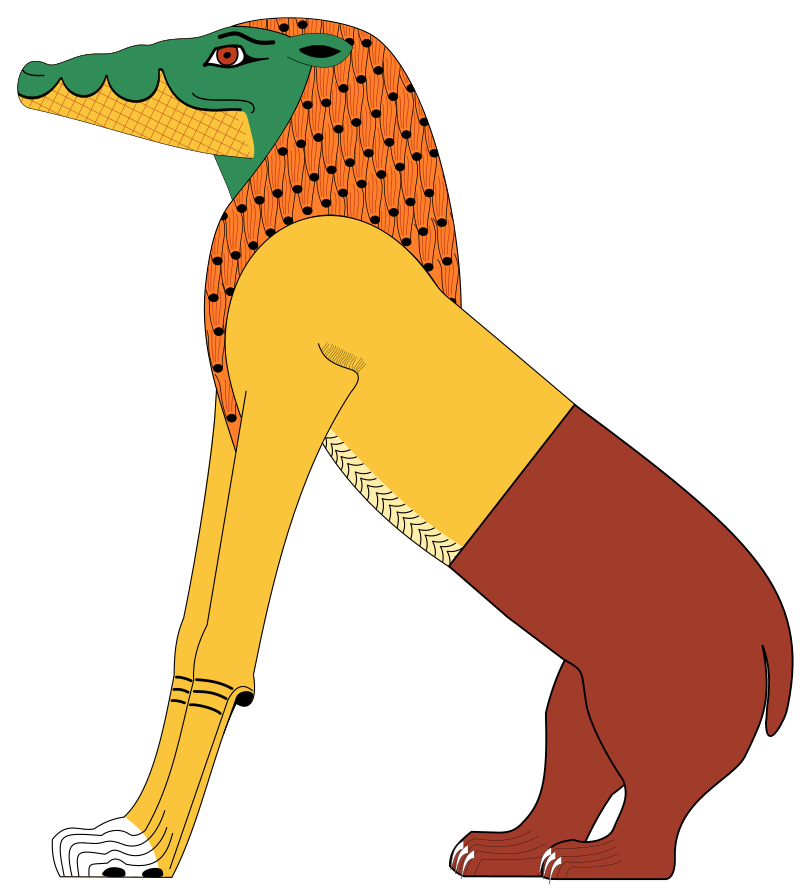
Sign in to saveAmmit (; , "Devourer of the Dead"; also rendered Ammut or Ahemait) was an ancient Egyptian goddess with the forequarters of a lion, the hindquarters of a hippopotamus, and the head of a crocodile—the three largest "man-eating" animals known to ancient Egyptians. In ancient Egyptian religion, Ammit played an important role during the funerary ritual, the Judgment of the Dead.
Key facts
- Deity.type
- Egyptian
- Deity.name
- Ammit
- Deity.image
- Ammit.svg
- Deity.hiero
- Egyptian: ꜥm-mwt (devourer of the dead) a-m-F10-m-t*Z2ss:A14
- Deity.gender
- Female
via Wikipedia infobox
Wikidata facts
- Instance of
- Ancient Egyptian deity
- Part of
- Egyptian mythology
- Gender
- female
- Image
- Ammit.svg
Show 2 more facts
- Commons category
- Ammit
- worshipped by
- Egyptian mythology
Sources (1)
via Wikidata · CC0
~9 min read
Encyclopedic overview
10 sectionsContents
- Nomenclature
- Iconography
- Role in ancient Egyptian religion
- Weighing of the heart
- In popular culture
- Gallery
- See also
- Explanatory notes
- References
- External links
Ammit (; , "Devourer of the Dead"; also rendered Ammut or Ahemait) was an ancient Egyptian goddess with the forequarters of a lion, the hindquarters of a hippopotamus, and the head of a crocodile—the three largest "man-eating" animals known to ancient Egyptians. In ancient Egyptian religion, Ammit played an important role during the funerary ritual, the Judgment of the Dead.
== Nomenclature == Ammit (; ) means "devourer of the dead" ("devoureress of the dead") or "swallower of the dead", where is the verb "to swallow", and signifies "the dead", more specifically the dead who had been adjudged not to belong to the ("blessed dead") who abided by the code of truth (Ma'at).
Excerpted from Wikipedia’s “Ammit” article, available under the CC BY-SA 4.0 licence.