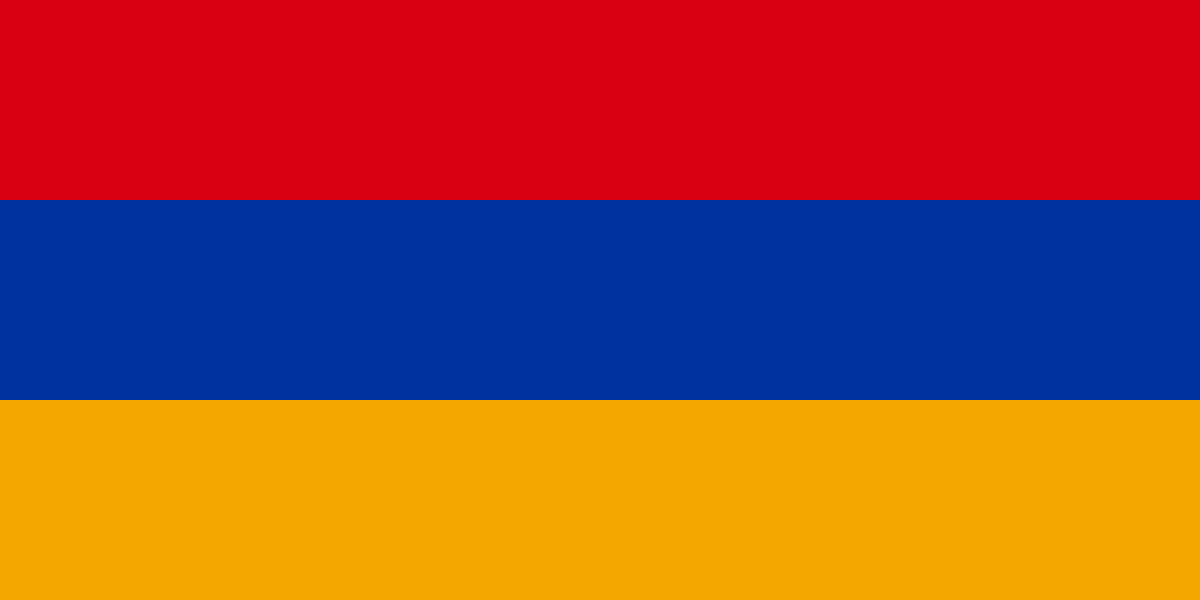
Also known as Hayastan, Republic of Armenia, Hayastani Hanrapetut’yun, Հայաստան
高加索地區國家
Armenia is a landlocked country located in the Armenian highlands of West Asia, bordered by Turkey, Georgia, Azerbaijan, Iran, and the Azerbaijani exclave of Nakhchivan, with its capital and largest city in Yerevan. It is situated in the Caucasus region, a strategically significant area that connects Europe and Asia.
AI-generated from the Wikipedia summary — may contain errors.
via Open-Meteo
thumb|375px|Countries in dark green and turquoise can travel to Armenia without a visa, and countries in light green can get a visa on arrival or an eVisa. All other countries will need a visa in advance.
Armenia's visa policy is remarkably open. Most people can obtain a visa on arrival or visit the country without a visa.
thumb|240px|Noravank Monastery in [[Southern Armenia.]]
thumb|Khor Virab against the backdrop of Mount Ararat Armenia lies at the root of the Christian faith, as it is known as the first country that was evangelized by two of Jesus' own disciples. Today, there is still a wealth of religious heritage to see. Beautiful churches and monasteries are omnipresent, and some are up to 1700 years old. A few of the most important ones are listed on Unesco's World Heritage list. To start, there is the monastery of Geghard, carved out of a mountain slope and dramatically situated between the stunning cliffs of the Azat river gorge. Once you are there, the Garni Temple with its Roman temple is just a quick stop downriver. The Etchmiadzin Cathedral in Vagharshapat is the headquarters of the Armenian Church and has parts dating back to the 5th century, making it considered the oldest cathedral in the world. The Monasteries of Sanahin and Haghpat are just across the tops of the Debed Canyon from each other, which is full of great hiking trails. Both date back to the 10th century. The 7th century Zvartnots Cathedral is now in ruins, but considered of great archeological value.
If you are up for some of Armenia's oldest churches, consider the ancient basilicas at Yereruyk, Odzun, Byurakan or Aparan. Some heritage sights sit in beautiful valleys. The monastery of Noravank is a good sight in the lovely brick-red Amaghu Canyon, while the monasteries of Tatev and Tatevi Anapat sit in the Vorotan Valley - a gorgeous area with great landscapes and dotte…
thumb|240px|Roman temple, built in the first century AD, [[Garni, Central Armenia.]] Hiking – Armenia has an endless amount of hiking trails and peaks to discover. South of Lake Sevan Region, around Garni, up and down the Debed Canyon, and Southern Armenia are just a few of the highlights. For reliable maps and comprehensive trails and map information, consult OpenStreetMap, which is used by this travel guide, and by many mobile Apps like OsmAnd (comprehensive with many add-ons) and MAPS.ME (simple but limited). Cycling – Bike Armenia Tour Route has a great route mapped out to see Armenia by bicycle. Events – A list of upcoming events can be found on the official tourism website. Otherwise: rock climbing, wind surfing, sun bathing, camping, and even skiing
亞美尼亞共和國(亞美尼亞語:Հայաստանի Հանրապետություն,羅馬化:Hayastani Hanrapetut'yun),通稱亞美尼亞(亞美尼亞語:Հայաստան,羅馬化:Hayastan,發音近似於「哈亞斯坦」),是一個位於西亞外高加索地區的共和制國家,有時也會被視為是東歐的一部分。行政疆界上,亞美尼亞位於黑海與裏海之間,属內陸國家,西鄰土耳其,北鄰格鲁吉亚,東為阿塞拜疆,南接伊朗和阿塞拜疆的飛地納希切萬自治共和國,以埃里溫為首都。亞美尼亞曾经是蘇聯的加盟共和國之一,1991年蘇聯解體时独立。 在4世纪早期(公元301年),亚美尼亚是世界上第一个将基督教视为官方宗教的国家。因此,亚美尼亚经常被指为「第一个基督教国家」。绝大部分國民信奉基督教的东方正统教会(与衣索比亞和埃及的科普特正教会同宗,非东正教),但因為周圍被伊斯蘭國家所包圍著,再加上與鄰國之間的國界爭議問題,成為高加索地區動盪不安的火藥庫地帶。 目前,亞美尼亞與鄰國阿塞拜疆之間存在納戈爾諾-卡拉巴赫的領土爭議問題,1988年以來一直宣稱亞塞拜然西南部的納戈爾諾-卡拉巴赫(境內大多數居民為信奉基督教的亞美尼亞人)是亞美尼亞領土的一部份,並且支持當地的武装與亞塞拜然政府對抗,支持在1991年宣布独立但為未被普遍承認的國家的阿爾察赫共和國,曾在1990年代雙方因此問題在邊境發生軍事对抗,並于2020年10月再次爆發。亞美尼亞也因为1915年奧斯曼帝國土耳其民族主義者發動的亞美尼亞種族大屠殺的歷史認知問題與土耳其之間有外交上和對大屠殺事件承認問題上存在爭議,但是近年亞土雙方已透過元首互訪等方式逐漸修復關係、重建溝通對話。亚美尼亚是欧洲委员会和集体安全条约组织一员。
Abstract from DBpedia / Wikipedia · CC BY-SA
2 mapped locations
via REST Countries
via World Bank Open Data · CC BY 4.0
via Wikimedia Pageviews API
via Wikipedia infobox
via PubMed
via Wikidata · CC0
thumb|Coffee with a view, [[Garni]] Alcoholic: Vodka, tutti oghi (mulberry vodka), honi oghi (cornelian cherry vodka), Tsirani oghi (apricot vodka), local beer (Kilikia, Kotayk, Gyumri), wine (can also be made of pomegranate), and brandy. Respected wines include Karas, Karasi, Kataro, Armenia and some new wines hitting the market. Many are made with Armenian grape varietals not being grown anywhere else in the world. Areni is one of the most popular grape sorts which the largest number of red wines are made from, and the name of Armenia's wine country, while khndoghni is a variety grown in southern Karabakh that the Kataro wine is made from.
Other: Tan (yogurt combined with water and salt), Jermuk (mineral water), masuri hyut (rose hip juice), chichkhani hyut (sea buckthorne juice), bali hyut (sour cherry juice), Armenian coffee, and herbal teas.
Across Armenia, you can find bed and breakfasts that are pleasant and will give you a true taste of Armenian culture. The language barrier will be significant in the rural areas of Armenia if you do not speak Armenian or Russian, but if you take a phrase dictionary with you, you should have no trouble, as people are patient. Any effort to utter an Armenian phrase or term will be met with a friendly smile.
In Yerevan, there are a couple of hostels. Outside Yerevan, there are a few main recreational areas that offer very reasonable accommodation, but you will be required to live without some conveniences. At the high end are some hotels on Lake Sevan and in Northern Lori Marz (50 km from the Georgian border). Here you will miss nothing, but you will pay Western prices for the accommodation. Around Lake Sevan, there are numerous types of cottages and hotels. Prices are reasonable and start at about US$10 per day for a cottage with electricity and within walking distance from Lake Sevan. The city of Sevan, due to its proximity to Yerevan, is the most popular place on Lake Sevan but the history, culture and non-Western European feel of the accommodation change as you go south on Lake Sevan.
Tavush Marz, the northeast province of Armenia, is a popular place to summer. Dilijan and Ijevan are wonderful towns in which to be based, with day trips to the many ancient churches that pepper this remote region. Dilijan is known for its sanatoriums from the Soviet era, and has become home…
thumb|240px|Sevanavank in [[Lake Sevan Region.]] Armenia is a very safe country, so you shouldn't worry about walking around late at night. People leave you to your own devices.
Overall, Yerevan is also safe, though theft and pickpocketing are not unheard of, particularly targeting foreigners. Use common sense and usual precautions when walking on the street at night, especially after drinking.
Female travellers should be aware that unaccompanied women are an unusual sight after dark. In the outskirts of the city, a single woman walking alone at night may attract attention—though this attention may not be as malign as other parts of the world.
The biggest problem you may encounter in Armenia are crooked taxi drivers, especially in Yerevan. See the Yerevan article and included warning to read all about it. You can almost always avoid any problem by using either GG or Yandex taxi apps. If you cannot, always agree a price in advance, and if they are reluctant to agree, do not take the ride. If they pretend that your understanding was other than what you agreed to, refuse to pay and if need be involve other locals or police if they are trying to gouge too much.
If you are dining with Armenians, they will feed you until you cannot eat any more. The food is generally safe, even from the roadside khorovats stands.
The tap water is generally safe, as it comes directly from mountains. Tab and spring water is available virtually everywhere, especially at churches and monasteries. This means that you do not need to carry a lot of water with you, just a 0.5 L bottle should be enough.
Armenians are like any other Europeans in their manners and lifestyle, though very much on the traditional end of the spectrum. In contrast to Western Europe, Armenia remains deeply religious, and women occupy a place in society that Western Europe has not seen for a number of generations.
Women are traditionally treated with chivalry. Female travellers should not be surprised or alarmed if their male Armenian friends take the initiative to pay the bills at a restaurant, give up their seat on public transportation for them, open every door in front of them, and/or help them carry items or objects. Male travellers should understand that these nuances will be expected by Armenian women, even if they're not in a romantic relationship with one. The "ladies first" rule is considered important.
Many Armenians believe that Russian rule saved Armenia from complete Turkish extermination, and many Armenians are Russophiles. Almost every Armenian has relatives in Russia, Russians as individuals are very well received, and Russian continues to be widely spoken as a second language (although Armenians still may not necessarily support the Russian government unconditionally, so it might be a good idea to avoid talking about them unless you know the person you are talking to well enough). Similarly, Armenians are generally grateful to the Arabs and Persians for protecting many of their kinsmen from the Turks during the Armenian Genocide.
Staring is quite common in Armenia; People, both …
thumb|Beeline store in Yerevan Yerevan is full of cafes with free wifi. These are beginning to pop up in a number of towns outside of Yerevan as well. Many hotels and cafes provide WiFi for their guests. International calling is available through prepaid mobile phone cards using a landline. Mobile phone companies often offer special prefixes to dial before the number to use VoIP, which is extremely cheap, and a good quality call. Short-term mobile phone rental is also possible. Regular calls can always be made from the post office, and is cheap within Armenia, but a bit expensive for international calls. Try to find a phone office that uses the internet for much cheaper rates. Local calls can be made from kiosks or the rare payphone.
Phone numbers in Armenia are of the form +374 312 57659 where "374" is the country code for Armenia, the next 2-5 digits (starting with a 1, 2, 3 or 4 in the case of land lines) are the area code and the remaining 3 to 6 digits are the "local" part of the subscriber number that can be called from within that particular area code using abbreviated dialing.
Area codes starting with 6 have been assigned to Internet telephony service providers to provide non-geographically based numbers. Mobile phone numbers have two digit mobile prefixes denoting the original network and all begin with a 9 (Nagorno-Karabakh mobile networks that used to start with a 7 have now been re-numbered to 97).
You must dial "0" in front of the geographic area code from out…
Travel guide from Wikivoyage (CC BY-SA 4.0)
via Wikidata sitelinks · CC0
Discovered by embedding cosine similarity (sentence-transformers MiniLM, 384-dim).