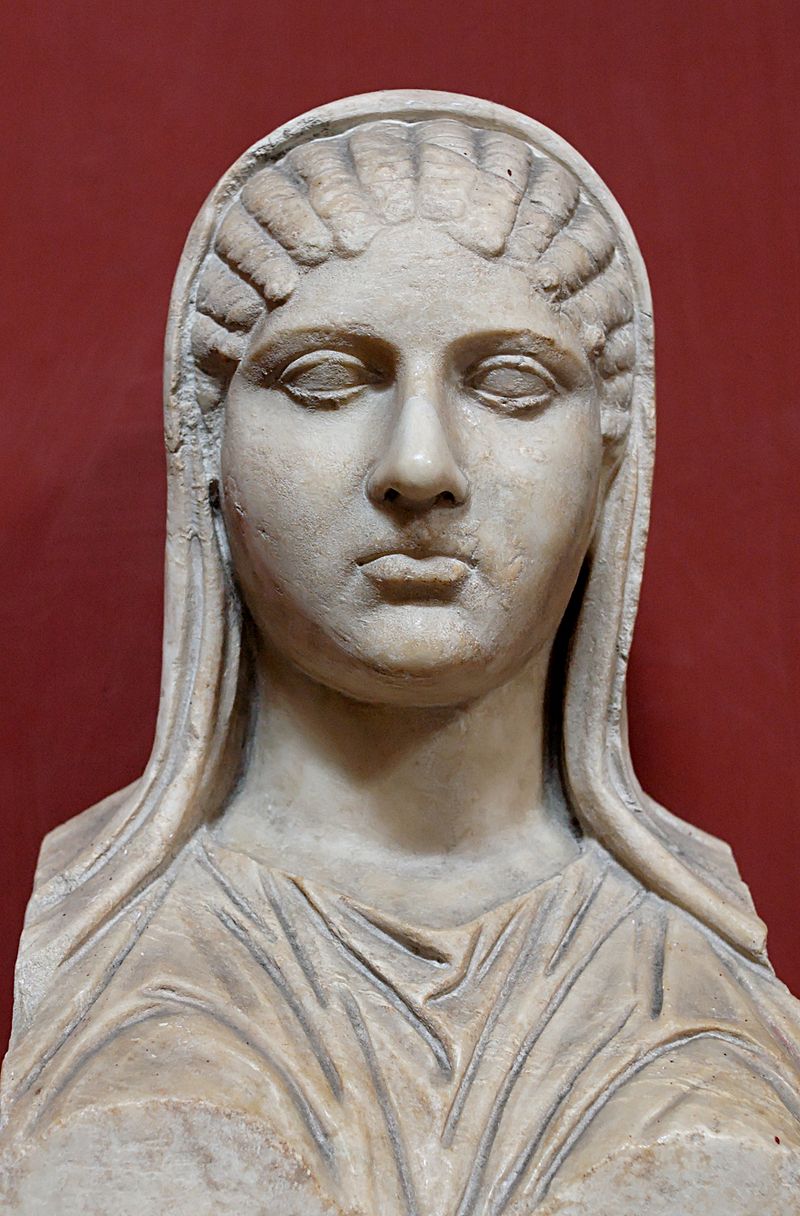
File:Aspasie_Pio-Clementino_Inv272.jpg · Wikimedia Commons · See Wikimedia Commons
Aspasia di Mileto
Sign in to saveAlso known as Aspasia of Miletus
antica greca, seconda moglie di Pericle
Aspasia was a woman from Miletus who lived in Classical Athens and became known for her relationship with the influential statesman Pericles, making her one of the most documented women from the ancient Greco-Roman world. While ancient sources describe her as a courtesan, modern scholars question whether this claim is historically accurate, since it comes largely from ancient comedies rather than reliable sources.
AI-generated from the Wikipedia summary — may contain errors.
Person · Open Library
- Works
- 11
Top works
- Advances in Applied Microeconomics
- Advances in Applied Macroeconomics
- Applied Economic Research and Trends
- Advances in Empirical Economic Research
- Advances in Quantitative Economic Research
via Open Library + Wikidata
Wikidata facts
- Instance of
- human
- Gender
- female
- Place of birth
- Miletus
- Place of death
- Athens
- Spouse
- Lysicles
- Child
- Pericles the Younger
- Occupation
- writer
- Languages spoken
- Ancient Greek
- Image
- Aspasie - Musée de Pergame - Berlin.jpg
Show 6 more facts
Sources (9)
via Wikidata · CC0
Article · Italiano
Aspasia di Mileto, comunemente nota come Aspasia (AFI: /aˈspazja/; in greco antico: Ἀσπασία, Aspasía; 470 a.C. circa – 400 a.C. circa), fu amante e compagna del politico ateniese Pericle, da cui ebbe un figlio, Pericle il Giovane, anche se non sono noti i dettagli completi del loro stato coniugale. Ionia originaria di Mileto, prese parte alla vita pubblica di Atene nell'età classica. Secondo Plutarco la sua casa divenne un centro intellettuale al punto da attrarre i più noti scrittori e pensatori, tra i quali Socrate che, a sua volta, si ipotizza sarebbe stato influenzato dagli insegnamenti di Aspasia. Essa è menzionata negli scritti di Platone, Aristofane, Senofonte e altri. Sebbene abbia speso la maggior parte della sua vita da adulta in Grecia, si conoscono a pieno pochi dettagli della sua vita. Qualche studioso ipotizza che Aspasia fosse una custode di bordello e un'etera. Il ruolo storico di Aspasia fornisce intuizioni essenziali per la comprensione delle donne nell'antica Grecia. Si conosce davvero poco delle donne del suo tempo. La studiosa Madeleine Henry afferma che «fare domande sulla vita di Aspasia è come fare domande su mezza umanità».
Abstract from DBpedia / Wikipedia · CC BY-SA