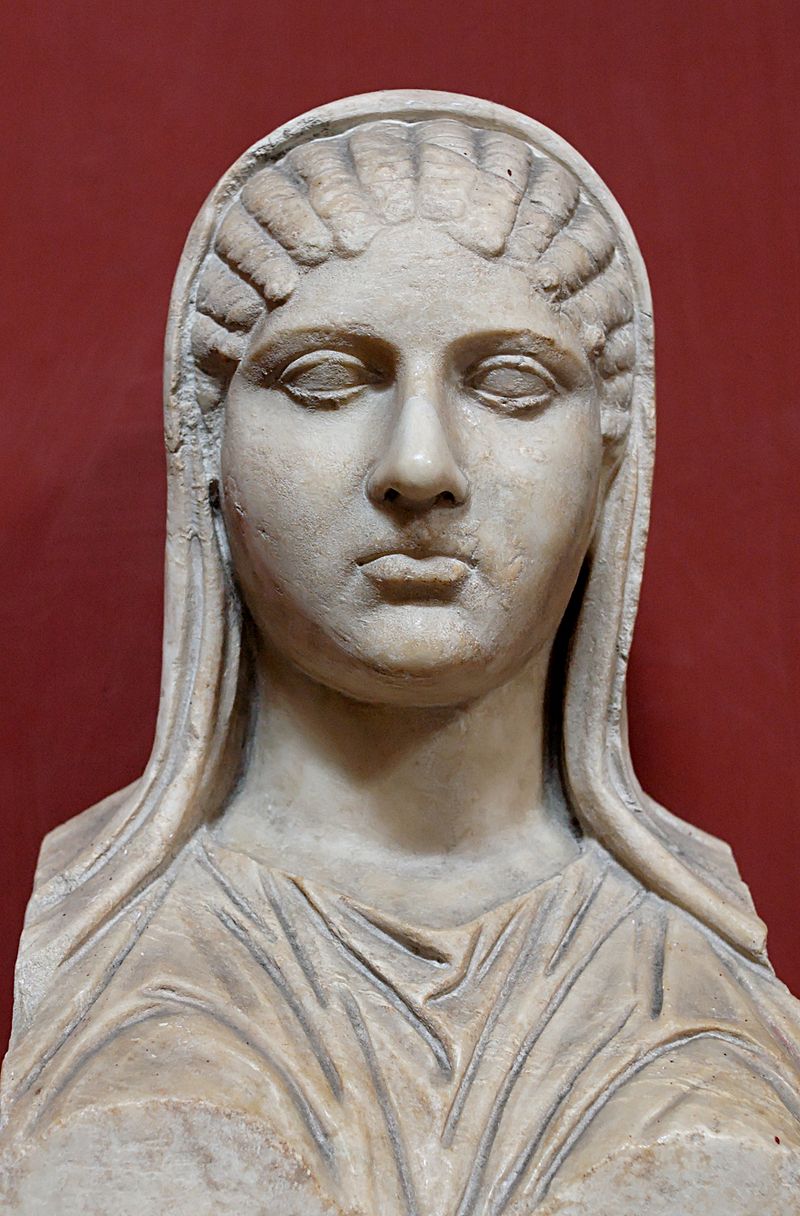
File:Aspasie_Pio-Clementino_Inv272.jpg · Wikimedia Commons · See Wikimedia Commons
Aspasia de Mileto
Sign in to saveAlso known as Aspasia of Miletus
thumb|right|Marble portrait herm (sculpture)|herm identified by an inscription as Aspasia, possibly copied from her grave. Aspasia (after 428 BC) was a metic woman who lived in Classical Athens. Born in Miletus, she moved to Athens and began a relationship with the statesman Pericles. According to the traditional historical narrative, she worked as a courtesan, though modern scholars have questioned the factual basis for this claim, which derives from ancient comedy. Though Aspasia is one of the best-attested women from the Greco-Roman world, and the most important woman in the history of fift
Aspasia was a woman from Miletus who lived in Classical Athens and became known for her relationship with the influential statesman Pericles, making her one of the most documented women from the ancient Greco-Roman world. While ancient sources describe her as a courtesan, modern scholars question whether this claim is historically accurate, since it comes largely from ancient comedies rather than reliable sources.
AI-generated from the Wikipedia summary — may contain errors.
Person · Open Library
- Works
- 11
Top works
- Advances in Applied Microeconomics
- Advances in Applied Macroeconomics
- Applied Economic Research and Trends
- Advances in Empirical Economic Research
- Advances in Quantitative Economic Research
via Open Library + Wikidata
Wikidata facts
- Instance of
- human
- Gender
- female
- Place of birth
- Miletus
- Place of death
- Athens
- Spouse
- Lysicles
- Child
- Pericles the Younger
- Occupation
- writer
- Languages spoken
- Ancient Greek
- Image
- Aspasie - Musée de Pergame - Berlin.jpg
Show 6 more facts
Sources (9)
via Wikidata · CC0
Article · Español
Aspasia de Mileto (en griego; Ἀσπασία; c. 470 a. C. – c. 400 a. C.), maestra de retórica y logógrafa, tuvo gran influencia en la vida cultural y política en la Atenas del Siglo de Pericles. Hija de Axíoco fue una mujer famosa también por haber estado unida al político ateniense Pericles desde aproximadamente 450-445 a. C. hasta la muerte de este en el 429 a. C. Se sabe poco de su vida. Pasó la mayor parte de su vida adulta en Atenas y pudo haber influido tanto a Pericles como a otros políticos atenienses. Se la menciona en los escritos de Platón, Aristófanes, Jenofonte y otros autores de la época. Plutarco se refiere a ella en su biografía de Pericles. Los escritores antiguos también recogen en sus escritos que Aspasia podría haber dirigido un burdel y la llaman hetera (una cortesana de la Antigua Grecia), si bien estos relatos han sido puestos en duda por los estudiosos modernos, basándose en que muchos de los autores eran escritores satíricos cuya principal finalidad era difamar a Pericles. Algunos investigadores cuestionan la idea de que fuese una hetera, y han sugerido que podría haber estado casada con Pericles. Aspasia tenía un hijo de Pericles, Pericles el Joven, que más tarde se convertiría en general en la academia militar ateniense y que fue ejecutado tras la batalla de Arginusas. Se cree que Aspasia, tras la muerte de Pericles, se convirtió en amante de Lisicles, otro político ateniense.
Abstract from DBpedia / Wikipedia · CC BY-SA