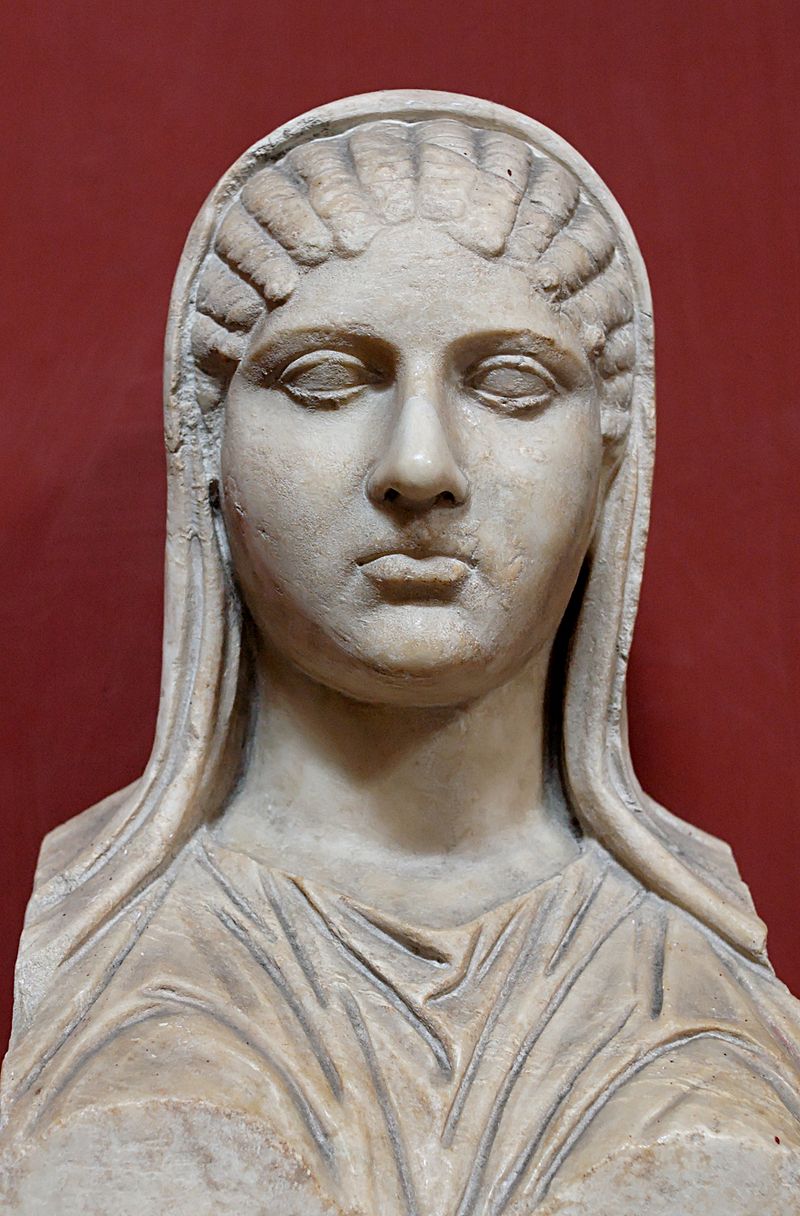
File:Aspasie_Pio-Clementino_Inv272.jpg · Wikimedia Commons · See Wikimedia Commons
Aspasia
Sign in to saveAlso known as Aspasia of Miletus
thumb|right|Marble portrait herm (sculpture)|herm identified by an inscription as Aspasia, possibly copied from her grave. Aspasia (after 428 BC) was a metic woman who lived in Classical Athens. Born in Miletus, she moved to Athens and began a relationship with the statesman Pericles. According to the traditional historical narrative, she worked as a courtesan, though modern scholars have questioned the factual basis for this claim, which derives from ancient comedy. Though Aspasia is one of the best-attested women from the Greco-Roman world, and the most important woman in the history of fift
Aspasia was a woman from Miletus who lived in Classical Athens and became known for her relationship with the influential statesman Pericles, making her one of the most documented women from the ancient Greco-Roman world. While ancient sources describe her as a courtesan, modern scholars question whether this claim is historically accurate, since it comes largely from ancient comedies rather than reliable sources.
AI-generated from the Wikipedia summary — may contain errors.
Person · Open Library
- Works
- 11
Top works
- Advances in Applied Microeconomics
- Advances in Applied Macroeconomics
- Applied Economic Research and Trends
- Advances in Empirical Economic Research
- Advances in Quantitative Economic Research
via Open Library + Wikidata
Wikidata facts
- Instance of
- human
- Gender
- female
- Place of birth
- Miletus
- Place of death
- Athens
- Spouse
- Lysicles
- Child
- Pericles the Younger
- Occupation
- writer
- Languages spoken
- Ancient Greek
- Image
- Aspasie - Musée de Pergame - Berlin.jpg
Show 6 more facts
Sources (9)
via Wikidata · CC0
~19 min read
Encyclopedic overview
13 sectionsContents
- Sources
- Life
- Early life
- Life in Athens
- Legacy
- Ancient reception
- Comic tradition
- Philosophical tradition
- Modern reception
- Notes
- References
- Bibliography
- Further reading
thumb|right|Marble portrait herm (sculpture)|herm identified by an inscription as Aspasia, possibly copied from her grave. Aspasia (after 428 BC) was a metic woman who lived in Classical Athens. Born in Miletus, she moved to Athens and began a relationship with the statesman Pericles. According to the traditional historical narrative, she worked as a courtesan, though modern scholars have questioned the factual basis for this claim, which derives from ancient comedy. Though Aspasia is one of the best-attested women from the Greco-Roman world, and the most important woman in the history of fifth-century Athens, almost nothing is certain about her life.
Aspasia's relationship with Pericles began between 452 and 441 BC. Both ancient and modern scholars have variously described her as Pericles's concubine and as his or wife. They had a son, Pericles the Younger; Pericles may also have defended her against a charge of asebeia (impiety) recorded in traditional accounts of Aspasia's life. As with her status as a courtesan, this narrative may also stem from Athenian comedy, and several modern scholars have questioned its historicity. After Pericles's death in 429 BC, she is believed to have married the politician Lysicles; nothing is known of Aspasia's life after his death in 428 BCE.
Excerpted from Wikipedia’s “Aspasia” article, available under the CC BY-SA 4.0 licence.