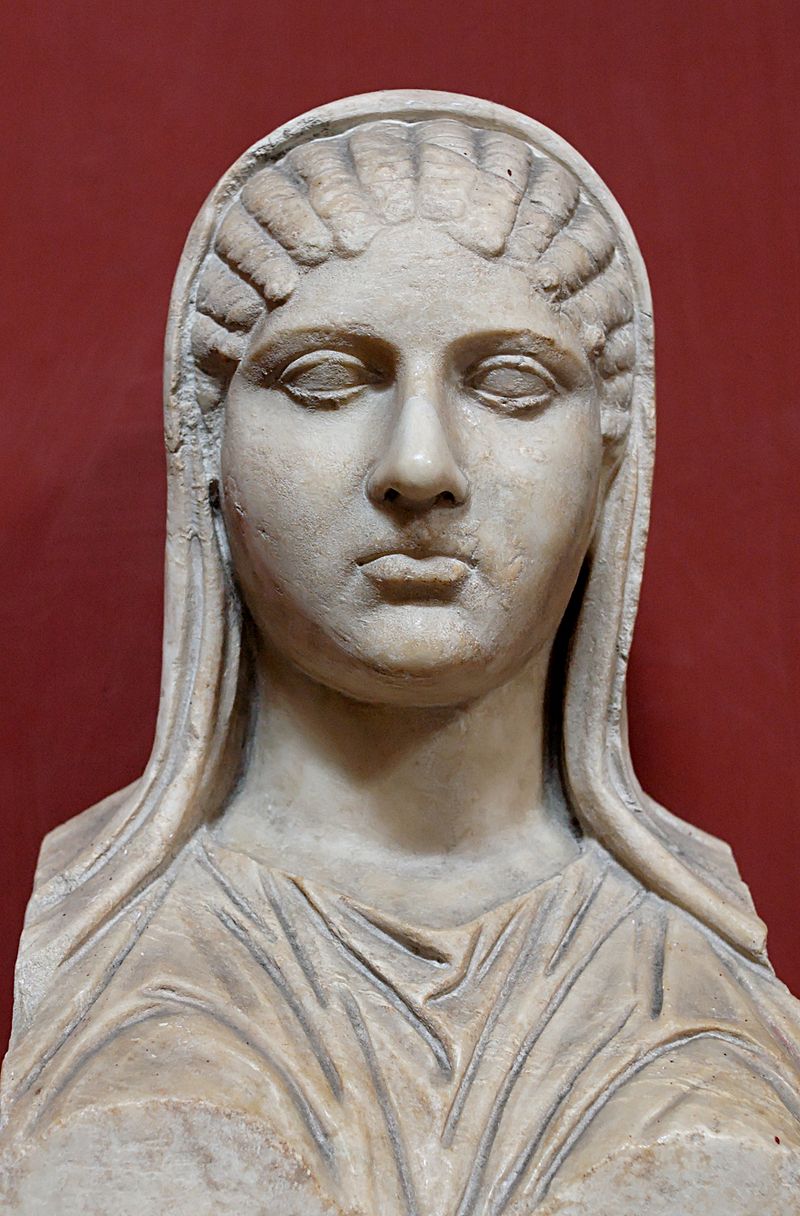
File:Aspasie_Pio-Clementino_Inv272.jpg · Wikimedia Commons · See Wikimedia Commons
アスパシア
Sign in to saveAlso known as Aspasia of Miletus
thumb|right|Marble portrait herm (sculpture)|herm identified by an inscription as Aspasia, possibly copied from her grave. Aspasia (after 428 BC) was a metic woman who lived in Classical Athens. Born in Miletus, she moved to Athens and began a relationship with the statesman Pericles. According to the traditional historical narrative, she worked as a courtesan, though modern scholars have questioned the factual basis for this claim, which derives from ancient comedy. Though Aspasia is one of the best-attested women from the Greco-Roman world, and the most important woman in the history of fift
Aspasia was a woman from Miletus who lived in Classical Athens and became known for her relationship with the influential statesman Pericles, making her one of the most documented women from the ancient Greco-Roman world. While ancient sources describe her as a courtesan, modern scholars question whether this claim is historically accurate, since it comes largely from ancient comedies rather than reliable sources.
AI-generated from the Wikipedia summary — may contain errors.
Person · Open Library
- Works
- 11
Top works
- Advances in Applied Microeconomics
- Advances in Applied Macroeconomics
- Applied Economic Research and Trends
- Advances in Empirical Economic Research
- Advances in Quantitative Economic Research
via Open Library + Wikidata
Wikidata facts
- Instance of
- human
- Gender
- female
- Place of birth
- Miletus
- Place of death
- Athens
- Spouse
- Lysicles
- Child
- Pericles the Younger
- Occupation
- writer
- Languages spoken
- Ancient Greek
- Image
- Aspasie - Musée de Pergame - Berlin.jpg
Show 6 more facts
Sources (9)
via Wikidata · CC0
Article · 日本語
アスパシア(古希: Ἀσπασία, 英語: Aspasia, [æˈspeɪʒiə, -ziə, -ʒə, -ʃə]; 紀元前470年 - 紀元前400年)は、アテナイで影響力を持っていたイオニア人女性で、古代ギリシアの政治家ペリクレスの愛妾である。二人の間にはという息子がいたが、二人が正式に婚姻関係を結んでいたかは不明である。 プルタルコスによれば、アスパシアの家はアテナイの知の集結地と化し、哲学者ソクラテスをはじめとする多数の著名な作家・思想家が訪れ、ソクラテスもアスパシアの教えに影響を受けていたと考えられる。哲学者プラトンやアリストファネス、 クセノポンなど同時代の作家たちの著書にもアスパシアに関する記述が見られる。成人してからはほとんどギリシャで過ごしたが、アスパシアの一生について詳細まで完全に分かっている部分はほとんどない。 学者の中にはアスパシアは遊郭を経営し自身も娼婦を行っていたという見解を示す者もいる。 歴史学的観点で観るとアスパシアの存在は古代ギリシアの女性を考察する上で重要な役目を担っている。というのも、当時の女性に関することはほとんど分かっておらず、「アスパシアのことが分かれば人間のことが半分分かったも同然だ」と言う学者もいる程である。
Abstract from DBpedia / Wikipedia · CC BY-SA