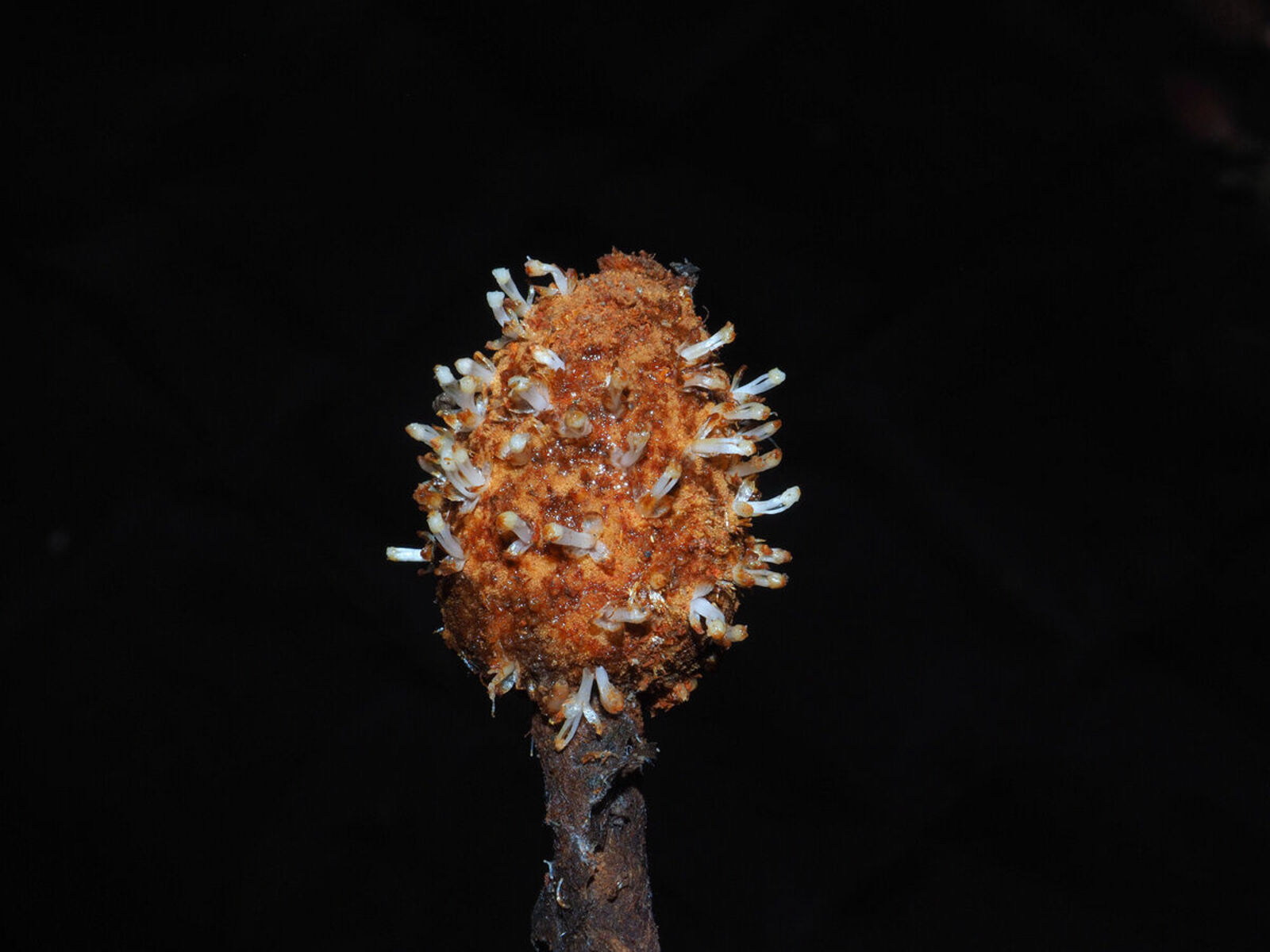
Balanophoraceae
The Balanophoraceae are a subtropical to tropical family of obligate parasitic flowering plants, notable for their unusual development and formerly obscure affinities. In the broadest circumscription, the family consists of 16 genera. Alternatively, three genera may be split off into the segregate family Mystropetalaceae.
Species
FAMILY
- KingdomPlantae
- PhylumTracheophyta
- ClassMagnoliopsida
- OrderSantalales
- FamilyBalanophoraceae
General: ‘Balanophoraceae of Continental Africa’ (Bot. Jahrb. Syst. 106: 359–377 Appearance: "Key to genera of Neotropical Balanophoraceae Key adapted
via GBIF · Kew POWO
Article
4 sectionsContents
- Taxonomy
- Genera
- References
- External links
The Balanophoraceae are a subtropical to tropical family of obligate parasitic flowering plants, notable for their unusual development and formerly obscure affinities. In the broadest circumscription, the family consists of 16 genera. Alternatively, three genera may be split off into the segregate family Mystropetalaceae.
The plants are normally found growing on tree roots in moist inland forests and have an above ground inflorescence with the overall appearance of a fungus, composed of numerous minute flowers. The inflorescences develop inside the tuberous underground part of the plant, before rupturing it and surfacing. The plants are monoecious or dioecious, and the fruits are indehiscent drupes or nuts. The underground portion, which attaches itself to the host, looks like a tuber, and is not a proper root system. The plants contain no chlorophyll. Balanophora means "bearing an acorn" (from the shape of the female inflorescence).