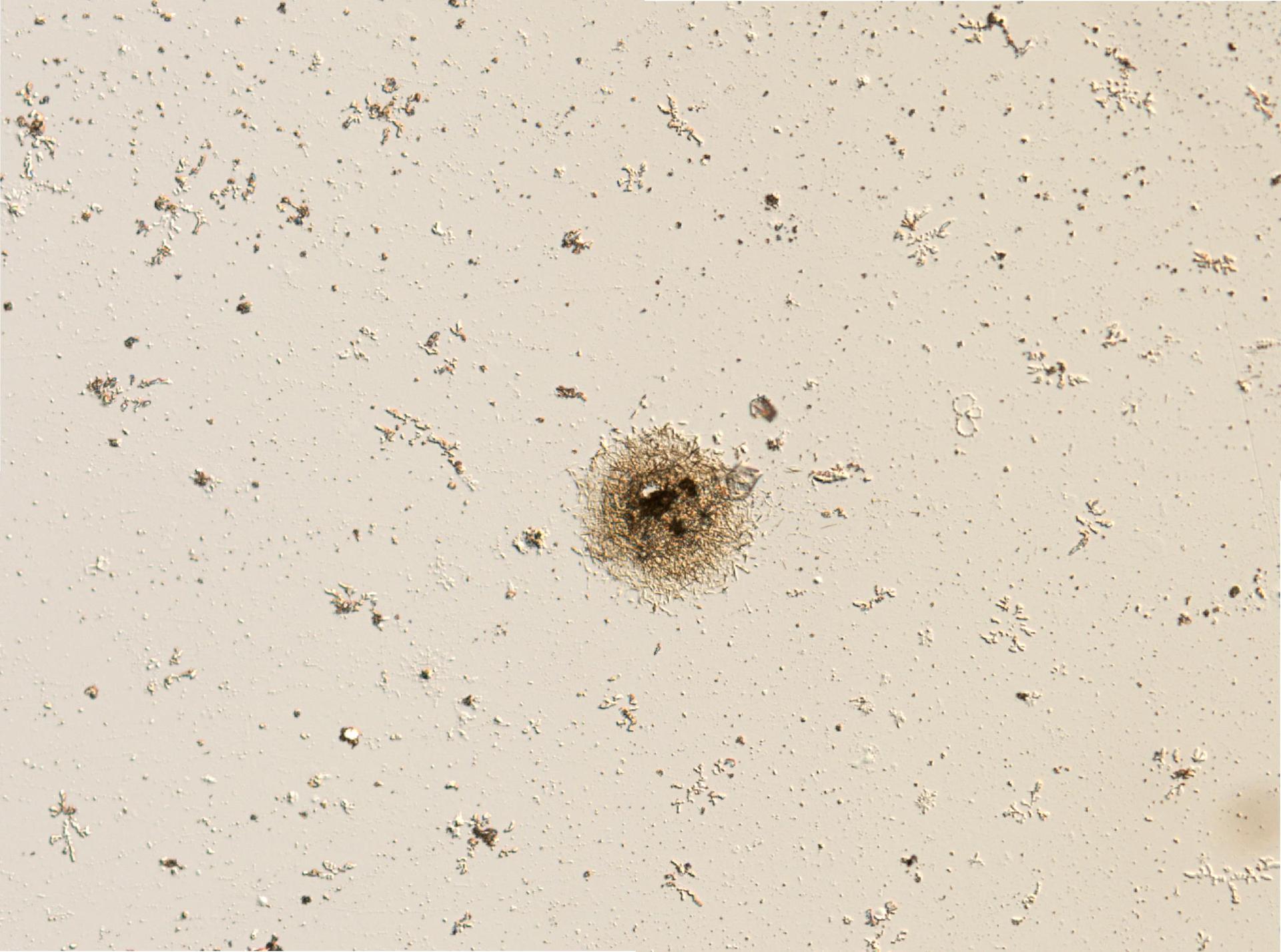
Specimen image via iDigBio · CC0
Blepharisma
Sign in to saveBlepharisma is a genus of unicellular ciliate protists found in fresh and salt water. The group includes around 40 accepted species, and many sub-varieties and strains. While species vary considerably in size and shape, most are easily identified by their red or pinkish color, which is caused by granules of the pigment blepharismin.
In the Vinony graph
Vinony's link graph records 267 inbound references to Blepharisma, and connects out to bacteria, International Standard Book Number and eukaryote.
It sits within the topics Ciliate genera, Heterotrichea and Taxa described in 1852.
Vinony links it to 5 Wikipedia language editions.
Species
GENUS
- KingdomChromista
- PhylumCiliophora
- ClassHeterotrichea
- OrderHeterotrichida
- FamilySpirostomidae
via GBIF
Museum specimens
- Specimen records
- 8
- With media
- 1
- Family
- Spirostomidae
- Collections
- USNM, NHMUK, YPM
- Recorded in
- United States, China, Cabo Verde
~7 min read
Encyclopedic overview
7 sectionsContents
- Appearance
- Reproduction and sexual phenomena
- Feeding and behavior
- Photobiology
- List of species
- References
- Further reading
Blepharisma is a genus of unicellular ciliate protists found in fresh and salt water. The group includes around 40 accepted species, and many sub-varieties and strains. While species vary considerably in size and shape, most are easily identified by their red or pinkish color, which is caused by granules of the pigment blepharismin.
All members of the genus possess a long series of membranelles on the left side of the oral groove, and an "undulating membrane" (a structure resembling a flap, scarf or small sail, composed of long cilia fused together as a single sheet) on the right side of the peristome, toward the posterior.
Excerpted from Wikipedia’s “Blepharisma” article, available under the CC BY-SA 4.0 licence.