
File:Giotto_-_Bonifatius_VIII_(cropped).jpg · Wikimedia Commons · See Wikimedia Commons
Boniface VIII
Sign in to saveAlso known as Pope Boniface VIII, Benedict Caetani, Bonifacius PP. VIII, Bonifatius VIII. Papa, Bonifacio VIII, Benedetto Gaetani, Benedetto Gaetano, Benedictus Caetani
pope of the Catholic Church from 1294 to 1303
OverviewAI-generated
Boniface VIII, born Benedetto Caetani in 1235, was a male member of the House of Caetani. He served as a Catholic priest, writer, and Pope within the Catholic Church. Educated at the University of Bologna, he held the positions of cardinal and cardinal-deacon before becoming Pope. His work locations included Rome and the Papal States, and he was a citizen of the Papal States. He spoke and wrote in Latin and Italian.
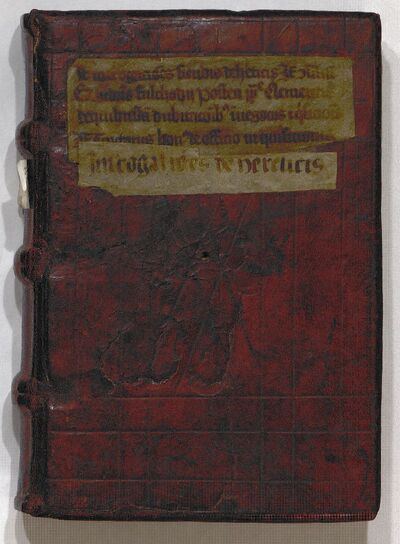
He participated in several papal elections, including those in 1285, 1287–88, 1292–94, and 1294. He was consecrated by Hugh Aycelin. His notable works include the *Liber sextus decretalium cum Clementinis*, *Reuelationes sancte Birgitte*, and *Due Minute di Lettere*. He is described in sources such as the *Nordisk familjebok* and the *Jewish Encyclopedia of Brockhaus and Efron*, and appears in *The Decameron*. He died on October 11, 1303, from poison and is buried in the Vatican Grotto.
Synthesized by Vinony from 29 facts across 4 sources: Wikidata, Open Library, Europeana Sparql, Vinony collections. Generated from structured data (not the Wikipedia text) and checked against those facts — may still contain errors.
Person · Open Library
- Born
- 1235 ca.
- Died
- 1303
- Works
- 10
Top works
- Reuelationes sancte Birgitte
- Liber sextus decretalium cum Clementinis
- Liber sextus Decretalium . Add : Johannes Andreae
- Due Minute di Lettere
- Liber sextus decretalium cum Clementinis et extravegantibus
via Open Library + Wikidata
Wikidata facts
- Instance of
- human
- Given name
- Benedetto
- Gender
- male
- Citizenship
- Papal States
- Place of birth
- Anagni
- Place of death
- Rome
- Occupation
- writer
- Educated at
- University of Bologna
- Languages spoken
- Italian
- Religion
- Catholic Church
- Participant in
- 1285 papal election
- Family
- House of Caetani
- Image
- Giotto, bonifacio VIII proclama il giubileo del 1300, frammento 02.jpg
- Work location
- Papal States
Show 14 more facts
- place of burial
- Vatican Grotto
- Commons category
- Bonifacius VIII
- date of death
- 1303-10-11
- date of birth
- 1235-01-23
- topic's main category
- Category:Pope Boniface VIII
- birth name
- Benedetto Caetani
- cause of death
- poison
- consecrator
- Hugh Aycelin
- writing language
- Latin
- name in native language
- Bonifatius PP. VIII
- on focus list of Wikimedia project
- Wikipedia:Vital articles/Level/4
- relative
- Benedetto II Caetani
- name
- Boniface VIII
- P13311
- Sedico
Sources (9)
via Wikidata · CC0
Works in European collections
26 objects attributed to Boniface VIII, held across European museums, libraries & archives · via Europeana




~40 min read
Encyclopedic overview
Pope Boniface VIII (Latin: Bonifacius PP. VIII, Italian: Bonifacio VIII; born Benedetto Caetani; c. 1230 – 11 October 1303) was head of the Catholic Church and leader of the Papal States from 24 December 1294 until his death in 1303. The Caetani family was of baronial origin with connections to the papacy. He succeeded Pope Celestine V, who had abdicated from the papal throne. Boniface spent his early pontificate abroad in diplomatic roles.
Boniface VIII put forward some of the strongest claims of any pope to temporal as well as spiritual power. He involved himself often with foreign affairs, including in France, Sicily, Italy, and the First War of Scottish Independence. These views, and his chronic intervention in temporal affairs, led to many bitter quarrels with Albert I of Germany, Philip IV of France, and later Dante Alighieri, who expected the pope to soon arrive at the eighth circle of Hell in his Divine Comedy, among the simoniacs.
Excerpted from Wikipedia’s “Boniface VIII” article, available under the CC BY-SA 4.0 licence.
Gallery (9)
Available in 73 languages
- Español
- Français
- Deutsch
- 中文
- 日本語
- Русский
- Português
- Italiano
- العربية
- Afrikaans
- Albanian
- Asturian
- Bahasa Indonesia
- Basque
- Belarusian
- Breton
- Bulgarian
- Catalan
Show 54 more
- cdo
- Corsican
- Croatian
- Czech
- Danish
- Egyptian Arabic
- Esperanto
- Estonian
- Filipino
- Finnish
- Galician
- Georgian
- Greek
- Hakka Chinese
- Hebrew
- Hungarian
- Icelandic
- Ido
- Iloko
- Irish
- Javanese
- Latin
- Latvian
- Lithuanian
- Macedonian
- Malagasy
- Malay
- Marathi
- Nederlands
- Norwegian
- Piedmontese
- Polski
- Romanian
- Serbian
- Serbian (Latin)
- Sicilian
- simple
- Slovak
- Slovenian
- Svenska
- Swahili
- Tiếng Việt
- Türkçe
- Ukrainian
- Urdu
- Waray
- Welsh
- Wu Chinese
- Yoruba
- Zaza
- zh_min_nan
- zh_yue
- فارسی
- 한국어
via Wikidata sitelinks · CC0