Category
page 1Characters in the Divine Comedy

Aristotle
Aristotle (; 384–322 BC) was an ancient Greek philosopher and polymath. His writings cover a broad range of subjects spanning the natural sciences, philosophy, linguistics, economics, politics, psychology, and the arts. As the founder of the Peripatetic school of philosophy in the Lyceum in Athens, he began the wider Aristotelian tradition that followed, which set the groundwork for the development of modern science.

Plato
Plato ( ; Greek: , ; born BC, died 348/347 BC) was an ancient Greek philosopher of Classical Athens who is most commonly considered the foundational thinker of the Western philosophical tradition. An innovator of the literary dialogue and dialectic forms, Plato influenced all the major areas of theoretical philosophy and practical philosophy, and was the founder of the Academy, a philosophical school in Athens where Plato taught the collection of philosophical theories that would later become known as Platonism.

Muhammad
Muhammad (8 June 632 CE) was an Arab religious, military and political leader, as well as the founder of Islam. According to Islam, he was the final prophet of God who was divinely inspired to preach and confirm the monotheistic teachings of Adam, Noah, Abraham, Moses, Jesus, and other prophets in Islam. He is believed by Muslims to be the Seal of the Prophets, and along with the Quran, his teachings and normative examples form the basis for Islamic religious belief.

Julius Caesar
Gaius Julius Caesar was a Roman general, statesman, and author who was the dictator of the Roman Republic almost continuously from 49 BC until his assassination in 44 BC. A member of the First Triumvirate, he led the Roman armies through the Gallic Wars and defeated his political rival Pompey in Caesar's civil war. He consolidated power and proclaimed himself dictator for life in 44 BC, which contributed to the political conditions that led to the collapse of the Roman Republic and the emergence of the Roman Empire. For his role in these events, he is regarded as one of the most influential historical figures.
.jpg)
Socrates
Socrates (; ; – 399 BC) was an ancient Greek philosopher from Classical Athens, perhaps the first Western moral philosopher, and a major inspiration on his student Plato, who largely founded the tradition of Western philosophy. An enigmatic figure, Socrates authored no texts and is known mainly through the posthumous accounts of classical writers, particularly his students Plato and Xenophon. These accounts are written as dialogues, in which Socrates and his interlocutors examine a subject in the style of question and answer; they gave rise to the Socratic dialogue literary genre. Contrad

Dante Alighieri
Florentine poet, writer, and philosopher (c. 1265–1321)
%20-%20Homer%20and%20his%20Guide%20(1874).jpg)
Homer
Homer (; , ; possibly born ) was an ancient Greek poet who is widely credited as the author of the Iliad and the Odyssey, two epic poems that are foundational works of ancient Greek literature. Although his life and authorship remain obscure, Homer was highly revered in ancient Greek society and is considered one of the most influential authors in history.

Alexander the Great
Alexander III of Macedon, most commonly known as Alexander the Great, was king of the ancient Greek kingdom of Macedon. He succeeded his father Philip II to the throne in 336 BC at the age of 20, and spent most of his reign conducting a lengthy military campaign throughout Asia and Egypt. By the age of 30, he had created one of the largest empires in history, stretching from Greece to northwestern India. He was undefeated in battle and is widely considered to be one of history's greatest and most successful military commanders.

Augustus
Augustus (born Gaius Octavius; 23 September 63 BC – 19 August AD 14), also known as Octavian (), was the founder of the Roman Empire and the first Roman emperor from 27 BC until his death in AD 14. The reign of Augustus initiated an imperial cult and an era of imperial peace (the or ) in which the Roman world was largely free of armed conflict. The principate, a style of government where the emperor showed nominal deference to the Senate, was established during his reign and lasted until the Crisis of the Third Century.
.jpg)
Virgil
Publius Vergilius Maro (; 15 October 70 BC21 September 19 BC), usually called Virgil or Vergil ( ) in English, was an ancient Roman poet of the Augustan period. He composed three of the most famous poems in Latin literature: the Eclogues (or Bucolics), the Georgics, and the epic Aeneid. Some minor poems, collected in the Appendix Vergiliana, were attributed to him in ancient times, but modern scholars regard these as spurious, with the possible exception of some short pieces.

Thomas Aquinas
Italian Dominican friar, philosopher, Catholic priest, and Doctor of the Church (1225–1274)

Avicenna
Ibn Sina ( – 22 June 1037), commonly known in the West as Avicenna ( ), was a preeminent philosopher and physician of the Muslim world. He was a seminal figure of the Islamic Golden Age, serving in the courts of various Iranian rulers, and was influential to medieval European medical and Scholastic thought.

Abraham
Abraham (originally Abram) is the common Hebrew patriarch of the Abrahamic religions, including Judaism, Christianity, and Islam. In Judaism, he is the founding father who began the covenantal relationship between the Jewish people and God; in Christianity, he is the spiritual progenitor of all believers, whether Jewish or non-Jewish; and in Islam, he is a link in the chain of Islamic prophets that begins with Adam and culminates in Muhammad. Abraham is also revered in other Abrahamic religions such as the Baháʼí Faith and the Druze faith.
.JPG)
Hippocrates
Hippocrates of Kos (; ; ), also known as Hippocrates II, named after his grandfather Hippocrates I (also Hippocrates of Kos or Hippocrates I of Kos) was a Greek physician and philosopher of the classical period who is considered one of the most outstanding figures in the history of medicine. He is traditionally referred to as the "Father of Medicine" in recognition of his lasting contributions to the field, such as the use of prognosis and clinical observation, the systematic categorization of diseases, and the (later discredited) formulation of humoral theory. His studies set out the basic id
Horace
Quintus Horatius Flaccus (; 8 December 65 BC – 27 November 8 BC), commonly known in the English-speaking world as Horace ( ), was the leading Roman lyric poet during the time of Augustus (also known as Octavian). The rhetorician Quintilian regarded his Odes as the only Latin lyrics worth reading: "He can be lofty sometimes, yet he is also full of charm and grace, versatile in his figures, and felicitously daring in his choice of words."

Seneca
Roman Stoic philosopher, statesman and dramatist (c. 4 BCE–65 CE)
.jpg)
Saladin
Salah ad-Din Yusuf ibn Ayyub ( – 4 March 1193), commonly known as Saladin, was a Kurdish commander and political leader. He was the founder of the Ayyubid dynasty and the first sultan of both Egypt and Syria. An important figure of the Third Crusade, he spearheaded the Muslim military effort against the Crusader states in the Levant. At the height of his power, the Ayyubid realm spanned Egypt, Syria, Upper Mesopotamia, the Hejaz, Yemen, and Nubia.

Saint Peter
apostle of Jesus Christ

Alī ibn Abī Ṭālib
Ali ibn Abi Talib (; ) was the fourth Rashidun caliph who ruled from until his assassination in 661, as well as the first Shia Imam. He was the cousin and son-in-law of the Islamic prophet Muhammad. Born to Abu Talib ibn Abd al-Muttalib and Fatima bint Asad, Ali was raised in the household of his cousin Muhammad and was among the first to accept his teachings.

David
David (; , "beloved one") was, originally, leader of the Tribe of Judah who became the first king of the united Kingdom of Israel according to the Hebrew Bible and Old Testament.

Averroes
Ibn Rushd (14 April 112611 December 1198), Latinized as Averroes, was an Andalusian polymath and jurist who was proficient in a variety of intellectual fields, including philosophy, theology, medicine, astronomy, physics, psychology, mathematics, neurology, Islamic jurisprudence and law, and linguistics. The author of more than 100 books and treatises, his philosophical works include numerous commentaries on Aristotle, for which he was known in the Western world as "The Commentator" and "Father of Rationalism".

Noah

Satan
thumb|Illustration of the Devil on Codex Gigas, early thirteenth century
Satan, also known as the Devil, is an entity in Abrahamic religions who entices humans into sin or falsehood. In Judaism, Satan is seen as an agent subservient to God, typically regarded as a metaphor for the , or 'evil inclination'. In Christianity and Islam, he is usually seen as a fallen angel or jinn who has rebelled against God, who nevertheless allows him temporary power over the fallen world and a host of demons.

Justinian I
Eastern Roman Emperor who ruled from 527 to 565 (482-565)

Attila

Trajan
Trajan ( ; born Marcus Ulpius Traianus, 18 September 53) was a Roman emperor from AD 98 to 117, remembered as the second of the Five Good Emperors of the Nerva–Antonine dynasty. He was a philanthropic ruler and a successful soldier-emperor who presided over one of the greatest military expansions in Roman history, during which, by the time of his death, the Roman Empire reached its maximum territorial extent. He was given the title of optimus princeps ('the best ruler') by the Roman Senate.

Anaxagoras
Anaxagoras (; , Anaxagóras, 'lord of the assembly'; ) was a Pre-Socratic Greek philosopher. Born in Clazomenae at a time when Asia Minor was under the control of the Persian Empire, Anaxagoras came to Athens. In later life he was charged with impiety and went into exile in Lampsacus.
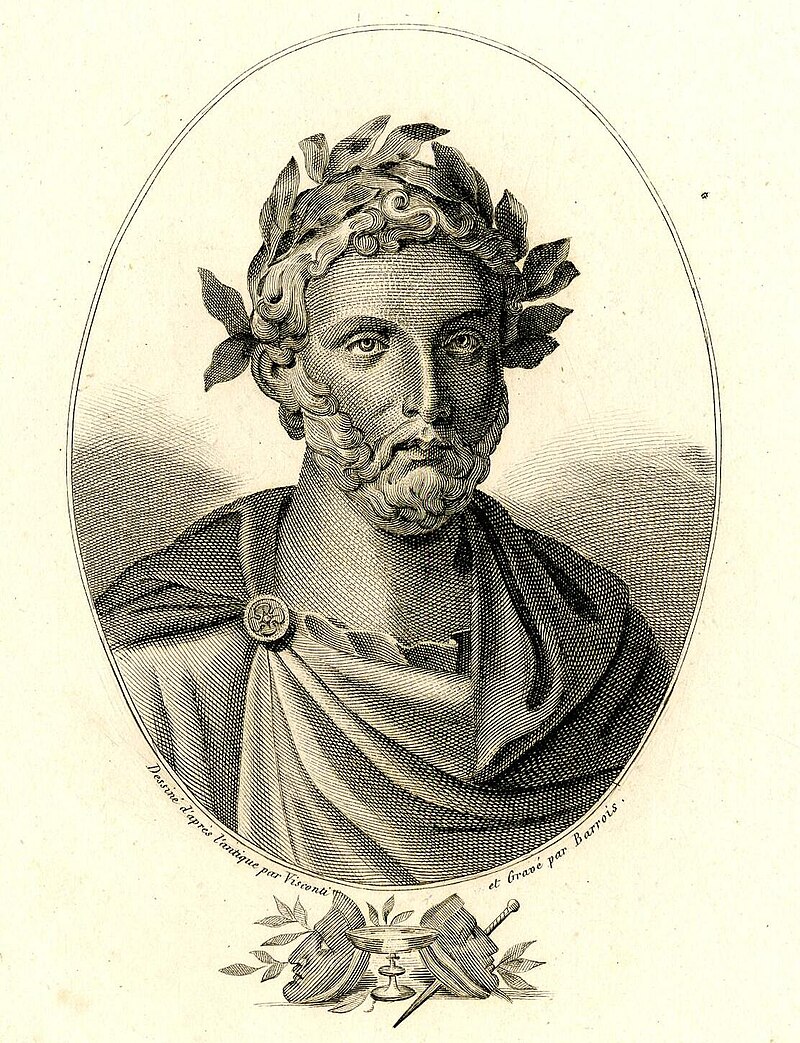
Plautus
Titus Maccius Plautus ( ; 254 – 184 BC) was a Roman playwright of the Old Latin period. His comedies are the earliest Latin literary works to have survived in their entirety. He wrote Palliata comoedia, the genre devised by Livius Andronicus, the innovator of Latin literature. The word Plautine () refers to both Plautus's own works and works similar to or influenced by his.
He influenced some of the greatest figures in literature, including Shakespeare and Molière (The Miser is partly modeled after Plautus's Aulularia).

Judas Iscariot
notable as betrayer of Jesus, one of Jesus's original twelve disciples

Zeno of Elea
Greek philosopher (c. 495 – c. 430 BC)

Albertus Magnus
German-Dominican friar and saint (c. 1200–1280)

Frederick II, Holy Roman Emperor
King of Sicily, Holy Roman Emperor (1194–1250, 1220–1250)

Bernard of Clairvaux
Burgundian saint, abbot and theologian (1090-1153)

Adam and Eve
first man and woman in Abrahamic creation myth

Aeneas
thumb|Aeneas flees burning Troy, Federico Barocci, 1598 ([[Galleria Borghese, Rome, Italy)]]

Boniface VIII
pope of the Catholic Church from 1294 to 1303

Cerberus
thumb|right|Heracles, wearing his characteristic lion-skin, club in right hand, leash in left, presenting a three-headed Cerberus, snakes coiling from his snouts, necks and front paws, to a frightened [[Eurystheus hiding in a giant pot. Caeretan hydria (c. 530 BC) from Caere (Louvre E701)]]

Hugh Capet of France
King of the Franks

Minos
250 px|thumb|Gustave Doré's illustration of King Minos for [[Dante Alighieri's Inferno]]
thumb|Mural of Minos at the National and Kapodistrain University of Athens
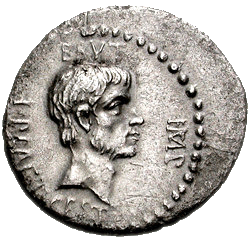
Marcus Junius Brutus
assassin of Julius Caesar

Nicholas III
Pope from 1277 to 1280

Hector
thumb|250px|Cassandra (center) drawing lots with her right hand predicts the downfall of Troy in front of [[Priam (seated, on the left), Paris (holding the apple of discord) and a warrior leaning on a spear, presumably Hector. Fresco in Pompeii, 20-30 AD]]
thumb|250px|Fresco of Cassandra's prophecy with the presence of presumably Hector, Pompeii

Paris
mythological son of Priam, king of Troy

Semiramis
thumb|Semiramis, a legendary figure based on the life of Shammuramat, depicted as an armed Amazons|Amazon in an eighteenth-century Italian illustration
Semiramis (; Šammīrām, Šamiram, , Samīrāmīs) was the legendary Lydian-Babylonian wife of Onnes and of Ninus, who succeeded the latter on the throne of Assyria, according to Movses Khorenatsi. Legends narrated by Diodorus Siculus, who drew primarily from the works of Ctesias of Cnidus, describe her and her relationships to Onnes and King Ninus.

John XXI
pope (1276-1277)

Saint Lucy
saint from Italy

Martin IV
Head of the Catholic Church from 1281 to 1285

Adrian V
pope
%20Lekythos%20with%20Charon%2C%20attributed%20to%20the%20Tymbos%20painter%2C%20ca%20500%20-%20450%20BC%2C%20Ashmolean%20Museum%2C%20Oxford%2C%20UK%20(22681344331).jpg)
Charon
thumb|right|Attic red-figure [[lekythos attributed to the Tymbos painter showing Charon welcoming a soul into his boat, c. 500–450 BC]]
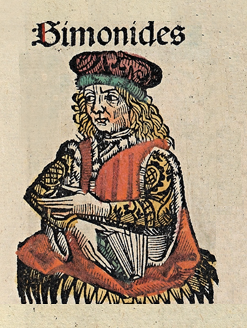
Simonides of Ceos
Greek lyric poet (c. 556–468 BC)
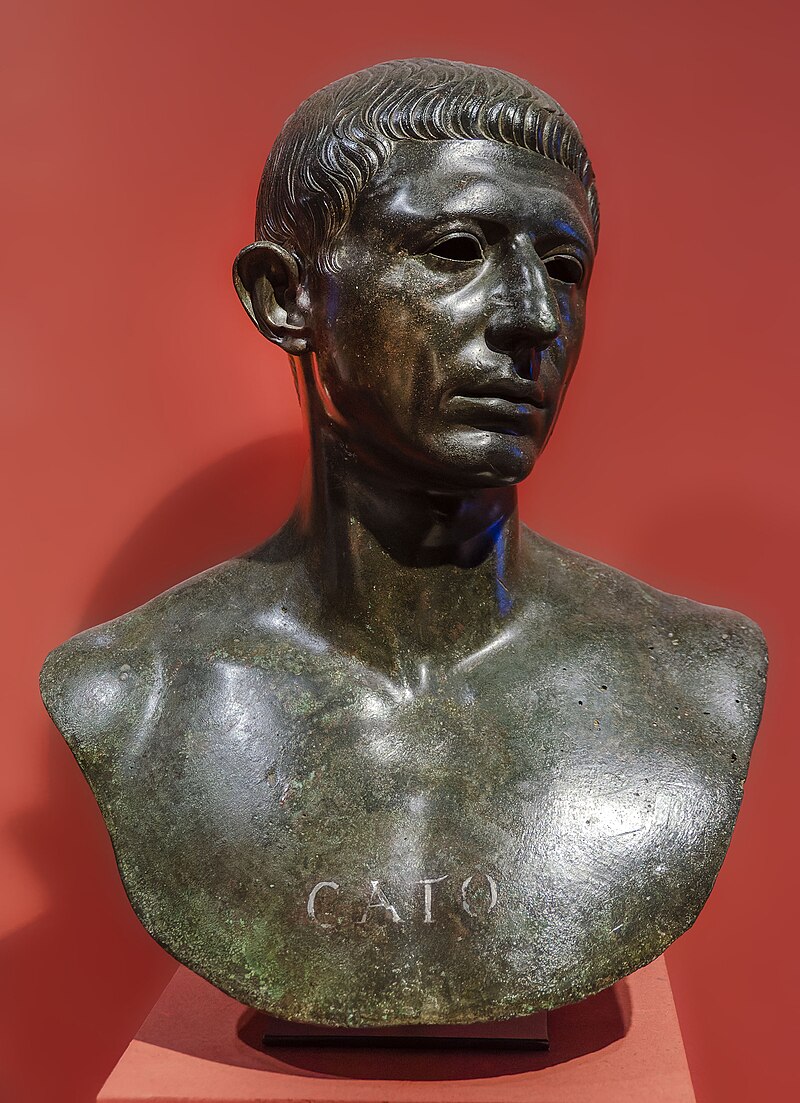
Cato the Younger
Roman statesman, general and writer (95–46 BC)

Publius Papinius Statius
Publius Papinius Statius (Greek: Πόπλιος Παπίνιος Στάτιος, Poblios Papinios Statios; , ; – ) was a Latin poet of the 1st century CE. His surviving poetry includes an epic in twelve books, the Thebaid; a collection of occasional poetry, the Silvae; and an unfinished epic, the Achilleid. He is also known for his appearance as a guide in the Purgatory section of Dante's epic poem, the Divine Comedy.

Rudolph I of Germany
count of Habsburg, king of Germany (1218–1291)

Rachel
Rachel () was a Biblical figure, the favorite of Jacob's two wives, and the mother of Joseph and Benjamin, two of the twelve progenitors of the tribes of Israel. Rachel's father was Laban. Her older sister was Leah, Jacob's first wife. Her aunt Rebecca was Jacob's mother.

Cain and Abel
persons of the Bible, the first two sons of Adam and Eve

Ottokar II of Bohemia
King of Bohemia (1253-1278)

Caiaphas
Joseph ben Caiaphas () was the High Priest of Israel during the first century. In the New Testament, the Gospels of Matthew, Luke and John indicate he was an organizer of the plot to kill Jesus. He is portrayed as presiding over the Sanhedrin trial of Jesus. The primary sources for Caiaphas' life are the New Testament and the writings of Josephus. The latter records he was made high priest by the Roman procurator Valerius Gratus after Simon ben Camithus had been deposed.
_Attica.svg)
Pisistratus
Pisistratus (also spelled Peisistratus or Peisistratos; ; – 527 BC) was a politician in ancient Athens, ruling as tyrant in the late 560s, the early 550s and from 546 BC until his death. His unification of Attica, the triangular peninsula of Greece containing Athens, along with economic and cultural improvements laid the groundwork for the later pre-eminence of Athens in ancient Greece. His legacy lies primarily in his institution of the Panathenaic Games, historically assigned the date of 566 BC, and the consequent first attempt at producing a definitive version of the Homeric epic
Wenceslaus II of Bohemia
King of Bohemia and Poland

Gaius Cassius Longinus
ancient Roman politician, known for his role in the assassination of Julius Caesar