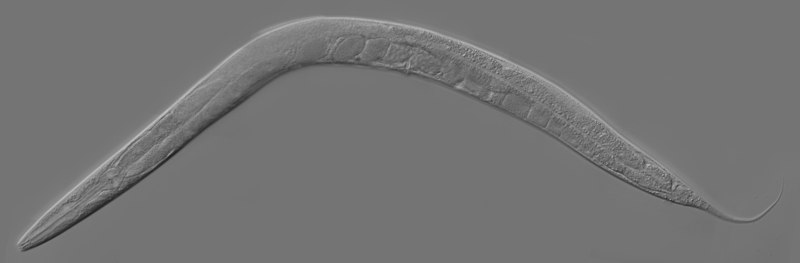
File:Adult_Caenorhabditis_elegans.jpg · Wikimedia Commons · See Wikimedia Commons
Caenorhabditis elegans
Sign in to savefree-living species of nematode
OverviewAI-generated
Caenorhabditis elegans, commonly abbreviated as C. elegans, is a species of nematode within the family Rhabditidae. It belongs to the order Rhabditida, class Chromadorea, and phylum Nematoda, under the kingdom Animalia. The species is classified under the parent taxon Caenorhabditis and is recognized as a model organism. Its taxonomic status is accepted, with the scientific name attributed to (Maupas, 1899) Dougherty, 1953.
The organism has been the subject of whole genome sequencing. It is also referenced in various scientific contexts, including studies related to the International Space Station, where research on these nematodes aims to support planning for long-term human presence on the moon.
Synthesized by Vinony from 38 facts across 7 sources: Wikidata, WoRMS, GBIF, PubMed, Firecrawl, Gbif Occ, Vinony graph. Generated from structured data (not the Wikipedia text) and checked against those facts — may still contain errors.
Species
Caenorhabditis elegans
SPECIES
- KingdomAnimalia
- PhylumNematoda
- ClassChromadorea
- OrderRhabditida
- FamilyRhabditidae
Caenorhabditis elegans (C. elegans en abrégé) est un petit ver d'un millimètre environ, transparent et non parasitaire. C'est un nématode de la famille des Rhabditidae. Le nom est formé des deux racine grecques caeno- (καινός (caenos), récent), et rhabditis (ῥάβδος (rhabdos), tige, bâton) et du mot latin elegans (élégant). En 1900, Maupas nomma l'espèce Rhabditides elegans, puis Osche la plaça dans le sous-genre Caenorhabditis en 1952, et en 1955, Dougherty établit Caenorhabditis au rang de genre. Dougherty et Nigon établissent l'intérêt de l'étude de C. elegans en physiologie animale et en génétique en 1949. Ce ver est devenu un organisme modèle en biologie, car il permet l'étude, entre autres, de l'apoptose (mort programmée de certaines cellules), du développement embryonnaire et du vieillissement.
via GBIF
Research
41,765 papers- RNAi mechanisms in Caenorhabditis elegans.FEBS letters · 2005
- Caenorhabditis elegans as a Model to Study Aging and Photoaging.Biomolecules · 2024
- Kinesins in Caenorhabditis elegans neuronal morphogenesis.Open biology · 2025
- Non-Coding RNAs in Caenorhabditis elegans Aging.Molecules and cells · 2019
- Neuropeptide signaling network of Caenorhabditis elegans: from structure to behavior.Genetics · 2024
via PubMed
Described at
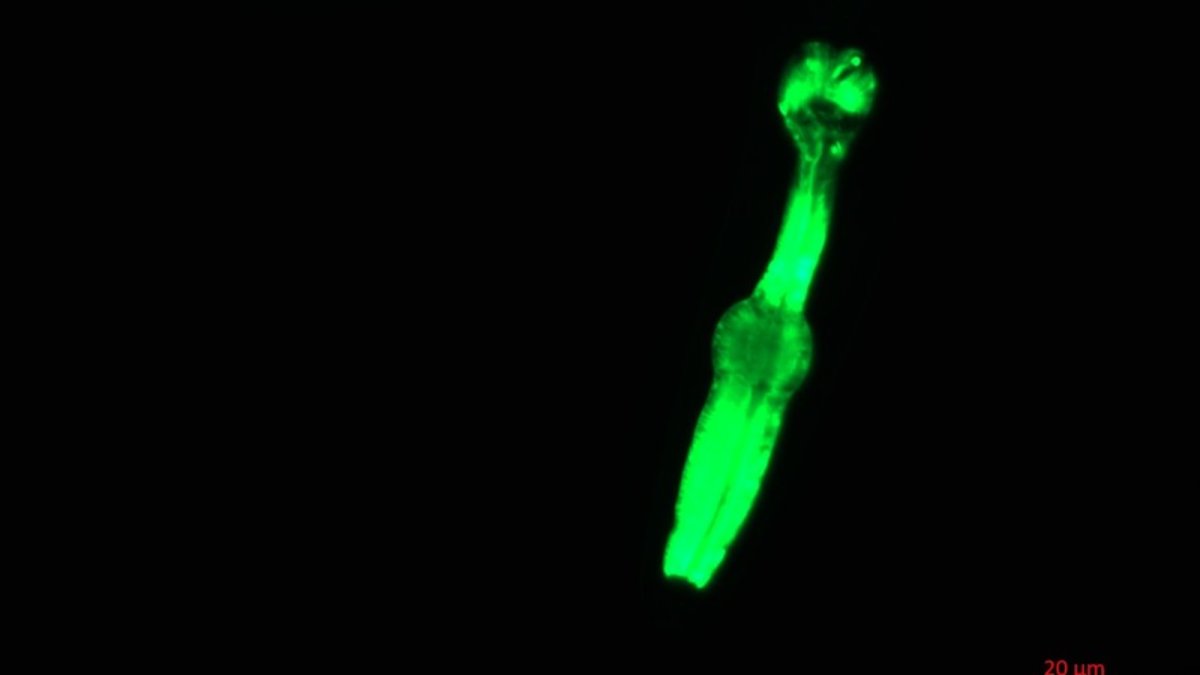
'Space worms' are en route to the International Space Station | Popular Science
Studying these nematodes will help scientists plan for a long-term human presence on the moon.
popsci.com →The Artemis II astronauts were back on Earth for less than a day before worms took their place in space. The space worms launched from Cape Canaveral, Florida, on April 11, aboard NASA’s Commercial Resupply Services 24 mission (CRS-24) and are on a journey to the International Space Station (ISS). Although uncrewed, the roughly 11,000 pounds of cargo aboard the Northrop Grumman Cygnus XL spacecraft contained at least few living organisms, including a vat filled with tiny Caenorhabditis elegans nematodes . Scientists at the University of Exeter in England are relying on the C. elegans worms to investigate a major hurdle facing long-duration spacefaring—safeguarding the health of human explorers . While April 12 marked the 65th anniversary of the first person to reach space, the record for longest time spent in space still remains the 371-day tenure achieved by NASA astronaut and former ISS crewmember Frank Rubio in 2023. Barely a year in microgravity has serious effects on his body that can require extensive physical reconditioning. If humans are expected to establish a permanent lunar base—let alone make the yearslong trip to Mars and back—then scientists and medical experts need to develop a plan to address problems like bone and muscle loss, vision issues, and radiation exposure. The Petri Pod is specially designed to house the nematodes while mounted outside the ISS. Credit: University of Exeter Nematodes may not resemble humans at first glance, but both species still rely on many of the same basic biological processes to survive. Once the “Petri Pod” filled with 1-millimeter-long worms arrives at the ISS, crewmembers will transport the multichamber housing container into an onboard laboratory. After some time inside the capsule, astronauts will then use an exterior robotic arm to mount the nematode home onto the outside of the ISS. From there, the nematodes will live for up to 15 weeks inside containers carefully designed to maintain temperature, pressure, and oxygen while still exposed to zero-gravity and the harsh radiation of space. “It might sound surprising, but these tiny worms could play a big role in the future of human spaceflight,” added U.K. Space Minister Liz Lloyd.
Excerpt from a page describing this subject · 5,402 chars · not written by Vinony
Wikidata facts
- Instance of
- model organism
- Parent taxon
- Caenorhabditis
- Image
- 202205 Nematode.svg
- Significant event
- whole genome sequencing
- Has parts of class
- cell
Show 9 more facts
- taxon name
- Caenorhabditis elegans
- Commons category
- Caenorhabditis elegans
- taxon rank
- species
- topic's main category
- Category:Caenorhabditis elegans
- Commons gallery
- Caenorhabditis elegans
- sequenced genome URL
- www.ensembl.org/Caenorhabditis_elegans
- short name
- C. elegans
- taxon common name
- 秀丽隐杆线虫
- described at URL
- www.popsci.com/science/worms-international-space-station
Sources (2)
via Wikidata · CC0
~37 min read
Encyclopedic overview
Caenorhabditis elegans (/ˌsiːnoʊræbˈdaɪtəs ˈɛləɡæns/) is a free-living transparent nematode about 1 mm in length that lives in temperate soil environments. It is the type species of its genus. The name is a blend of the Greek caeno- 'recent', rhabditis 'rod-like', and Latin elegans 'elegant'. In 1900, Maupas initially named it Rhabditis elegans. Osche placed it in the subgenus Caenorhabditis in 1952, and in 1955, Dougherty raised Caenorhabditis to the status of genus.
C. elegans is an unsegmented pseudocoelomate and lacks respiratory or circulatory systems. Most of these nematodes are hermaphrodites and a few are males. Males have specialised tails for mating that include spicules.
Excerpted from Wikipedia’s “Caenorhabditis elegans” article, available under the CC BY-SA 4.0 licence.