
File:Chefchaouen_(52189357475).jpg · Wikimedia Commons · See Wikimedia Commons
Chefchaouen
Sign in to saveAlso known as Blue City, Chaouen, Shafshawan
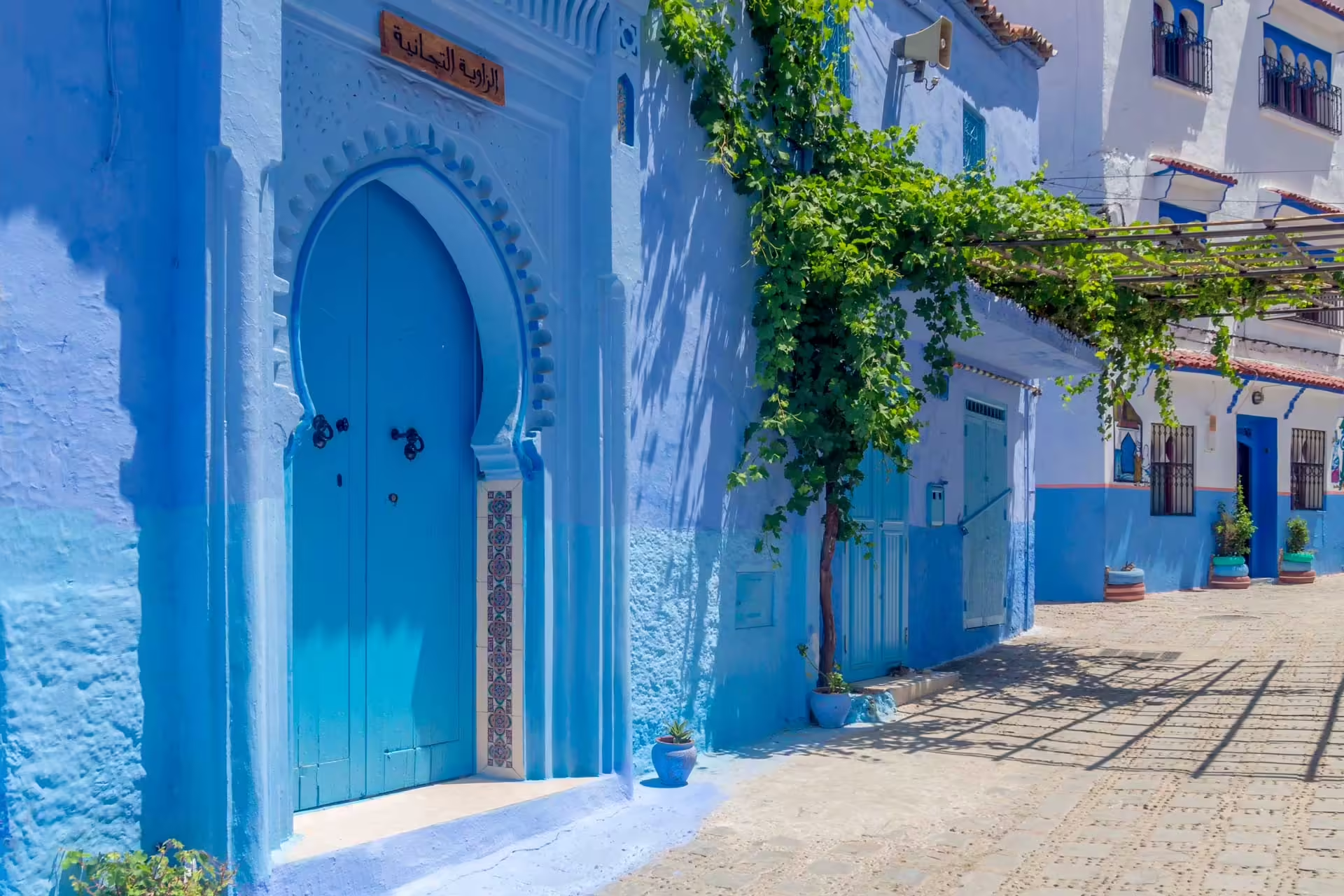
Chefchaouen (, ) is a city in northwest Morocco. It is the chief town of the province of the same name and is noted for its buildings in shades of blue, for which it is nicknamed the "Blue City". It is situated in a mountainous region in northern Morocco, between Tétouan and Ouazzane.
OverviewAI-generated
Chefchaouen is a city in Morocco, serving as the capital of Chefchaouen Province. It is located in the Tanger-Tétouan-Al Hoceïma region and has a population of 46,168. The city was established in 1471 and covers an area of 15.4 square kilometers. Its elevation above sea level is recorded as 564 meters.
The city is twinned with Testour, Mértola, Ronda, and Issaquah. It operates in the Central European Time zone and has a postal code of 91000. The official name is Chefchaouen, with native labels in Arabic and Tifinagh scripts.
Synthesized by Vinony from 54 facts across 8 sources: Wikidata, Open Meteo, Openweathermap, OpenStreetMap, GeoNames, Firecrawl, Vinony graph, Geo. Generated from structured data (not the Wikipedia text) and checked against those facts — may still contain errors.
Weather now
7-day forecast
via Open-Meteo
Place details
- Locality
- Chefchaouen ⴰⵛⵛⴰⵡⵏ شفشاون
- Region
- Tanger-Tétouan-Al Hoceïma ⵟⴰⵏⵊ-ⵟⵉⵜⴰⵡⵉⵏ-ⵍⵃⵓⵙⵉⵎⴰ طنجة تطوان الحسيمة
- Country
- Maroc ⵍⵎⵖⵔⵉⴱ المغرب
- Population
- 46,721
- Timezone
- Africa/Casablanca
via OpenStreetMap · GeoNames
Key facts
- Settlement.official_name
- Chefchaouen
- Settlement.settlement_type
- City
- Settlement.image_caption
- Clockwise from top: Overall view of the city; Ras al Ma' stream; Uta Hammam Square and the Kasbah; one of the blue-painted streets in the medina
- Settlement.nicknames
- The Blue Pearl ()
- Settlement.pushpin_map
- Morocco#Africa
- Settlement.pushpin_label_position
- left
- Settlement.pushpin_relief
- yes
- Settlement.pushpin_map_caption
- Location of Chefchaouen in Morocco
- Settlement.subdivision_type
- Country
- Settlement.subdivision_name
- Morocco
- Settlement.subdivision_type1
- Region
- Settlement.subdivision_type2
- Province
- Settlement.subdivision_name1
- Tangier-Tetouan-Al Hoceima
- Settlement.subdivision_name2
- Chefchaouen
- Settlement.established_title
- Founded
- Settlement.established_date
- 1471
- Settlement.leader_title
- Governor
- Settlement.leader_name
- Mhamed Haddan
via Wikipedia infobox
Described at
Chefchaouen - Maroko - PlaceMania
Modrá farba Chefchaouen má pôvod v židovskej tradícii utečencov z 15. storočia.
placemania.sk →Okrem podomových obchodníkov predávajúcich marihuanu z okolitého regiónu sú najvýraznejším znakom tohto horského mesta fasády budov natreté rôznymi odtieňmi modrej farby. Modré dvere vystupujú na pozadí bielených stien a celé uličky kopírujú bezoblačnú oblohu nad nimi. Hoci o pôvode krásnej farby mesta veľa nevedno, v skutočnosti ide o stredoveký pozostatok dávno stratenej populácie v tejto oblasti. Koncom 15. storočia španielska inkvizícia vyhnala moslimov a židov z Európy. Od roku 1471 bol Chefchaouen založený v podstate ako utečenecký tábor s výrazným židovským vplyvom. V nadväznosti na židovské tradície utečenci natierali svoje budovy na modro ako pripomienku Božej moci nad nimi. Aj keď židovská populácia v oblasti zanikla a ustúpila silnejšej moslimskej prítomnosti, tradícia modrých budov pretrvávala. Obyvatelia Chefchaouenu dodnes pravidelne maľujú svoje domy, čím udržiavajú modré mesto svieže a stratenú atmosféru tradície živú. Zakladateľ projektu PlaceMania.sk a zodpovedá za jeho obsah, technické fungovanie a dlhodobý rozvoj. Cestovné zápisky na webe vychádzajú z vlastnej skúsenosti z ciest; faktografické záznamy o miestach vznikajú kombináciou verejných zdrojov, automatizovaného spracovania dát a redakčného overovania. Zameriava sa na netradičné lokality, ich historický a geografický kontext a menej známe súvislosti. Things to do near Chefchaouen, شفشاون, Ville de Chechaouèn, Xauen, Шефшауен, Chaouèn, Lokalita, Politická oblasť, Tangier-Tétouan-Al Hoceima, Morocco, المغرب, Maroko, MA, MAR, Chefchaouen, Maroko. Find tours, guided tours, local activities, attractions, tickets, excursions, sightseeing, day trips and travel experiences nearby. Coordinates: 35.168796, -5.2683641. Cintorín Sidi Ben Achir: viacero prepojených pohrebísk na atlantickom pobreží mesta Salé. Táto reštaurácia sa nachádza v múroch opevnenia z 18. storočia, ktoré kedysi bránilo starú mestskú štvrť. Trinásť drevených trámov vyčnievajúcich z tejto historickej budovy bolo kedysi súčasťou hydraulických hodín. V marockej Zagore stojí tabuľa, ktorá pôsobí ako obyčajná turistická atrakcia. V skutočnosti však označuje jeden z najpôsobivejších smerov starého… Pozrite si ďalšie zaujímave miesta vo svete, ktoré stoja za naplánovanie ďalšej cesty. Toľko ponúk na drogy sme nedostali za celý život, ako tu za hodinu. Počas ramadánu ľahšie zoženiete hašiš ako alkohol.... Osamelá sýpka na kužeľovitom kopci, uctievaná ako svätyňa v údolí Aït Bouguemez. Chcete vidieť ďalšie úchvatné miesta ako Chefchaouen? Nájdeš ich u nás na mape. Objav s nami ďalšie úžasné miesta na zemi.
Excerpt from a page describing this subject · 15,919 chars · not written by Vinony
Wikidata facts
- Official name
- Chefchaouen
- Country
- Morocco
- Located in
- Chefchaouen Province
- Population
- 46168
- Area
- 15.4
- Elevation
- 564
- Time zone
- Central European Time
- Capital of
- Chefchaouen Province
- Official website
- chaouen.ma/fr/accueil.aspx
- Image
- Chefchaouen - blue city in Morocco.jpg
- Households
- 12474
Show 8 more facts
- twinned administrative body
- Kunming
- Commons category
- Chefchaouen
- postal code
- 91000
- native label
- ⴰⵛⵛⴰⵡⵏ
- category of associated people
- Category:People from Chefchaouen
- inception
- 1471-00-00
- P12749
- Tagbilaran
- described at URL
- www.placemania.sk/svetova-zaujimavost/chefchaouen
via Wikidata · CC0
Travel guide
Understand
It's no wonder that tourists flock here — this humble town is the embodiment of almost every Moroccan cliché. The picturesque medina, set against the dramatic backdrop of the Rif Mountains, is filled with white-washed homes with distinctive, powder-blue accents, and the call to prayer rings out of several mosques around the town in chorus. If you've got a few days to relax from the rigors of travel, this is a good place to do it.
Tourism in Chaouen is also driven by its reputation as centre of the marijuana plantations region in North Morocco. Drugs are widespread and somehow tolerated, but touts trying to sell to tourists are also very annoying.
Spanish and French are most popular foreign languages.
See
thumb|Kasbah thumb|El Haouta square
Buy
thumb|Chefchaouen street All the usuals are on offer in the medina — carpets, leatherwares, spices, metal wares, etc. If you're a seasoned bargainer you can probably get better prices in Fes or Marrakech, but Chefchaouen is undoubtedly a more pleasant place to shop. You'll also find plenty of hippie-wear aimed at budget travelers and marijuana tourists.
Eat
thumb|Moroccan Tajine The local speciality is baissara, but you'll also find the usual staples such as tajine (vegetable stew with goat or sheep), harira (tomato soup), kofte (meatballs) and tagras (fish). The Moroccan salad is a salad of cucumber and tomatoes, while salada variada includes eggs. The region is also well known for olives and olive oil, and for goat cheese, which is sold on display in various shops.
Always busy restaurants near the Kasbah (Outa Hamman square) offer tajines starting from 40 dirham of somewhat subpar quality.
Local breakfast includes fried eggs, cheese, olives, Moroccan mortadella, bread and tea/coffee, all for 20-25 dirham. Pretty much any cafe will be happy to serve it.
Some stalls cook pancakes (baghrir) with honey and olive oil or butter, for 10-15 dirham.
Drink
Alcohol is not readily available but can be found in Restaurant Oum Rabie. The latter charges some exorbitant prices for alcohol and requires ordering accompanying food. Mint tea is prevalent, 7-10 dirham per cup/pot.
Sleep
thumb|An alleyway in the medina thumb|A typical doorway Accommodation can be tight in the peak periods (mid-Jul to Sep) so arrive early or book ahead in these periods. A stroll through the medina will reveal dozens of cheap hotels, starting from 40 dirham per night for a single. Many of these hotels have roof terraces.
Hotels that are fully booked will sometimes deliberately over-book and try to move you to another hotel (for a commission), as always avoid touts who may tell you your hotel is closed, not good, hard to find, etc.
Stay safe
As Chefchaouen is on the edge of Morocco's marijuana growing region, touts desperate to extract money from travelers can be a serious problem. They can often be quite persistent, however, smiling, remaining calm, and politely refusing (repeatedly) will usually work.
Travelers hiking in the Rif Mountain area close to the town can run into the areas of marijuana production. While most of the growers may ignore you, some may offer to sell to you as well. While many travelers partake in or even come here specifically for the abundance of marijuana (hashish), understand that it is definitely illegal and there is nothing stopping you being proscecuted for buying, transporting, or smoking it.
On arriving in Chefchaouen, you may be met by touts at the bus station. They will claim the hotel you're looking for is closed or under restoration. Don't trust these at all and insist on going to your planned destination. They will probably try to take you to some cheap and low-quality hostel in the medina - but it is better to find the place by yourself, because if you arrive with touts, you'll be charged extra so they can get their commission. Touts will then insist that you follow them to their house in the medina, and there try to sell you a stash of dope for 300-500 dirham. Refusing to buy is not contemplated, nor safe, if you end up in such a situation, so just say no from the beginning and don't accept their "help".
The tap water in Chefchaouen is fed from local springs, so it's way …
Go next
Tetouan Tangier Rabat Casablanca Meknes Fez Berbered and Ketama Oued Laou Ceuta
Travel guide from Wikivoyage (CC BY-SA 4.0)
~19 min read
Encyclopedic overview
20 sectionsContents
- Etymology
- History
- Geography
- Demographics
- Culture
- Traditions
- Economy
- Agricultural sector
- Industry and commerce
- Tourism
- Handicraft sector
- Landmarks
- Medina
- Kasbah
- Religious sites
- Ras al-Ma'
- International relations
- Notable people
- References and notes
- External links
Chefchaouen (, ) is a city in northwest Morocco. It is the chief town of the province of the same name and is noted for its buildings in shades of blue, for which it is nicknamed the "Blue City". It is situated in a mountainous region in northern Morocco, between Tétouan and Ouazzane.
It was founded in 1471 by the Moulay Ali Ben Rachid, a distant descendant of the Islamic Prophet Muhammad. The original settlement consisted of just a small fortress, now referred to as Chefchaouen’s Kasbah. The fortress was erected to help defend the area from potential attacks by Portuguese invaders; at the time, Portugal was launching attacks against northern cities and towns in Morocco.
Excerpted from Wikipedia’s “Chefchaouen” article, available under the CC BY-SA 4.0 licence.
Gallery (34)
On the map
5 mapped locations