Encyclopedia of Life · EOL (see source)
In the Vinony graph
Within Vinony's link graph, Chipping Sparrow is referenced by 165 other articles, and connects out to Passerellidae, Animalia and North America.
It sits within the topics Birds described in 1798, Birds of Canada and Birds of Central America.
Its subject is documented across 27 Wikipedia language editions.
Species
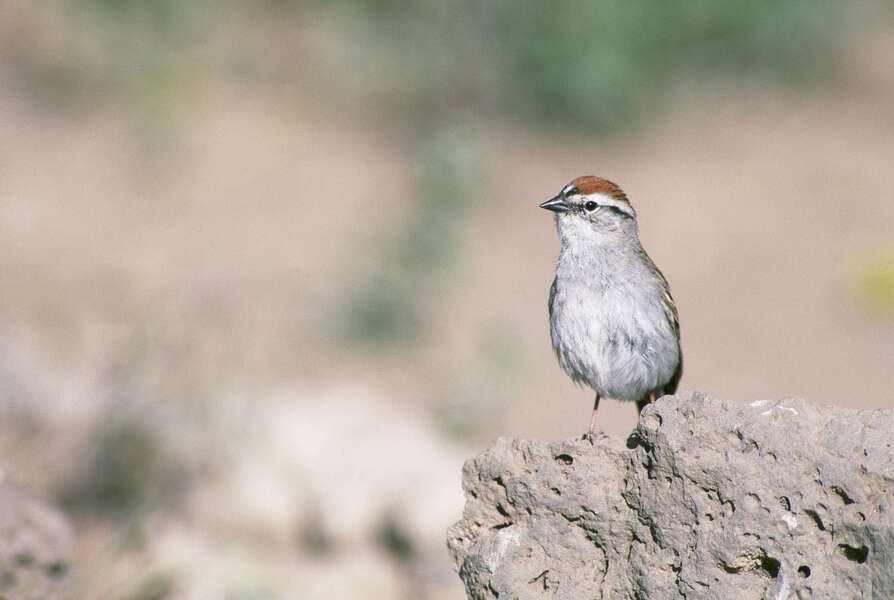
Least ConcernA small (5 ¼ inches) bunting, the Chipping Sparrow in summer is most easily identified by its mottled brown back, gray face and neck, conspicuous white eye-stripes, and rusty red crown. Winter birds are browner and duller overall, particularly on the head and face. This species may be distinguished from the similarly-patterned American Tree Sparrow (Spizella arborea) by that species’ larger size and grayer head. Male and female Chipping Sparrows are similar to one another in all seasons. The Chipping Sparrow breeds across south-central Canada and the northern half of the United States. In winter, northerly-breeding populations migrate south into the southeastern U.S., southwest, and northern Mexico. Populations breeding in the southern United States are non-migratory, and other non-migratory populations exist in Mexico and Central America. Chipping Sparrows breed in a number of woodland habitat types with dense undergrowth, preferring habitats composed at least partly of evergreen trees. In winter and on migration, this species is found in a wider variety of habitats including open deciduous forest, weedy fields, and in suburban yards. Chipping Sparrows primarily eat seeds, but thi
via IUCN
Wikidata facts
Show 8 more facts
- taxon rank
- species
- IUCN conservation status
- Least Concern
- taxon name
- Spizella passerina
- Commons category
- Spizella passerina
- Commons gallery
- Spizella passerina
- taxon common name
- tico-tico-de-coroa-ferrugínea
- diel cycle
- diurnality
- short name
- S. passerina
Sources (3)
via Wikidata · CC0