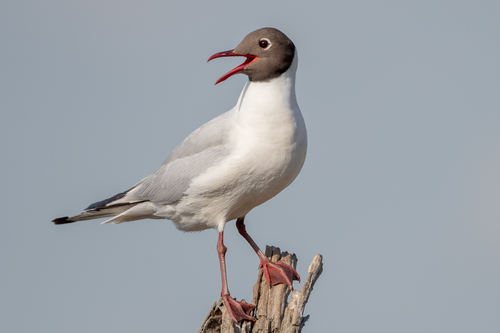
(c) Dmitry Dubikovskiy, some rights reserved (CC BY-NC), uploaded by Dmitry Dubikovskiy · cc-by-nc
Chroicocephalus
Sign in to saveChroicocephalus is a genus of medium to relatively small gulls which were included in the genus Larus until genetic evidence published in 2005 showed that Larus as then constituted was paraphyletic. Ten species are currently accepted. The genus name Chroicocephalus is from Ancient Greek khroizo, "to colour", and kephale, "head".
Species
Black-headed Gull
GENUS
- KingdomAnimalia
- PhylumChordata
- ClassAves
- OrderCharadriiformes
- FamilyLaridae
Chroicocephalus is een geslacht van relatief kleine meeuwen, dat tot voor kort bij Larus werd ingedeeld. Het geslacht telt 12 soorten.
via GBIF
Museum specimens
- Specimen records
- 47
- Family
- Laridae
- Collections
- UF, ANWC, COA, NMV, SAMA, QVMAG
- Recorded in
- United States, Russian Federation, Canada, Netherlands, Norway, Poland, Australia, United Kingdom
Wikidata facts
Show 7 more facts
- taxon name
- Chroicocephalus
- taxon rank
- genus
- Commons category
- Chroicocephalus
- topic's main category
- Category:Chroicocephalus
- Commons gallery
- Chroicocephalus
- taxon common name
- Hettemåser
- taxon range
- Brazil
Sources (2)
via Wikidata · CC0
~5 min read
Encyclopedic overview
5 sectionsContents
- Taxonomy
- Description
- Species
- Fossils
- References
Chroicocephalus is a genus of medium to relatively small gulls which were included in the genus Larus until genetic evidence published in 2005 showed that Larus as then constituted was paraphyletic. Ten species are currently accepted. The genus name Chroicocephalus is from Ancient Greek khroizo, "to colour", and kephale, "head".
==Taxonomy== The species now placed in this genus were formerly assigned to the genus Larus. A molecular phylogenetic study published in 2005 found that Larus, as then constituted, was paraphyletic. In the resulting rearrangement to create monophyletic genera, the genus Chroicocephalus was resurrected to contain a clade of species, all of which have black heads. The genus Chroicocephalus had been introduced in 1836 by the English naturalist Thomas Campbell Eyton. Although he listed two species in the new genus, he did not specify a type. In 1840 George Gray designated the type as Larus capistratus which had been described by Coenraad Jacob Temminck in 1820. This taxa is now considered to be a junior synonym of Larus ridibundus, the black-headed gull, that had been named in 1766 by Carl Linnaeus. The genus name Chroicocephalus combines the Ancient Greek χρωικος/khrōikos meaning "coloured" with -κεφαλος /-kephalos meaning "-headed".
Excerpted from Wikipedia’s “Chroicocephalus” article, available under the CC BY-SA 4.0 licence.