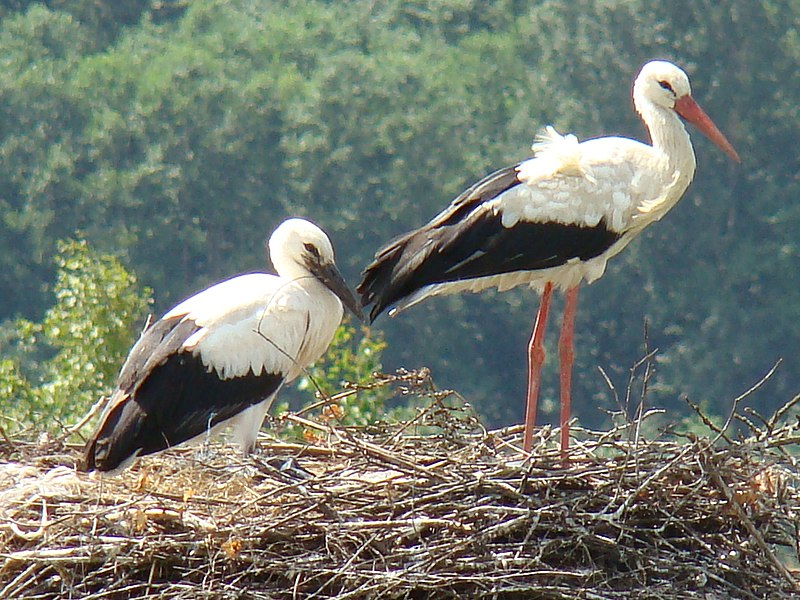
File:White_Stork-Mindaugas_Urbonas-1.jpg · Wikimedia Commons · See Wikimedia Commons
OverviewAI-generated
*Ciconia* is a genus of birds within the family Ciconiidae and the order Ciconiiformes. It belongs to the class Aves, phylum Chordata, and kingdom Animalia. The taxon was described by Brisson in 1760 and is currently accepted. Its parent taxon is the stork.
The genus is associated with freshwater habitats. Records from iDigBio indicate presence in the United States and Brazil, with specimens held by institutions including USNM, NHMUK, UF, and UCMP. The name *Ciconia* has been referenced in sources such as the Bible Encyclopedia of Archimandrite Nicephorus and the Jewish Encyclopedia of Brockhaus and Efron.
Synthesized by Vinony from 37 facts across 7 sources: Wikidata, GBIF, iNaturalist, Gbif Occ, WoRMS, iDigBio, Vinony graph. Generated from structured data (not the Wikipedia text) and checked against those facts — may still contain errors.
Species
White Stork
Ciconia
GENUS
- KingdomAnimalia
- PhylumChordata
- ClassAves
- OrderCiconiiformes
- FamilyCiconiidae
Ciconia Ciconia est un genre d'oiseaux échassiers souvent migrateurs appartenant à la famille des Ciconiidés et tous appelés cigognes. Il existe plusieurs espèces, les deux plus connues étant la Cigogne blanche (Ciconia ciconia), et dans une moindre mesure la Cigogne noire (Ciconia nigra). Le petit est appelé cigogneau. Sommaire 1 Caractéristiques 2 Écologie et comportement 3 Répartition et habitats 3.1 Migrations 4 Taxinomie 4.1 Espèces existantes 4.2 Espèces fossiles 5 Phylogénie 6 Symbolique 7 Annexes 7.1 Articles connexes 7.2 Références taxinomiques 7.3 Liens externes 8 Notes et références Caractéristiques Craquètement de Cigognes blanches. Les espèces de ce genre se caractérisent par leur bec droit et pointu et leur plumage principalement noir et blanc[1]. Ce sont de grands échassiers, d'environ un mètre de haut et 1,80 m d'envergure avec un long bec. Les jeunes sont de couleur plus brune et discrète que les adultes[2]. Les cigognes n'ont pas de muscle trachéo-bronchial autour du syrinx et ne peuvent ni chanter ni crier, et communiquent entre elles en claquant du bec : il s'agit du craquètement ou claquettement[3]. Son petit s’appelle le cigogneau. Tout petit, il peut produire
via GBIF
Museum specimens
- Specimen records
- 109
- With media
- 2
- Family
- Ciconiidae
- Collections
- USNM, NHMUK, UF, UCMP
- Recorded in
- United States, Brazil
Wikidata facts
- Instance of
- taxon
- Image
- White Stork-Mindaugas Urbonas-1.jpg
Show 5 more facts
- taxon rank
- genus
- Commons category
- Ciconia
- taxon name
- Ciconia
- topic's main category
- Category:Ciconia
- Commons gallery
- Ciconia
via Wikidata · CC0
~5 min read
Encyclopedic overview
6 sectionsContents
- Species
- Extant species
- Fossils
- References
- Further reading
- External links
__NOTOC__
Ciconia ( ; ) is a genus of birds in the stork family. Six of the seven living species occur in the Old World, but the maguari stork has a South American range. In addition, fossils suggest that Ciconia storks were somewhat more common in the tropical Americas in prehistoric times.
Excerpted from Wikipedia’s “Ciconia” article, available under the CC BY-SA 4.0 licence.