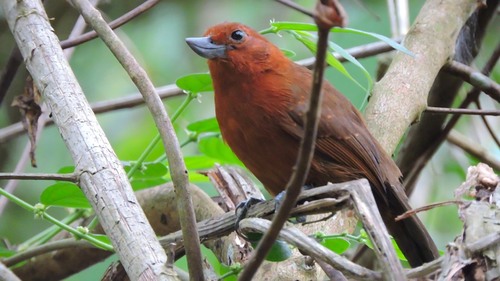
(с) Edwin Múnera Chavarría, некоторые права защищены (CC BY-NC), загрузил Edwin Múnera Chavarría · cc-by-nc
Clytoctantes
Sign in to saveClytoctantes is a South American genus of passerine birds in the antbird family, Thamnophilidae. They are medium sized, and males are grey or black and females are mainly rufous. The stubby, hefty bill has a distinctly upcurved lower mandible and a straight culmen (a large version of the bills of the recurvebills), which possibly is a modification for opening bamboo stems in their search for insects.
Species
Recurve-billed Bushbird
GENUS
- KingdomAnimalia
- PhylumChordata
- ClassAves
- OrderPasseriformes
- FamilyThamnophilidae
via GBIF
Wikidata facts
- Instance of
- taxon
- Parent taxon
- Thamnophilidae
- Image
- ClytoctantesAlixiiKeulemans.jpg
Show 4 more facts
- Commons category
- Clytoctantes
- topic's main category
- Category:Clytoctantes
- taxon rank
- genus
- taxon name
- Clytoctantes
Sources (1)
via Wikidata · CC0
~16 min read
Encyclopedic overview
11 sectionsContents
- Taxonomy and classification
- Description
- Species
- Recurve-billed bushbird (''Clytoctantes alixii'')
- Rondônia bushbird (''Clytoctantes atrogularis'')
- Distribution
- Habitat
- Behavior
- Status
- Conservation
- References
Clytoctantes is a South American genus of passerine birds in the antbird family, Thamnophilidae. They are medium sized, and males are grey or black and females are mainly rufous. The stubby, hefty bill has a distinctly upcurved lower mandible and a straight culmen (a large version of the bills of the recurvebills), which possibly is a modification for opening bamboo stems in their search for insects.
It comprises two species: the recurve-billed bushbird (Clytoctantes alixii) and the Rondônia bushbird (Clytoctantes atrogularis). Both species inhabit dense, lowland and foothill forests, C. alixii in the northern Andes and C. atrogularis in the Brazilian Amazon.
Excerpted from Wikipedia’s “Clytoctantes” article, available under the CC BY-SA 4.0 licence.
Gallery (3)
Available in 20 languages
- Español
- Français
- 中文
- Русский
- Português
- Breton
- Catalan
- Cebuano
- Egyptian Arabic
- Hungarian
- Kotava
- Nederlands
- Norwegian Nynorsk
- Svenska
- Tiếng Việt
- Türkçe
- Ukrainian
- Waray
Show 1 more
via Wikidata sitelinks · CC0