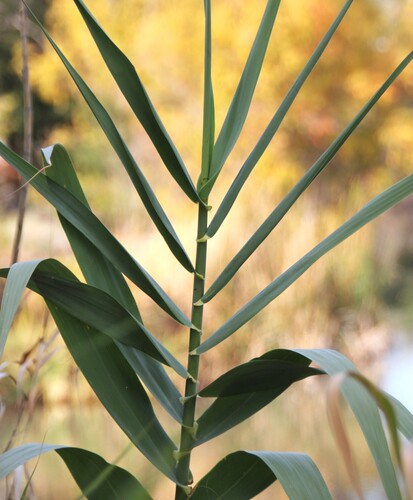
(c) columbidaeperson, some rights reserved (CC BY-NC), uploaded by columbidaeperson · cc-by-nc
Cynodon
Sign in to saveCynodon, from Ancient Greek κύων (kúōn), meaning "dog", and ὀδούς (odoús), meaning "tooth", is a genus of plants in the grass family. It is native to warm temperate to tropical regions of the Old World, as well as being cultivated and naturalized in the New World and on many oceanic islands.
OverviewAI-generated
Cynodon is a taxon at the genus rank, commonly known as Bermudagrass. It is classified within the subfamily Chloridoideae and the family Poaceae. The genus was described by Spix in 1829. While primarily associated with plants, the name Cynodon also refers to a homonymous taxon in the family Cynodontidae, order Characiformes, and class Teleostei. This aquatic group inhabits brackish and freshwater environments.
The plant genus Cynodon is native to a wide range of locations, including Afghanistan, Albania, Aldabra, Algeria, the Andaman Islands, Angola, Assam, Austria, the Azores, Baleares, Bangladesh, and Benin. The taxon is maintained by WikiProject Plants and has an accepted status in biological databases.
Records for Cynodon exist across various scientific platforms. The iDigBio database contains 693 records and 431 media files from institutions in France, Mexico, the United States, China, and Argentina. Additionally, 1,291 PubMed entries reference the term, and 58 other encyclopedia articles cite it.
Synthesized by Vinony from 36 facts across 7 sources: Wikidata, PubMed, iNaturalist, Plants of the World, WoRMS, iDigBio, Vinony graph. Generated from structured data (not the Wikipedia text) and checked against those facts — may still contain errors.
Species
giant reed
Genus
- PhylumChordata
- ClassTeleostei
- OrderCharaciformes
- FamilyCynodontidae
via · Kew POWO
Museum specimens
- Specimen records
- 693
- With media
- 431
- Family
- Cynodontidae
- Collections
- CM, FCN-UAQ, IEA-UAT, UJAT, CAS, UACH
- Recorded in
- France, Mexico, United States, China, Argentina
Research
1,291 papers- Bermudagrass (Cynodon spp.).Methods in molecular biology (Clifton, N.J.) · 2006
- Research Progress and Prospects of Molecular Breeding in Bermudagrass (Cynodon dactylon).International journal of molecular sciences · 2024
- Endophytic fungi of Cynodon dactylon: a treasure trove of bioactive compounds.Archives of microbiology · 2025
- Molecular Dissection of Quantitative Variation in Bermudagrass Hybrids (Cynodon dactylon x transvaalensis): Morphological Traits.G3 (Bethesda, Md.) · 2019
- Transgenic Cynodon dactylon overexpressing CdPIF4 alters plant development and cold stress tolerance.Physiologia plantarum · 2025
via PubMed
Wikidata facts
- Instance of
- taxon
- Parent taxon
- Chloridoideae
- Image
- Cynodon dactylon Dubbo plant7 (8675075574).jpg
Show 7 more facts
- taxon name
- Cynodon
- taxon rank
- genus
- Commons category
- Cynodon
- topic's main category
- Category:Cynodon
- taxon common name
- 狗牙根属
- topic has template
- Template:Taxonomy/Cynodon
- maintained by WikiProject
- WikiProject Plants
via Wikidata · CC0
~3 min read
Encyclopedic overview
4 sectionsContents
- Taxonomy
- Cultivation and uses
- References
- External links
Cynodon, from Ancient Greek κύων (kúōn), meaning "dog", and ὀδούς (odoús), meaning "tooth", is a genus of plants in the grass family. It is native to warm temperate to tropical regions of the Old World, as well as being cultivated and naturalized in the New World and on many oceanic islands.
==Taxonomy== The genus name comes from Greek words meaning "dog-tooth". The genus as a whole as well as its species are commonly known as Bermuda grass or '''dog's tooth grass'. Species Cynodon ambiguus (Ohwi) P.M.Peterson Cynodon barberi Rang. & Tadul. – India, Sri Lanka Cynodon convergens F.Muell. Cynodon coursii A.Camus – Madagascar Cynodon dactylon (L.) Pers. – Old World; introduced in New World and on various islands Cynodon incompletus Nees – southern Africa; introduced in Australia, Argentina Cynodon × magennisii Hurcombe – Limpopo, Gauteng, Mpumalanga; introduced in Texas, Alabama Cynodon nlemfuensis Vanderyst - Africa from Ethiopia to Zimbabwe; introduced in South Africa, West Africa, Saudi Arabia, Philippines, Texas, Florida, Mesoamerica, northern South America, various islands Cynodon plectostachyus (K.Schum.) Pilg. – Chad, East Africa; introduced in Madagascar, Bangladesh, Mexico, West Indies, Paraguay, northeastern Argentina, Texas, California Cynodon prostratus (C.A.Gardner & C.E.Hubb.) P.M.Peterson Cynodon radiatus Roth – China, Indian Subcontinent, Southeast Asia, Madagascar; introduced in Australia, New Guinea Cynodon simonii P.M.Peterson Cynodon tenellus R.Br. Cynodon transvaalensis Burtt Davy – South Africa, Lesotho; introduced in other parts of Africa plus in scattered locales in Iran, Australia, and the Americas Formerly included Several species now considered better suited to other genera, namely Arundo, Bouteloua, Chloris, Cortaderia, Ctenium, Digitaria, Diplachne, Eleusine, Enteropogon, Eragrostis, Eustachys, Gynerium, Leptochloa, Molinia, Muhlenbergia, Phragmites, Poa, Spartina, Tridens, and Trigonochloa.
Excerpted from Wikipedia’s “Cynodon” article, available under the CC BY-SA 4.0 licence.