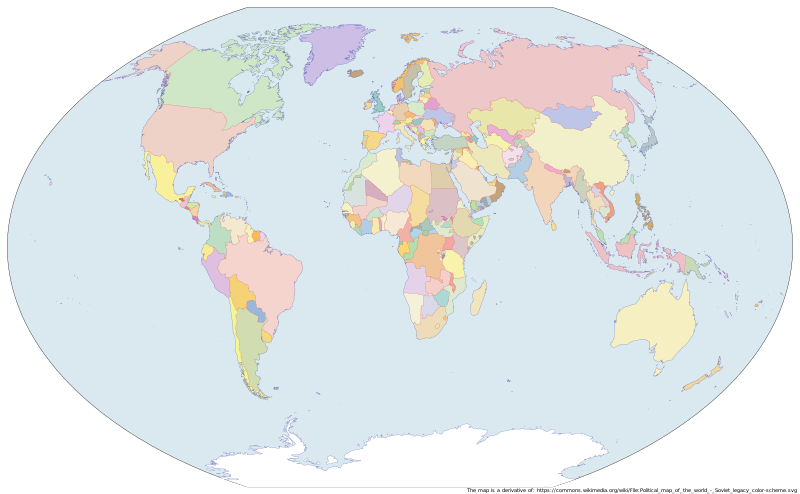
File:De-facto-territory-control-map-of-the-world-borderless-14-05-2019.svg · Wikimedia Commons · See Wikimedia Commons
de facto
Sign in to saveAlso known as informally, unofficially
practices that exist without recognition in law or other formal norms
"De facto" refers to something that exists or happens in practice, even though it may not be officially recognized or legally established. It matters because it describes the gap between what's formally true on paper and what actually occurs in real life, which can be important for understanding how systems truly work.
AI-generated from the Wikipedia summary — may contain errors.
~17 min read
Encyclopedic overview
De facto (/deɪ ˈfæktoʊ, di -, də -/, day FAK-toh, dee -, də -; Latin: [deː ˈfaktoː] ; lit. 'from fact') practices are those that exist in reality or effect, without explicit recognition or recognition at all by laws or other formal norms. They contrast with de jure ('from law') practices. This distinction is important in law and governance. For example, a de facto government holds power without legal recognition, while a de jure government may have formal legal authority but lack any real power.
Jurisprudence and de facto law
Excerpted from Wikipedia’s “de facto” article, available under the CC BY-SA 4.0 licence.
Available in 94 languages
- Español
- Français
- Deutsch
- 中文
- 日本語
- Русский
- Português
- Italiano
- العربية
- Afrikaans
- Albanian
- Aragonese
- Armenian
- Asturian
- Azerbaijani
- Bahasa Indonesia
- Bangla
- Basque
Show 75 more
- be_x_old
- Belarusian
- Bosnian
- Breton
- Bulgarian
- Buriat
- Burmese
- Catalan
- Central Kurdish
- Croatian
- Czech
- Danish
- Egyptian Arabic
- Esperanto
- Estonian
- Filipino
- Finnish
- Galician
- Georgian
- Greek
- Hebrew
- Hungarian
- Iloko
- Irish
- Kazakh
- Kurdish
- Kyrgyz
- Ladino
- Lao
- Latvian
- Limburgish
- Lithuanian
- lld
- Lombard
- Macedonian
- Malay
- Maltese
- Mingrelian
- Mongolian
- nah
- nds_nl
- Nederlands
- Northern Frisian
- Norwegian
- Norwegian Nynorsk
- Occitan
- Pashto
- Polski
- Quechua
- Romanian
- Rusyn
- Serbian
- Serbian (Latin)
- simple
- Sindhi
- Slovak
- Svenska
- Tamil
- Tiếng Việt
- Türkçe
- Ukrainian
- Urdu
- Uzbek
- Welsh
- Western Frisian
- Western Panjabi
- Wu Chinese
- Yakut
- Yoruba
- Zaza
- zh_min_nan
- zh_yue
- فارسی
- ไทย
- 한국어
via Wikidata sitelinks · CC0