Encyclopedia of Life · EOL (see source)
Dipus
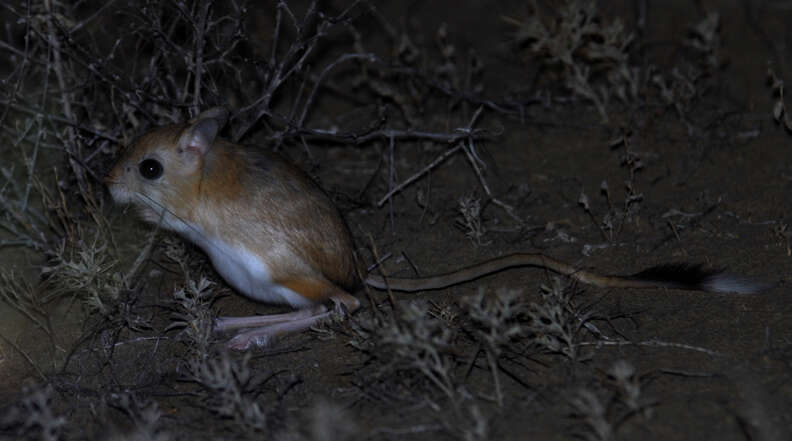
Sign in to saveDipus, meaning "two foot" in Ancient Greek, is a genus of jerboa. Today only a single species is usually recognized, the northern three-toed jerboa (Dipus sagitta), widespread throughout Central Asia. Some authors recognize a second species, the Qaidam three-toed jerboa (Dipus deasyi) from the Qaidam Basin of western China. The genus has a fossil record that dates back to the Miocene, with several extinct species known from Asia. The oldest dated species is Dipus conditor.
Species
GENUS
- KingdomAnimalia
- PhylumChordata
- ClassMammalia
- OrderRodentia
- FamilyDipodidae
Dipus Dipodidae animalia familiako generoa da, karraskarien barruan sailkatua.
via GBIF
Museum specimens
- Specimen records
- 17
- With media
- 1
- Family
- Dipodidae
- Collections
- UMZC, ROM, AMNH, NHMUK, GNM, MNHN
- Recorded in
- [Algeria], AlgéRie, Pays Non Identifié
Wikidata facts
Show 4 more facts
- Commons category
- Dipus sagitta
- taxon name
- Dipus
- taxon rank
- genus
- topic's main category
- Category:Dipus
Sources (2)
via Wikidata · CC0
~1 min read
Encyclopedic overview
1 sectionsContents
- References
Dipus, meaning "two foot" in Ancient Greek, is a genus of jerboa. Today only a single species is usually recognized, the northern three-toed jerboa (Dipus sagitta), widespread throughout Central Asia. Some authors recognize a second species, the Qaidam three-toed jerboa (Dipus deasyi) from the Qaidam Basin of western China. The genus has a fossil record that dates back to the Miocene, with several extinct species known from Asia. The oldest dated species is Dipus conditor.
==References==
Excerpted from Wikipedia’s “Dipus” article, available under the CC BY-SA 4.0 licence.