
Yibuti
Also known as Republic of Djibouti, Jabuuti, Gabuuti, Jībūtī, dj
país de África
AI overview
Djibouti is a small country located in the Horn of Africa at the strategic crossroads where the Red Sea meets the Gulf of Aden, bordered by Somalia, Ethiopia, and Eritrea. Its location makes it geographically important for international shipping and trade routes between Europe, the Middle East, and Asia.
AI-generated from the Wikipedia summary — may contain errors.
Weather now
cached 7h ago38°broken clouds
21% 2.0 m/s OpenWeatherMap
7-day forecast
via Open-Meteo
Country
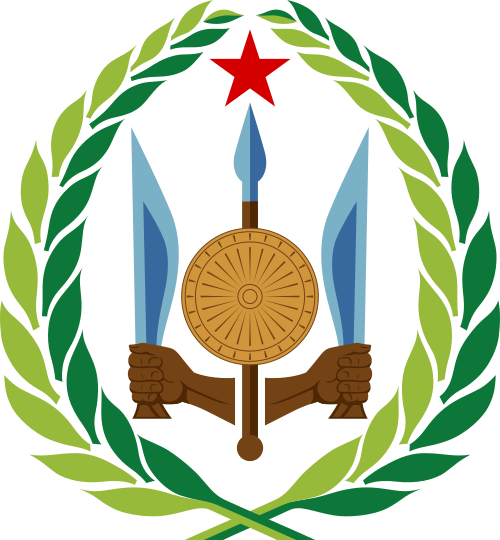
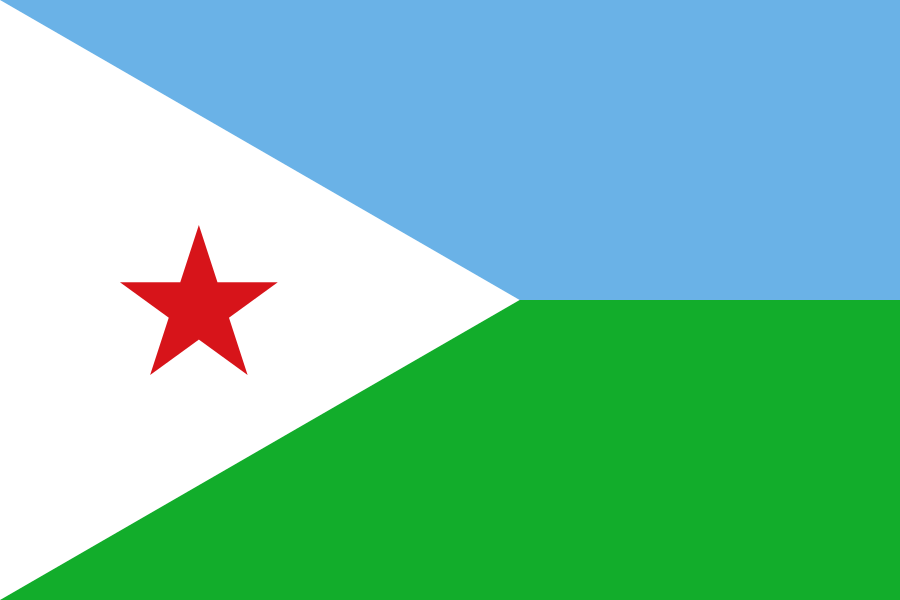
- Capital
- Djibouti
- Population
- 1,066,809
- Region
Travel guide
Understand
Djibouti's location near the Suez Route, one of the world's busiest shipping routes, has made the country important for international trade.
Get in
thumb|375px|A map showing the visa requirements of Djibouti, with countries in lime having visa on arrival
Get around
Taxis are available in Djibouti and from the airport to the town, as you exit the airport there is a big billboard displaying expected taxi fares, look for it; also in Ali-Sabieh, Dikhil, Dorale and Arta. Fares can increase by 50% after dark. Bicycling is a great way to get around the small capital. Ferry services sail daily from L'Escale (Djibouti) to Tadjoura and Obock. The journey takes about three hours.
See
thumb|Lake Assalthumb|Shores of Lake Abbe Lake Assal, at 150 m below sea level, is the third-lowest point on Earth. You'll need to hire a car or ask someone who lives in Djibouti to drive you there. Expect a rough ride: the roads outside the capital are destroyed by the truck traffic between Djibouti and Ethiopia. The road passes within sight of the Devil's Island, and some impressive views. Expect to be awestruck. Lake Abbe is one of the most desolate places on Earth and is dotted with limestone chimneys up to 50 m high. It is described as lunar, and Planet of the Apes was filmed here.
Do
Scuba diving — Despite the country's arid landscape, off the coast lie several reefs teeming with all sorts of life. Sea kayaking — Sea kayaking allows you to enjoy the Gulf of Tadjoura and Ghoubet Kharrib in an eco-friendly way, with the possibility of observing whale sharks and sea turtles. Whale shark tours — You can also go snorkelling or diving with whale sharks, although the chance of seeing them varies throughout the season (70-80% in Nov-Jan and close to zero during warmer months).
Eat
The city of Djibouti has many places to eat, including tourist traps. Western food is often expensive cuisine, with local cuisine being much cheaper. For example, the Ethiopian Community Center offers a wide variety of local, tasty and reasonably priced dishes. Average price per meal outside tourist areas is US$4 including drink.
Stay safe
Article · Español
Yibuti (en francés, Djibouti; en árabe, جيبوتي, Ŷībūtī, [ʤiːbuːtiː]), oficialmente denominado República de Djibouti, es un país ubicado en el Cuerno de África. Tiene 23200 km² y comparte fronteras con Eritrea por el norte, con Etiopía por el oeste y el sur, y con Somalia por el sureste. Asimismo, tiene sus costas bañadas por el mar Rojo y el golfo de Adén. En la Edad Antigua el territorio de Yibuti era parte de Punt y en la Edad Media la zona fue cuna de los sultanatos de Adel e Ifat. A finales del siglo XIX se creó la colonia de la Somalia francesa como resultado de la firma de varios tratados firmados por los sultanes de Somalia y del pueblo afar con los franceses. La zona pasó a llamarse Territorio Francés de los Afars y de los Issas en 1967. Una década después el pueblo de Yibuti votó a favor de la independencia, lo que marcó la formación oficial de la República de Yibuti, que recibió el nombre de su capital. El país se unió a la ONU ese mismo año, el 20 de septiembre de 1977. A comienzos de los años 1990 las tensiones sobre la representación del gobierno condujeron a un conflicto armado que culminó en el año 2000 en un acuerdo para compartir el poder entre el partido gobernante y la oposición. Yibuti es una nación multiétnica con una población actual cercana a los ochocientos mil habitantes, entre los cuales los somalíes y el pueblo afar son los grupos étnicos más numerosos. Ambos hablan lenguas afroasiáticas que están reconocidas como idiomas nacionales, aunque el árabe y el francés son las lenguas oficiales. Más del 90% de los yibutianos practican el islam, religión predominante en toda la región desde hace más de un milenio. El país tiene una ubicación estratégica cerca de uno de los puntos más transitados por la navegación comercial, en el acceso al mar Rojo desde el océano Índico, por lo que su costa es un centro de repostaje de enorme importancia para los buques mercantes y también es el puerto para importaciones y exportaciones de la vecina Etiopía. Además de floreciente centro del comercio mundial, Yibuti alberga varias bases militares de ejércitos extranjeros y la sede de la Autoridad Intergubernamental sobre el Desarrollo de África Oriental.
Abstract from DBpedia / Wikipedia · CC BY-SA
Gallery (39)
On the map
4 mapped locations
Connections
Categories
1977 establishments in DjiboutiCountries and territories where Arabic is an official languageCountries and territories where French is an official languageCountries and territories where Somali is an official languageCountries in AfricaCountries in East AfricaDjiboutiFormer French coloniesGulf of AdenHorn African countriesLeast developed countries