
File:Domenico_Cimarosa_2.png · Wikimedia Commons · See Wikimedia Commons
Domenico Cimarosa
Sign in to saveItalian opera composer of the Neapolitan school (1749–1801)
OverviewAI-generated
Domenico Cimarosa was an Italian composer active during the classical period. He was born in Aversa on December 17, 1749, and died in Venice on January 11, 1801. Cimarosa was educated at the Conservatorio di S. Maria di Loreto and held citizenship in the Republic of Venice. He spoke and wrote in Italian.
His notable work includes the opera *Il matrimonio segreto*. Cimarosa composed works in the genres of opera and classical music. He is described by sources such as the Nordisk familjebok, Enciclopedia Treccani, Russian Biographical Dictionary, and Brockhaus and Efron Encyclopedic Dictionary. He is buried at San Michele Arcangelo.
Synthesized by Vinony from 25 facts across 4 sources: Wikidata, MusicBrainz, Last.fm, Europeana Sparql. Generated from structured data (not the Wikipedia text) and checked against those facts — may still contain errors.
Listeners · Last.fm
- Listeners
- 160,327
- Total plays
- 561,929
Tags
Domenico Cimarosa (17 December 1749 – 11 January 1801) was an Italian opera composer. Cimarosa was born in Aversa, near Naples. His parents were poor, but anxious to give their son a good education. After moving to Naples, they sent him to a free school connected with one of the monasteries in that city. The organist of the monastery, Padre Polcano, was struck by the boy's intellect, and voluntarily instructed him in the elements of music, and also in the ancient and modern literature of his co
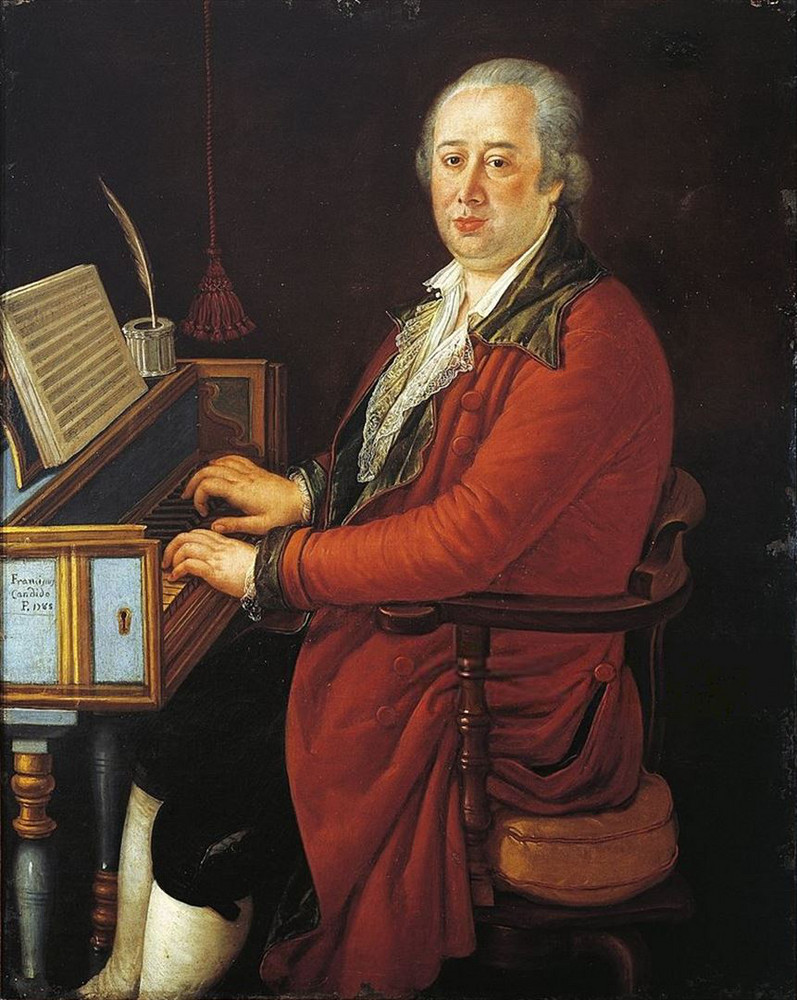
Key facts
- Born
- ( 1749-12-17 ) 17 December 1749 , Aversa , Kingdom of Naples
- Died
- 11 January 1801 (1801-01-11) (aged 51) , Venice , Venetian Province
- Occupation
- Composer
- Works
- List of compositions
- Spouses
- Constanza Suffi (m. 1799 d. 1799) Gaetana (m. 1780s d. 1796)
via Wikipedia infobox
Wikidata facts
- Instance of
- human
- Given name
- Domenico
- Gender
- male
- Citizenship
- Republic of Venice
- Place of birth
- Aversa
- Place of death
- Venice
- Occupation
- composer
- Educated at
- Conservatorio di S. Maria di Loreto
- Languages spoken
- Italian
- Notable work
- Il matrimonio segreto
- Genre
- opera
- Image
- Domenico Cimarosa.png
Show 8 more facts
- Commons category
- Domenico Cimarosa
- date of birth
- 1749-12-17
- date of death
- 1801-01-11
- related category
- Category:Compositions by Domenico Cimarosa
- P8168
- Freden
- name in native language
- Domenico Cimarosa
- place of burial
- San Michele Arcangelo
- P12674
- Gates to Paradise
via Wikidata · CC0
Works in European collections
35 objects attributed to Domenico Cimarosa, held across European museums, libraries & archives · via Europeana
Il matrimonio secreto (sic) [Música notada] :]opera buffa posta in musica e ridotta per il piano forte da Cimarosa ; corrigé par A. Marquerie et C. Lebourtier
Gli Orazi e i Curiazi [Música notada] :]opera seria del Signor Sografi
Il matrimonio segreto [Música notada] :]dramma giocoso in due atti = ou Le mariage secret : opéra comique en deux actes
Il matrimonio segreto : dramma per musica del Signr. D. Domenico Cimarosa
Il matrimonio segreto.. Ouverture
Aria seria negli Oriazi e Curiazi [Música notada]
Se alla patria ognor donài
Or che niuno qui ci ascolta : quintetto : nel Matrimonio p[er] raggiro
Secret marriage: melodrama played in two acts
Duetto, Se vedete una ragazza, nel opera Il matrimonio per rag[g]iro
Quartetto Liron Lilera
Se fiato in corpo avete : duetto buffo
Oh che notte tetra e bruna : quartetto
Or che niuno qui ci ascolta : quintetto
Amore il mio bellissimo : quartetto per il piano forte

Il matrimonio segreto (act 1): Perdonate, signor mio (One momente, Sir)/(Cimarosa - Bertati)
Inc. con la scena 6° - 1° quint. e segnato 10 2, ult. 29 2, fine del dramma, scena 6°, carolina sola
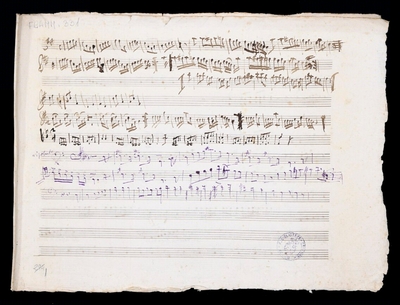
Rachele allor che iddio…
![[“Secret wedding” - “Ude all hearing”]](https://api.europeana.eu/thumbnail/v2/url.json?uri=https%3A%2F%2Fbeu-covers.s3.amazonaws.com%2Fedl%2Feuropeana%2F109442.jpg&type=IMAGE)
[“Secret wedding” - “Ude all hearing”]
![[“Il matrimonio segreto” - duetto - “se fiato in corpo avete”]](https://api.europeana.eu/thumbnail/v2/url.json?uri=https%3A%2F%2Fbeu-covers.s3.amazonaws.com%2Fedl%2Feuropeana%2F109443.jpg&type=IMAGE)
[“Il matrimonio segreto” - duetto - “se fiato in corpo avete”]
Orazi e curiazi - terzetto
Scena and Duetto Svenami in op. The Horace and Curiazi, with instructors
Due baroni. Opera buffa in due atti. Partit.
Marcia nell'opera Gli Orazi e i Curiazi, per il P. F
![Sinfonia dell'opera Gli Orazi e i Curiazi , per pianoforte [e vl di acc.] Riduzione di R. Bonajuti](https://api.europeana.eu/thumbnail/v2/url.json?uri=https%3A%2F%2Fbeu-covers.s3.amazonaws.com%2Fedl%2Feuropeana%2F12314.jpg&type=IMAGE)
Sinfonia dell'opera Gli Orazi e i Curiazi , per pianoforte [e vl di acc.] Riduzione di R. Bonajuti
![Air: Those pupille to keep the work “Le Orazi e Curiazi,” by tenor [ma S] and pf](https://api.europeana.eu/thumbnail/v2/url.json?uri=https%3A%2F%2Fbeu-covers.s3.amazonaws.com%2Fedl%2Feuropeana%2F12315.jpg&type=IMAGE)
Air: Those pupille to keep the work “Le Orazi e Curiazi,” by tenor [ma S] and pf
Duetto buffo per Soprano e Basso con orchestra. Vaga fravola odorosa
Italienerin zu London. Melodramma in 2 atti. Partit.
Miscellanea
Ouvertura dell'Opera: Gli Orazi e i Curiazi ridotta per il Clavicembalo
Aria Quelle pupille tenere per Tenore con accomp.to di P.F. nell'opera gli Orazi e i Curiazi
Aria Guardami and in this brick for Sopr. P. F. in the work: The Horatics and the Curiazi
Terzetto: Oh! Dolce, o caro istante per due Soprani e Tenori con accomp.to di P.F. nell'opera: Gli Orazi e Curiazi
Ouverture to Clavicembalo of the work The secret wedding
Duetto Cara, not a dubitar for the harpsichord in the work The Secret Wedding
~13 min read
Encyclopedic overview
Domenico Cimarosa ( Italian: [doˈmeːniko tʃimaˈrɔːza] ; 17 December 1749 – 11 January 1801) was an Italian composer of the Neapolitan School and of the Classical period. He wrote more than eighty operas, the best known of which is Il matrimonio segreto (1792); most of his operas are comedies. He also wrote instrumental works and church music.
Cimarosa was principally based in Naples, but spent some of his career in various other parts of Italy, composing for the opera houses of Rome, Venice, Florence and elsewhere. He was engaged by Catherine the Great of Russia as her court composer and conductor between 1787 and 1791. In his later years, returning to Naples, he backed the losing side in the struggle to overthrow the monarchy there, and was imprisoned and then exiled. He died in Venice at the age of 51.
Excerpted from Wikipedia’s “Domenico Cimarosa” article, available under the CC BY-SA 4.0 licence.