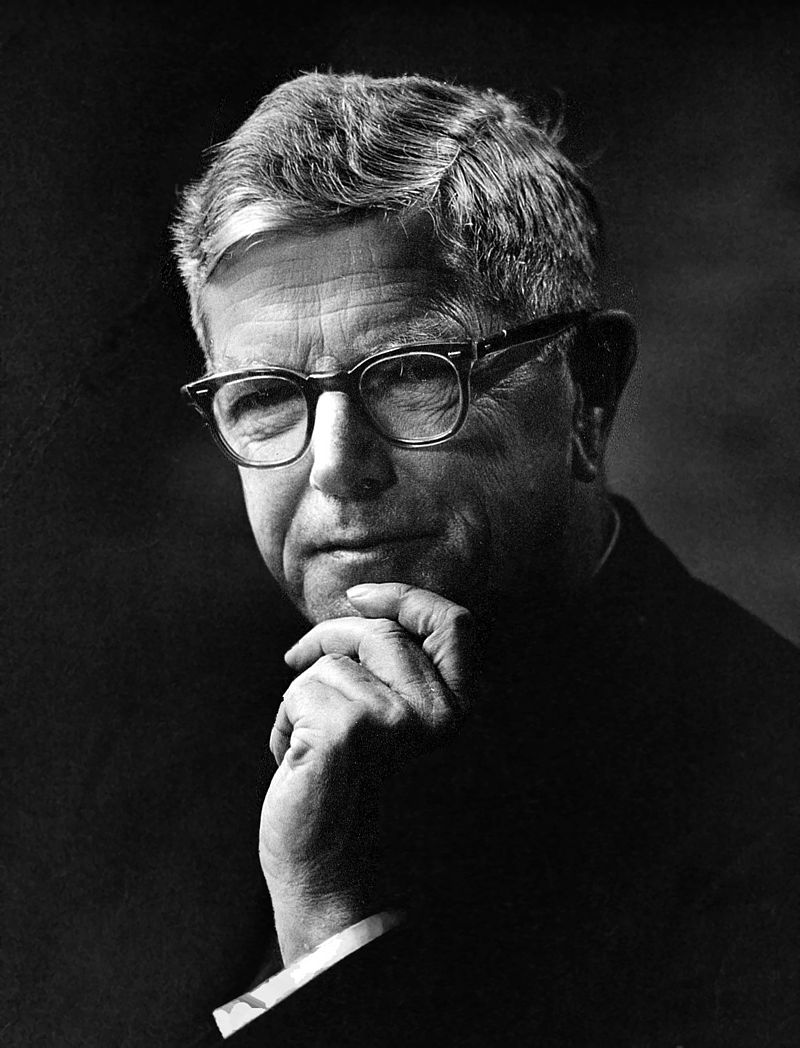
File:Frank_Macfarlane_Burnet.jpg · Wikimedia Commons · See Wikimedia Commons
Frank Macfarlane Burnet
Sign in to saveAlso known as Frank Burnet, F. Macfarlane Burnet, Macfarlane Burnet, Sir Frank Macfarlane Burnet
Australian virologist (1899-1985)
OverviewAI-generated
Sir Frank Macfarlane Burnet was a figure recognized in several prestigious collections, including the Royal Society collection, the Nobel Laureates collection, the Nobel Medicine collection, the American Academy Arts Sciences collection, and the Copley Medal collection. He was associated with the Nobel Prize, with a count of one recorded for this award.
His lifespan is recorded as beginning on 1899-09-03 and ending on 1985-08-31. These dates define the period of his life as documented in the provided records.
Synthesized by Vinony from 9 facts across 3 sources: Wikidata, Nobel Prize, Vinony collections. Generated from structured data (not the Wikipedia text) and checked against those facts — may still contain errors.
Nobel Prize
- The Nobel Prize in Physiology or Medicine1960
“for discovery of acquired immunological tolerance”
Shared · 1/2 portion
Wikidata facts
- Instance of
- human
- Gender
- male
- Citizenship
- Australia
- Place of birth
- Traralgon
- Place of death
- Melbourne
- Occupation
- researcher
- Educated at
- University of London
- Employer
- University of Melbourne
- Languages spoken
- English language
- Academic degree
- Doctor of Philosophy
- Field of work
- virology
- Military rank
- knight
- Image
- Burnet in 1945.jpg
- Residence
- Canterbury
Show 11 more facts
- member of
- National Academy of Sciences
- Commons category
- Frank Macfarlane Burnet
- date of birth
- 1899-09-03
- date of death
- 1985-08-31
- cause of death
- cancer
- manner of death
- natural causes
- honorific prefix
- Sir
- name in native language
- Frank Macfarlane Burnet
- professorship
- professor
- writing language
- English language
- interested in
- immunology
via Wikidata · CC0
~40 min read
Encyclopedic overview
Sir Frank Macfarlane Burnet OM AK KBE FRS FAA FRSNZ (3 September 1899 – 31 August 1985), usually known as Macfarlane or Mac Burnet, was an Australian virologist known for his contributions to immunology. He won a Nobel Prize in 1960 for predicting acquired immune tolerance. He also developed the theory of clonal selection.
Burnet received his Doctor of Medicine degree from the University of Melbourne in 1924, and his PhD from the University of London in 1928. He went on to conduct pioneering research in microbiology and immunology at the Walter and Eliza Hall Institute of Medical Research, Melbourne, and served as director of the Institute from 1944 to 1965. From 1965 until his retirement in 1978, Burnet worked at the University of Melbourne. Throughout his career he played an active role in the development of public policy for the medical sciences in Australia and was a founding member of the Australian Academy of Science (AAS), and served as its president from 1965 to 1969.
Excerpted from Wikipedia’s “Frank Macfarlane Burnet” article, available under the CC BY-SA 4.0 licence.
Gallery (7)
Available in 60 languages
- Español
- Français
- Deutsch
- 中文
- 日本語
- Русский
- Português
- Italiano
- العربية
- azb
- Azerbaijani
- Bahasa Indonesia
- Bangla
- Basque
- Belarusian
- Bulgarian
- Catalan
- Central Kurdish
Show 41 more
via Wikidata sitelinks · CC0